Arts & Culture
This spooky season, join UC Santa Cruz experts in exploring what scares us and why
As Halloween approaches, UC Santa Cruz faculty are undertaking scholarly investigations of zombies, digging up cultural histories of vampires, and delving deeply into the metaphysics of creepiness.

Center for Monster Studies Director Michael Chemers, a professor in the Performance, Play, and Design Department, dressed up as Fester from the Addams Family during last year's Monsters Ball.
As Halloween approaches, UC Santa Cruz faculty are undertaking scholarly investigations of zombies, digging up cultural histories of vampires, and delving deeply into the metaphysics of creepiness.
At the heart of the eerie action are two autumnal happenings on campus: the return of the Festival of Monsters (Oct. 15-18), a celebration of horror and theory hosted by the UC Santa Cruz Center for Monster Studies, and the arrival of new philosophy professors in the Humanities Division, Sara Bernstein and Daniel Nolan, whose unlikely dinner-table conversation led to a formal study — set to be published by Oxford University Press next year — of what makes something truly creepy.
Despite its grim subject matter, this year’s Festival of Monsters is anything but sinister. The event blends pop culture fun with rigorous scholarship. The conference includes paid academic programming Oct. 16-17 and free public events on Wednesday, Oct. 15 and Saturday, Oct. 18.
“The Monster Studies community is collegial, fun, and intellectually rich,” said Center for Monster Studies Director Michael Chemers, a professor in the Performance, Play, and Design Department. “Scholars analyze monsters across time periods and media, from medieval texts to Japanese yokai — monsters and spirits from Japanese folklore — and horror films.”
Monsters are more than frightful fun — they’re mirrors of cultural anxiety. The Festival of Monsters emphasizes interdisciplinary inquiry, exploring how monsters reflect social norms, marginalization, and identity. Topics link to queer theory, trans studies, and critical race theory.
This year’s festivities open Wednesday, Oct.15 at 5:30 p.m. at the Santa Cruz Museum of Art and History with a public keynote by David Livingstone Smith, author of Making Monsters: The Uncanny Power of Dehumanization. A philosophy professor at the University of New England, Smith explores how societies construct monsters to justify atrocities. He asks, “How do some people come to believe that their enemies are monsters, and therefore easy to kill?”

A fuzzy bunny-monster enjoying the festivities at the Monsters Ball
Following the keynote, two days of academic panels at the Digital Arts Research Center on campus will explore themes both grotesque and profound. In tandem with The Humanities Institute’s 2025-26 theme of “Nourishment,” many of this year’s panels focus on consumption, cannibalism, and monsters like vampires and zombies that are known for their insatiable hunger. According to Chemers, zombie films often reflect contemporary fears — Cold War paranoia, for instance, once painted the undead as stand-ins for Communist hordes.
Center For Monster Studies Co-Director Renée Fox, Associate Professor in the Literature Department, adds that zombie films from the 1970s onward have critiqued consumer culture.
“That is why so many zombie attacks happen in shopping malls in zombie movies,” she said, referencing George Romero’s Dawn of the Dead, in which survivors barricade themselves in the Monroeville Mall. “There is a version (of movie zombies) where money-loving capitalism transforms people into a kind of mindless, hungry mass.”
Other panel topics include freak shows, female monsters, “monstrous motherhood,” Chupacabras in science fiction, and Dante’s Inferno as a study of hunger and punishment. Then things get delightfully weird Friday night at the annual Monsters’ Ball, where scholars and locals don elaborate costumes — from cryptids to undead cryptkeepers.
Saturday’s lineup of public programming in downtown Santa Cruz includes three standout events: an Oh! The Horror writers’ panel at Bookshop Santa Cruz, a talk by horror comic artist Cole Lemke at Atlantis Comics, and Blood on the Clocktower, an interactive bluffing game (hosted by Game) involving demons in disguise.
For full schedules and registration details, visit the Festival of Monsters website.
The metaphysics of creepiness
Picture yourself in a room, alone, reading a scary book, when something unsettles the air above you. You look up. An enormous spider swings from the ceiling. Your skin crawls. You flee the room before it can land on your glasses.
You’ve just experienced creepiness—a visceral emotional response that inspired new Humanities faculty Sara Bernstein, incoming Philosophy Professor and department chair, and Philosophy Professor Daniel Nolan to examine this chilling feeling more closely. They asked themselves: What makes something creepy, rather than just frightening or threatening?
The Oxford English Dictionary offers a definition: “Having a creeping of the flesh, or chill shuddering feeling, caused by horror or repugnance, or tending to produce such sensations.”
But Bernstein and Nolan felt this missed the mark. Not every shiver from horror or disgust, they argue, qualifies as “real” creepiness. Watching a gruesome act of violence may horrify you—but that’s not the same as being creeped out.
To pin down the distinction, Bernstein and Nolan co-authored “Creeped Out,” a chapter in The Oxford Studies In The Philosophy of Mind, Volume 5, edited by Uriah Kriegel, which will be published by Oxford University Press in December 2025.
They reverse-engineered a definition by examining common triggers:
- A clown’s fixed grin masking unknowable thoughts
- A figure trailing you at night
- A doll with one missing eye
- A stranger hovering near someone’s unattended drink at a bar
Each involves blurred intentions, a feeling of social tension, and subtle unease—qualities that distinguish creepiness from straightforward fear. Creepiness, Nolan and Bernstein argue, often involves uncertainty, ambiguity, and social or norm-violating cues. “When bits are missing, that can seem creepy,” Nolan said, explaining why damaged dolls feel unsettling.
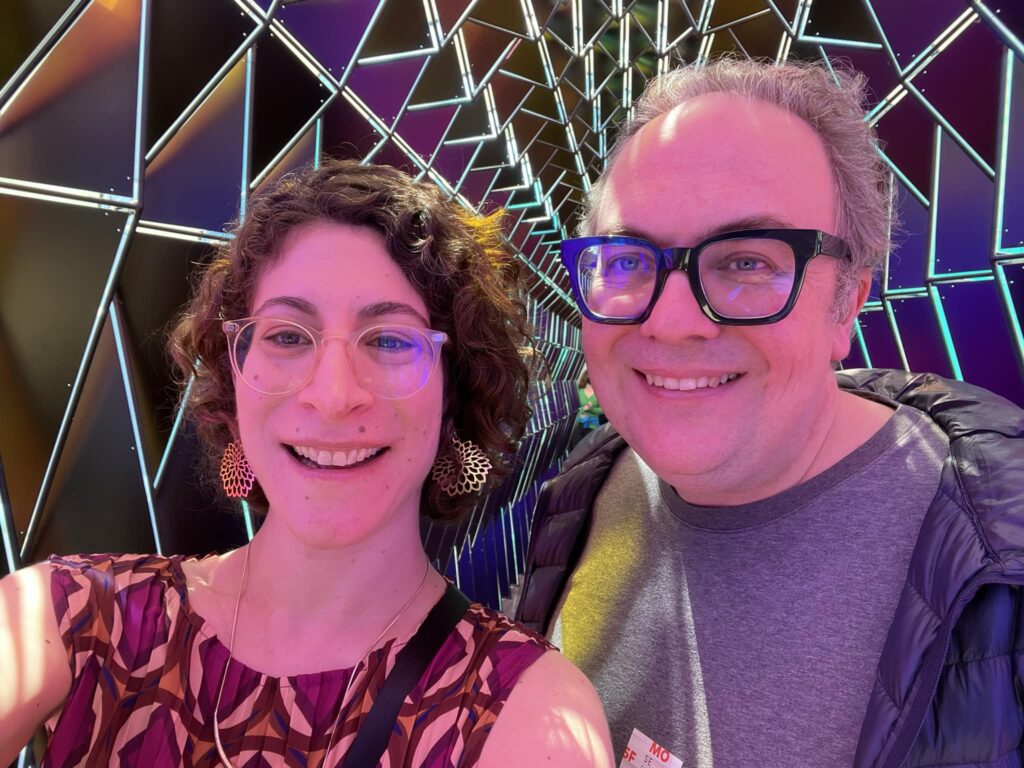
Sara Bernstein, incoming Philosophy Professor and department chair, and Philosophy Professor Daniel Nolan
Bernstein offered a personal example: “My three-year-old niece is terrified of even cartoon skeletons. She sees them as an imminent threat… something unpredictable,” she said.
Despite its discomforts, Bernstein and Nolan believe creepiness can be useful. It may help people avoid danger—or avoid behaving in ways that unsettle others. “Being creeped out is not only instrumentally useful for protecting oneself from creepy things,” they write. “It can also serve as a bonding activity and an indirect form of social censure.”
After all, as they point out: “Few people enjoy being thought of as a creep.”