Climate & Sustainability
UC Santa Cruz alumni leading local nonprofits: Pie Ranch
Many local nonprofits have roots that trace back to UC Santa Cruz alumni, who played pivotal roles in launching and shaping their missions. Alumnus Jered Lawson (Kresge ’92, community studies) co-founded Pie Ranch in 2005 and played a key role in launching UC Santa Cruz’s and the Homeless Garden Project’s Community Support Agriculture (CSA) programs in the ’90s.

Jered Lawson (Kresge ’92, community studies) co-founded Pie Ranch—a Pescadero-based farm that promotes education and social justice— in 2005.
Key takeaways
- Alumnus Jered Lawson (Kresge ’92, community studies) co-founded Pie Ranch—a Pescadero-based farm that promotes education and social justice— in 2005.
- Lawson played a key role in launching UC Santa Cruz’s and the Homeless Garden Project’s Community Support Agriculture (CSA) programs in the ’90s.
Throughout the region, nonprofit organizations work to strengthen communities, support those in need, and make a meaningful impact. Many of these nonprofits have roots that trace back to University of California, Santa Cruz alumni who played pivotal roles in launching and shaping their missions. Among those is Pie Ranch, a Pescadero-based farm that promotes education and social justice.
Jered Lawson (Kresge ’92, community studies) co-founded Pie Ranch alongside his wife Nancy Vail—who once oversaw operations at the UC Santa Cruz Farm—and their business partner Karen Heisler. The three founders envisioned Pie Ranch as a regenerative farming and food education center that builds community, supports young and emerging farmers, advances climate-friendly practices, addresses systemic inequities, and fosters joy, celebration, and partnership.
“Our goals include connecting people with the source of their food, training the next generation of farmers, and advancing food sovereignty in our region,” says Lawson.
Pie Ranch started as a triangular 14-acre “slice” of coastal farmland alongside Highway 1. Today, the thriving educational ranch spans more than 400 acres, becoming one of the first properties on the San Mateo coast protected by an agricultural affirmative easement that ensures the land will remain in organic production in perpetuity. Lawson regularly collaborates with other organizations—such as the Amah Mutsun Land Trust—to achieve goals like increasing resource conservation and creating opportunities for multiracial farmers.
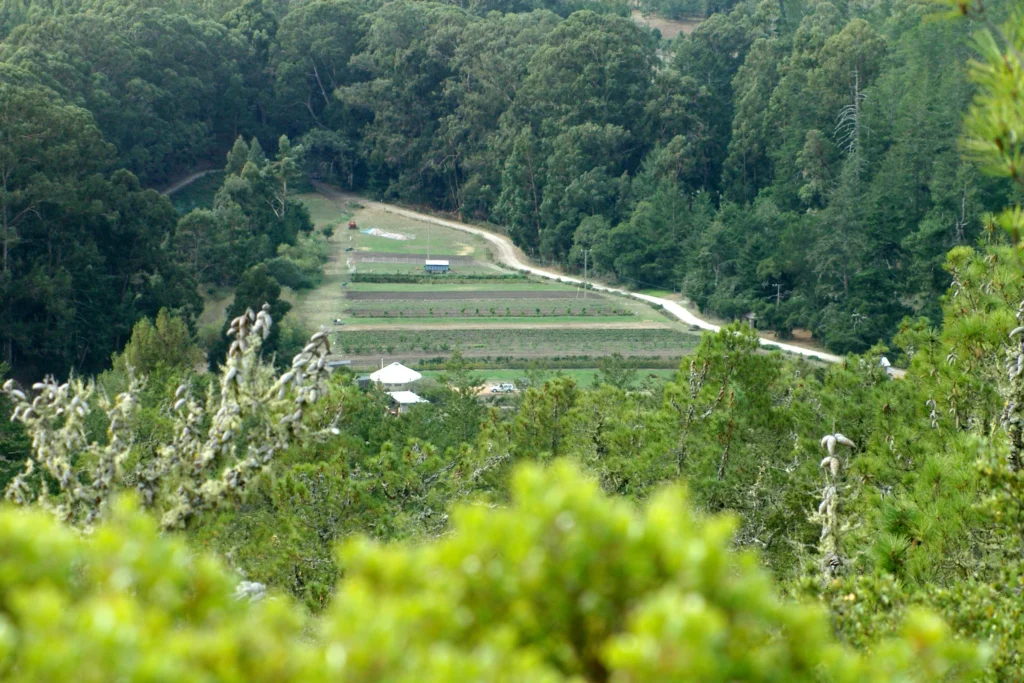
Lawson says his upbringing informed his passion for addressing inequity and food insecurity. He grew up in a single-parent household, and his mom had little time to cook.
“We ate out a lot and could only afford fast food,” he says. “When I later sat at the table of farms that I visited, with so much love and so much flavor present, I knew I and lots of others were missing out on something special, and also, very basic. It motivated me to make that available to more people.”
Pie Ranch connects young people from nearby communities to farming and food systems by hosting field trips for local schools. In 2024, more than 1,100 K–12 students visited the farm, with programs ranging from single-day experiences to extended learning opportunities. These visits help students build meaningful connections to nature and deepen their understanding of where their food comes from.
“The rhythms of the day, sounds of chickens while collecting eggs, smells from the barn when milking, opportunities to learn by doing and discussing the potential of better school food over farm fresh meals stick with them longer—at least we hope,” Lawson said. “It happened to me as a 19-year-old at Live Power Community Farm. And here I am, fostering something similar for the last 20 years. It’s very gratifying.”
Pie Ranch offers many public programs that engage community members from all levels including artist residencies, food sovereignty workshops, and farmer pathway programs that cultivate hands-on experiences and pushes policy initiatives that work towards systemic changes in the food system.
One farmer pathway program is YouthCorps, which engages young adults in hands-on experiences with sustainable farming and food justice. From working the land and caring for animals to supporting educational programs and culinary events, YouthCorps participants gain practical skills and a deeper connection to food, community, and the environment.
Looking to the future, Lawson is excited to continue Pie Ranch’s offerings.
“We feel these nature-based experiences that offer practical skills in living in the world with a solutions-orientation to our climate crisis, are critical for youth who are struggling under the disconnected social media and urban-centered, politically polarized reality that we find ourselves in.”
Transformative UCSC Experiences
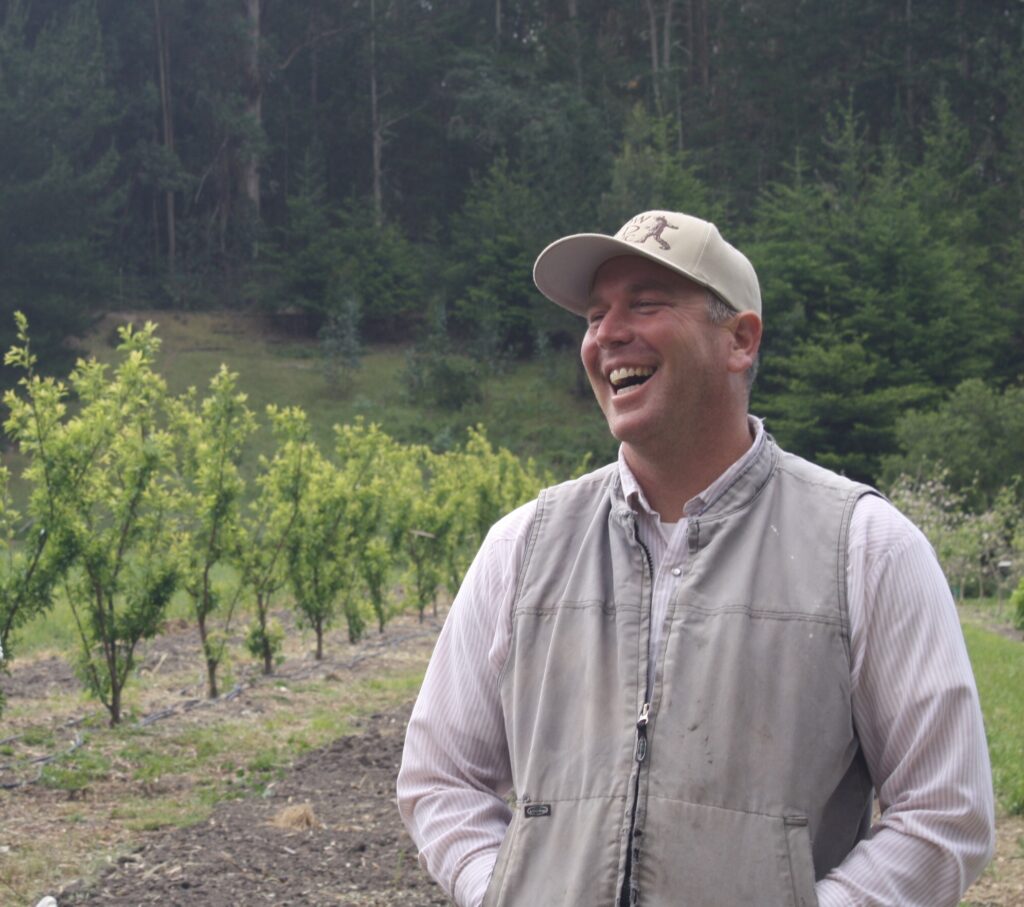
Lawson was drawn to UC Santa Cruz for its unique campus environment.
“The moment I walked through the redwoods and over a bridge spanning a ravine to a library with big windows opening to such beauty, I knew I wanted to be in that learning environment.”
Lawson began at UC Santa Cruz in 1988 as a psychology major, drawn to questions about how environments shape mental health and social well-being. Through Kresge Core and a writing course with Jeff Arnett, he was introduced to Wendell Berry’s The Unsettling of America, which deepened his awareness of food systems and inspired him to switch to Community Studies.
A 1989 visit to Steve and Gloria Decater’s Live Power Community Farm, where UCSC’s Alan Chadwick had once established a garden, impressed upon Lawson the power of community-supported agriculture and how farming could address social, political, economic, and ecological issues in practice.
In 1995, Lawson launched the Community Supported Agriculture project at the UC Santa Cruz Farm shortly after his time as an apprentice there. Lawson found his time as an apprentice pivotal, greatly influencing his personal and professional journeys. The same year, he organized the first Western CSA Conference. He was also instrumental in connecting organic farmers with schools in the East Bay and was a lead organizer of the Buy Fresh, Buy Local campaign.
Homeless Garden Project
As a Community Studies major, Lawson completed fieldwork and a six-month internship with the then newly formed Homeless Garden Project (HGP), which began selling produce to fund stipends for homeless trainees. In 1991, he and his colleagues visited Live Power Farm, where he had first been inspired two years earlier.
As a result, he and HGP staff, plus community members, launched the CSA program, which has since expanded and continues to thrive today as a consistent source of funding for the project’s programs benefiting people who are unhoused.
Lawson is grateful to UC Santa Cruz’s Community Studies program for providing students opportunities to do truly impactful work.
“The most rewarding part is learning you can join a community effort and make a difference as a young person.”