Campus News
In Memoriam: Mike Rotkin
Longtime UC Santa Cruz lecturer and alumnus Mike Rotkin passed away earlier this month. He leaves behind an esteemed legacy as a social change leader.
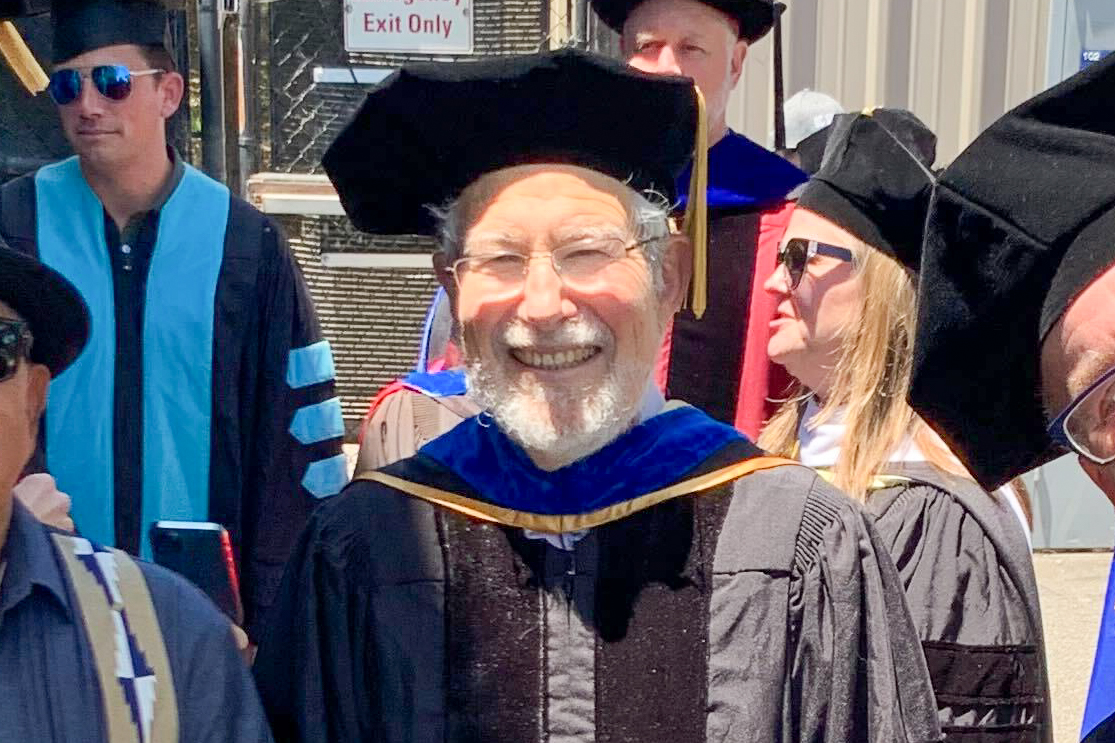
Mike Rotkin, a longtime UC Santa Cruz lecturer, co-founder of the Community Studies Program, coordinator of Merrill College’s Field Study Program, and former organizer with the local UC-AFT lecturers union died on June 18th of leukemia at the age of 79.
Rotkin was a beloved leader, both on campus and in the broader Santa Cruz community, where he served as a five-time mayor of the City of Santa Cruz and spent more than 25 years on the Santa Cruz City Council. His legacy will be carried on by all those whose lives he touched with his compassion, wisdom, and tenacity.
Rotkin first arrived at UC Santa Cruz in 1969, alongside his mentor, Professor Bill Friedland, who had been hired to develop the campus’s Community Studies Program. Together, they formed a new vision of how higher education could prepare students to become effective organizers for social justice. Their work would later become a national model for both the public service potential of universities and the growing popularity of experiential education.
“They understood the opportunity at hand and invented a program animated by two audacious claims,” explained Mary Beth Pudup, a former director of the Community Studies Program who worked alongside Rotkin for 25 years. “The first was the idea that universities did not have a monopoly as sites of knowledge production. Mike and Bill shared an intuitive understanding that communities were repositories of knowledge born from struggle, and an urgent task of the university was bringing that knowledge into the academy.
“The second audacious claim was that undergraduate students could be the messengers between community and the university. These ideas were wild at the time, but they became codified in a core curriculum integrating classroom learning and analysis with extended field study across California and out to the four corners of the globe.”

Through the program that Rotkin and Friedland designed, students in the community studies major are required to take part in a six-month field study, an essential experiential education component, through which students contribute to and learn from organizations actively working for social change in a variety of fields. Field study integrates research with hands-on experience in the community and builds a strong connection between theory and practice, in ways that benefit both students and community partners.
“Mike served as the field study coordinator for decades, placing students with organizations, reading field notes, and guiding their senior capstone work,” Pudup said. “Because of his myriad engagements in Santa Cruz and California, he worked his relationships on behalf of students, finding them field study placements they never dreamed of.”
“As field study coordinator for many years, Mike Rotkin really was community studies for the thousands of students he supported over the program’s first 50 years,” added long-time Community Studies Program lecturer Andrea Steiner, who retired from teaching in 2021.
Steiner fondly recalled Rotkin’s diligence and sensitivity in supporting the very first cohort of Community Studies Program field study students, who lived and worked shoulder-to-shoulder with migrant farm workers in the Salinas Valley for six months.
“It would have been disrespectful and awkward for those students to take notes in their bunk beds across from the folks they were learning from, supporting, and studying, so instead, once a month, the students would take a bus into town, where Mike would meet them at a coffee shop,” she explained. “And, one by one, each student would simply talk into a tape recorder—sometimes for hours—and respond to the questions Mike asked.
“In effect, they ‘downloaded’ their experience to Mike. He brought the tapes back and they became field note transcripts for the capstone analyses the students went on to write. I’ve always remembered this story because it represented what a fine listener Mike could be, how he conveyed a ‘meet people where they’re at’ openness, long before that became the watchword of harm reduction, and how he had the politician’s gift of getting people to relax around him.”
Distinguished Professor Emerita Julie Guthman, who taught in the Community Studies Program for many years, described Rotkin as “a stalwart supporter of community studies’ unique approach to community-engaged pedagogy and a model himself of community activism, as evidenced in his repeated service as mayor and more in the city of Santa Cruz.”

As a politician, Rotkin was renowned for taking progressive values mainstream in the Santa Cruz region. Over the years, he also earned a Ph.D. in History of Consciousness from UC Santa Cruz. Even after his official retirement as a lecturer, he remained active in the campus community, advising new leaders of the Community Studies Program and returning in 2014 as a retired lecturer on recall to lead and teach in Merrill College’s field study program, which is open to students of all majors.
“At the end of Spring Quarter of 2025, Mike Rotkin submitted final grades for what would be his last course as a lecturer and leader of our Field Studies Program at Merrill College,” said Merrill College Provost Aims McGuinness. “I was fortunate to be able to sit in on one of Mike’s classes in February. As students filed in, he connected with each of them, sharing ideas and suggestions that were never condescending and always kind and encouraging.
“That Mike continued to inspire students just as much today as in the past testifies to his extraordinary ability to draw from his deep well of expertise in ways that could connect with the passions and preoccupations of any generation. Scholarship on student success has confirmed the knowledge that Mike carried into the classroom every day: community-engaged, experiential learning produces tangible, measurable benefits for students, especially for students from groups who have been historically underserved by higher education in our society.”
In a statement, UC Santa Cruz Chancellor Cynthia Larive expressed gratitude for Rotkin’s many contributions over the years, and conveyed how fondly he will be remembered by the campus.
“Mike was an important figure in the history of our campus and Santa Cruz itself,” Larive wrote. “From his early days as a graduate student in our History of Consciousness program to his decades teaching in Community Studies, he inspired generations of our students to engage with the world around them and work for meaningful change.
“He exemplified what it means to live one’s values — with clarity and compassion, and an unwavering belief in the power of community. His impact rippled far beyond the classroom and city council chamber, helping shape the very identity of Santa Cruz.”