Technology
UC Santa Cruz hosts AI summit and hackathon events for SF Tech Week
The two events brought together industry leaders, founders, builders, and students.
Elijah Viju
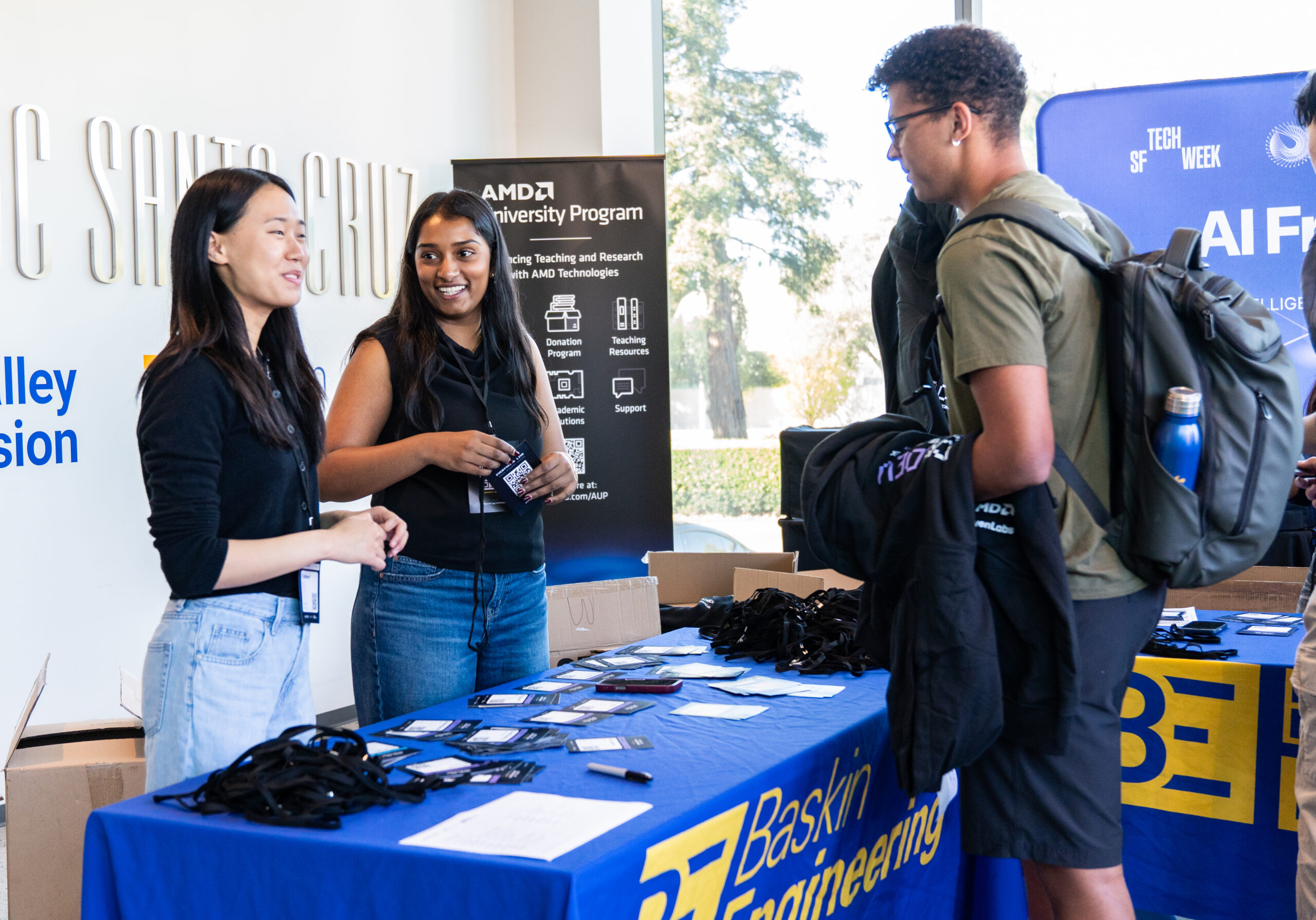
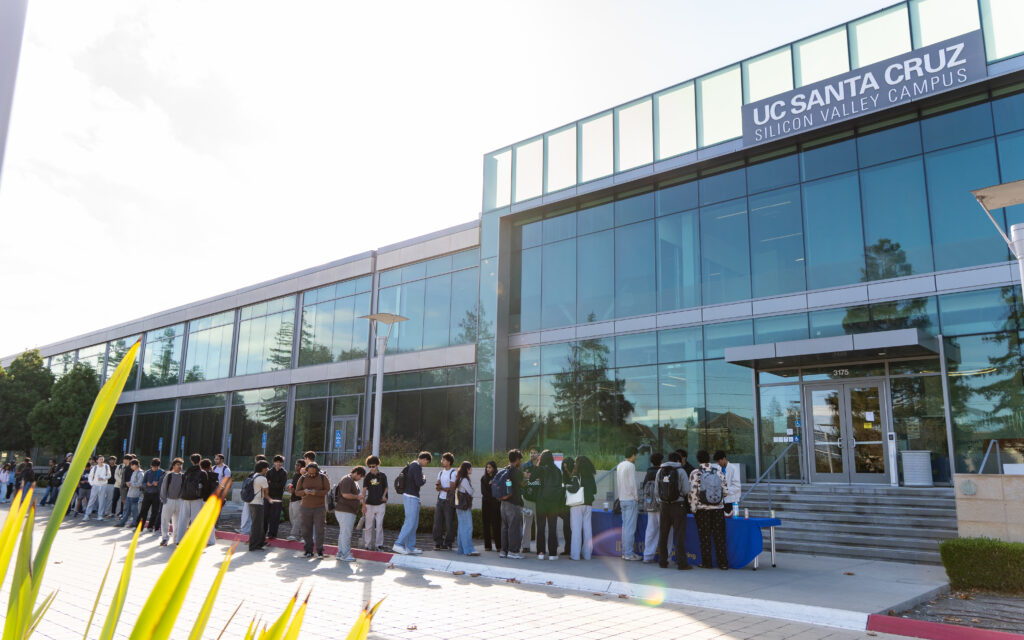
The University of California, Santa Cruz hosted two events at the Silicon Valley Campus for SF Tech Week 2026. The events brought together industry leaders, founders, builders, and students during a week of energy and connection about the future of technology.
On October 9, the Generative AI Center at the UC Santa Cruz Baskin School of Engineering hosted the AI Frontier Summit in partnership with the Silicon Valley AI Pioneer Club. The event connected founders, academics, and technologists across the AI ecosystem to share ideas and start collaborations.
On October 10-11, Baskin Engineering hosted an AI Hackathon for students and builders at UC Santa Cruz and beyond, in partnership with the Generative AI Center and the Hack.Dev student organization, sponsored by Cisco, ASUS Education, and AMD.
SF Tech Week is one of the largest technology gatherings in the world, and featured hundreds of events across the San Francisco Bay Area to showcase innovation, foster collaboration, and drive the future of technology.
AI Frontier Summit
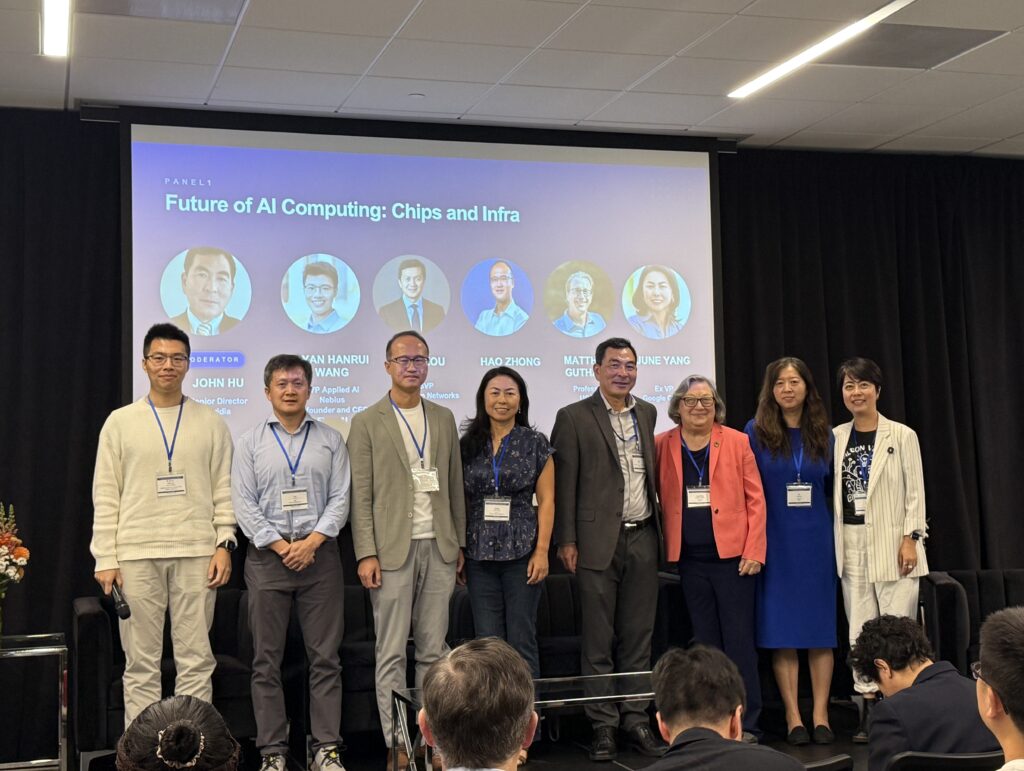
Building AI at scale is a challenge with many layers, from chips and infrastructure to models, agents, and the businesses that fund them. The AI Frontier Summit was designed to bring people working at each of those layers into the same room, encouraging connections beyond any one area of the technology.
“UC Santa Cruz is the UC of Silicon Valley, and this campus is an important part of how we connect the research and talent of a great public university with one of the world’s most dynamic innovation ecosystems,” UC Santa Cruz Chancellor Cynthia Larive said at the event. “The most consequential advances in AI won’t come from thinking about technology in isolation. They will come from connecting fundamental research with real-world problems, and from building collaborations that allow us to innovate boldly and responsibly.”
The program featured four panels, a demo and startup showcase, and time for networking. More than 1,000 participants registered to attend in person or online. Themes that emerged included the urgent need to focus on cybersecurity, the shift from chat models to AI agents, and the growing importance of memory infrastructure.
“I always like to interact with people who have differences of opinions, and hear people share their perspectives,” said Vinesh Sukmar, Vice President of AI Product Management at Qualcomm. “I think this forum was quite interesting, and people gave a lot of perspectives on their challenges and viewpoints on deployment of physical AI. And importantly, I got an opportunity to catch up with students, and try to understand their thought process.”
AI Hackathon
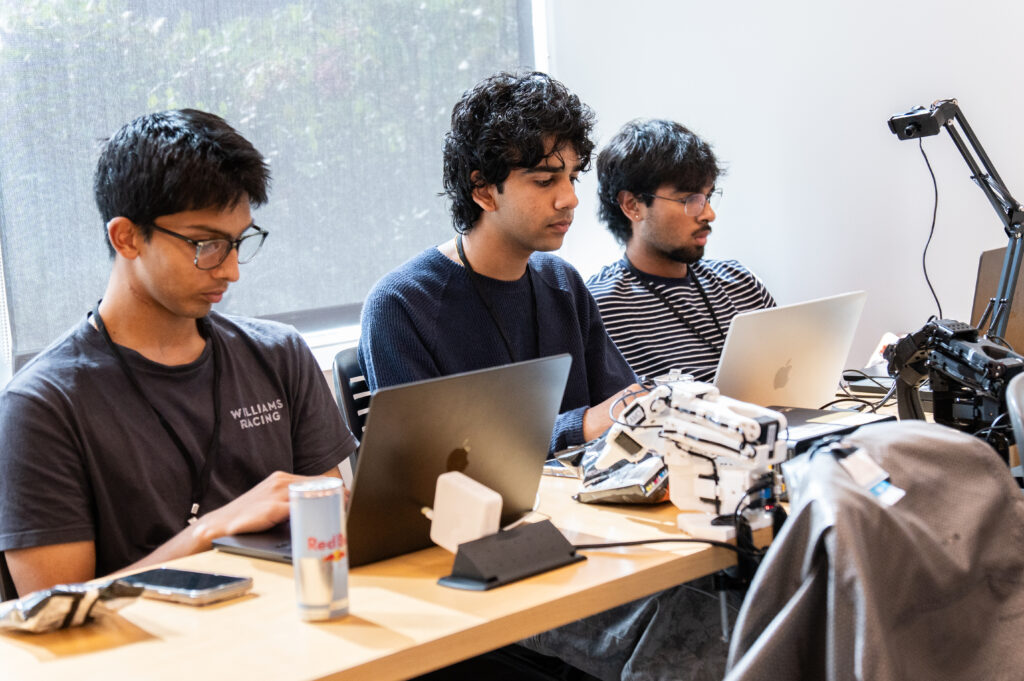
The weekend Hackathon event moved the focus from conservation to creation. More than 300 hackers checked in for the two-day event, and were tasked to team up and to build AI projects across three sponsor-led tracks: Cloud AI (sponsored by Cisco), Local AI (sponsored by ASUS Education), and Physical AI (sponsored by AMD).
The event drew a broad crowd of builders, ranging from several startup founders to more than 115 first-time hackers. Participants came from 29 high schools and universities, representing 36 cities, nine states, and three countries. Many teams built projects intended to use AI to solve pressing issues, like an AI-powered robotic assistant designed to make electronics workspaces more accessible for people with limited mobility, and assistive technology to help people with visual impairments to retrieve objects.
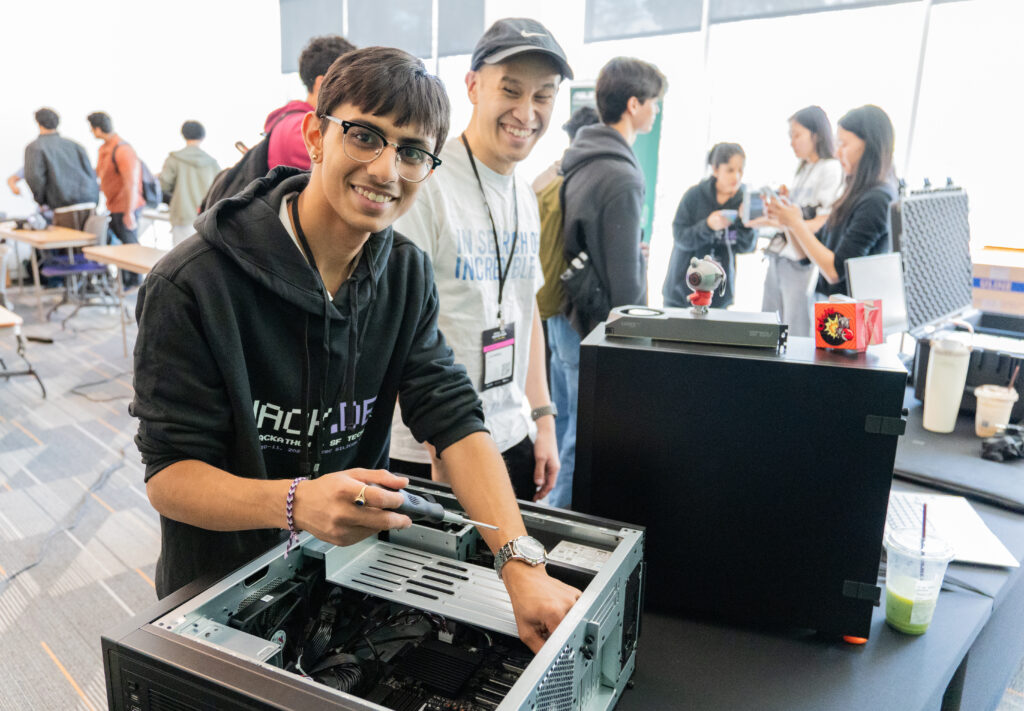
“The hackathon taught me to network and meet new people like I did with my team, but also use your creative mind to come up with something you genuinely want to execute,” said Gavin Wang, a fourth-year UC Santa Cruz electrical engineering student whose team placed second in the Local AI track.
The event sponsors supplied hardware and served as judges, and their presence offered students and builders the opportunity to learn from and network with industry leaders whose technology is shaping the job market. Sponsors also ran several workshops, with one offering guidance on how to use advanced hardware available at the events like GX10 supercomputers and robotics arms, to an ASUS and NVIDIA-hosted session on career advice and recruiting opportunities. Hack.Dev gave a workshop on strategies for success at Hackathons.
“The idea of this event is to bring opportunities to students so that they’re able to learn, network, gain exposure, and build a better portfolio for themselves, so they can go back and contribute to the industry, and contribute to wherever their future takes them,” said Preet Karia, founder of Hack.Dev and a third-year student studying computer engineering and robotics engineering. “Our goal is essentially to make their steps easier, make their life easier by providing them all these resources and opportunities.”
Additional community sponsors NVIDIA, ElevenLabs, n8n, and Beeceptor gave every hacker free credits to build with, and Celsius and Red Bull kept teams fueled.
Twelve finalists each gave a four-minute live pitch and demo, and prizes for winning teams included MacBook Pros, iPad Pros, NVIDIA RTX 5080 graphics cards, robotic arms, and compute credits.
The winning teams were:
- Overall winner: SightSense
- Best Beginner: 254Demons
- Cloud AI, 1st: WatchDog
- Cloud AI, 2nd: Parliament
- Cloud AI, honorable mention: Midflight
- Local AI, 1st: Lev
- Local AI, 2nd: Proprio
- Local AI, 3rd: PCBAgent
- Physical AI, 1st: Cerulean
- Physical AI, 2nd: Vector