Arts & Culture
Peggy Downes Baskin Ethics Lecture to explore Japanese American redress and the legacy of incarceration
Forty-five years ago, more than 750 survivors and descendants of Japanese Americans incarcerated during World War II spoke before the Commission on Wartime Relocation and Internment of Civilians. On Nov. 5, UC Santa Cruz will revisit that history with the Peggy Downes Baskin Ethics Lecture by civil rights attorney Donald Tamaki, along with the premiere of a new cinematic digital history project, Reckoning with Redress.
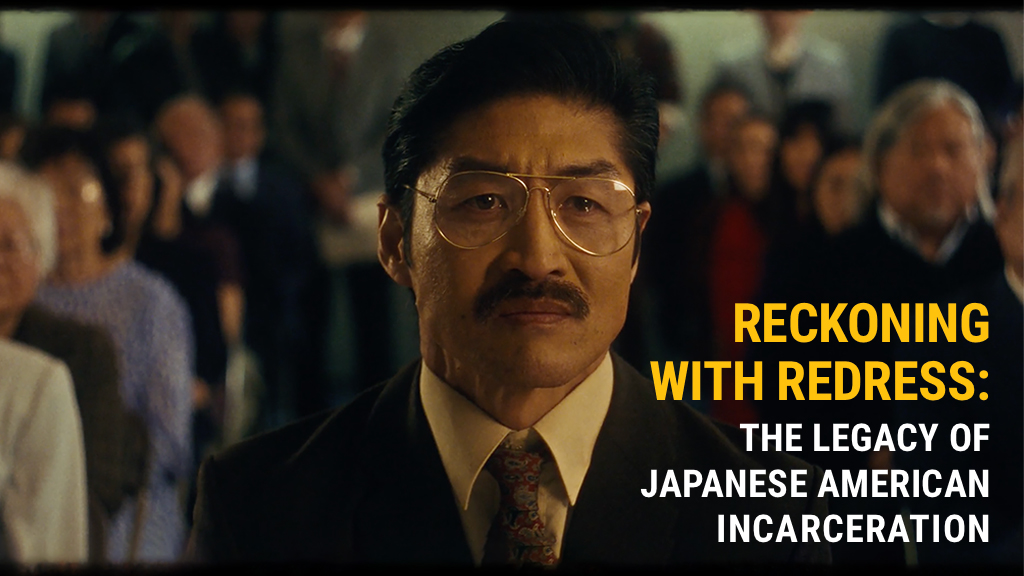
Image from the short film "Enough."
Forty-five years ago, more than 750 survivors and descendants of Japanese Americans incarcerated during World War II spoke before the Commission on Wartime Relocation and Internment of Civilians. Many had never shared their painful experiences before.
Their courageous testimonies helped launch a landmark effort to secure a formal government apology and monetary redress for one of the gravest violations of civil liberties in U.S. history.
On Nov. 5, UC Santa Cruz will revisit that history with the Peggy Downes Baskin Ethics Lecture by civil rights attorney Donald Tamaki, along with the premiere of a new cinematic digital history project, Reckoning with Redress. In 1981, Tamaki was part of the legal team that helped reopen and overturn the landmark World War II-era Supreme Court case Korematsu v. United States. Most of the team were young Japanese-American lawyers whose parents and extended families had all been incarcerated.
The Peggy Downes Baskin Ethics Lecture will take place from 6 to 7:30 p.m. at the Cultural Center at Merrill College.
The redress movement marked a pivotal chapter in the struggle for civil liberties in the United States.
In 1980, Congress established the Commission on Wartime Relocation and Internment of Civilians to investigate the circumstances surrounding the government’s wartime actions. Survivors and descendants testified about the devastating consequences of incarceration, helping build public support for redress.
The commission’s findings contributed to the Civil Liberties Act of 1988, through which the federal government formally apologized and authorized payments of $20,000 to eligible surviving incarcerees.
Don Tamaki will address these issues in his lecture, “A Debt Owed—Korematsu, Reparations, and the Ever-Recycling Racial Pathology of 1619.”
He is known for his work in the legal effort to overturn Fred Korematsu’s conviction for defying the government’s justification of the wartime policy, based on false evidence.
By the end of 1942, 125,000 people had been removed from their homes and put away in ten concentration camps from California to Arkansas.
“And most people went along with it because what choice did they have?” Tamaki said. “But there were people who defied the orders, and one of them was Fred Korematsu, so I will tell his story.”
Korematsu evaded the roundup of Japanese Americans but was later found and arrested.
Tamaki, in his talk, will also connect this history to a much longer pattern of racial discrimination in the United States, tracing it from slavery and Jim Crow through anti-Asian prejudice and the exclusion of Japanese Americans.
He argues that the incarceration was not an isolated injustice but part of a centuries-long pattern in which successive groups have been targeted, underscoring both the enduring consequences of racism and the fragility of democracy.
“Where does this prejudice come from?” said Tamaki, who grew up during the tail end of the Jim Crow era. “Our families were rounded up for no reason other than the fact that they looked like the enemy. Between 1,600 and 1,800 people died in those camps. We kind of viewed what happened to Japanese Americans as a standalone event. Before and after Pearl Harbor, there was a lot of anti-Asian sentiment. But after serving on California’s reparations task force, I realized that the racial pathology that ended up with Japanese Americans losing everything started long before we arrived in America.
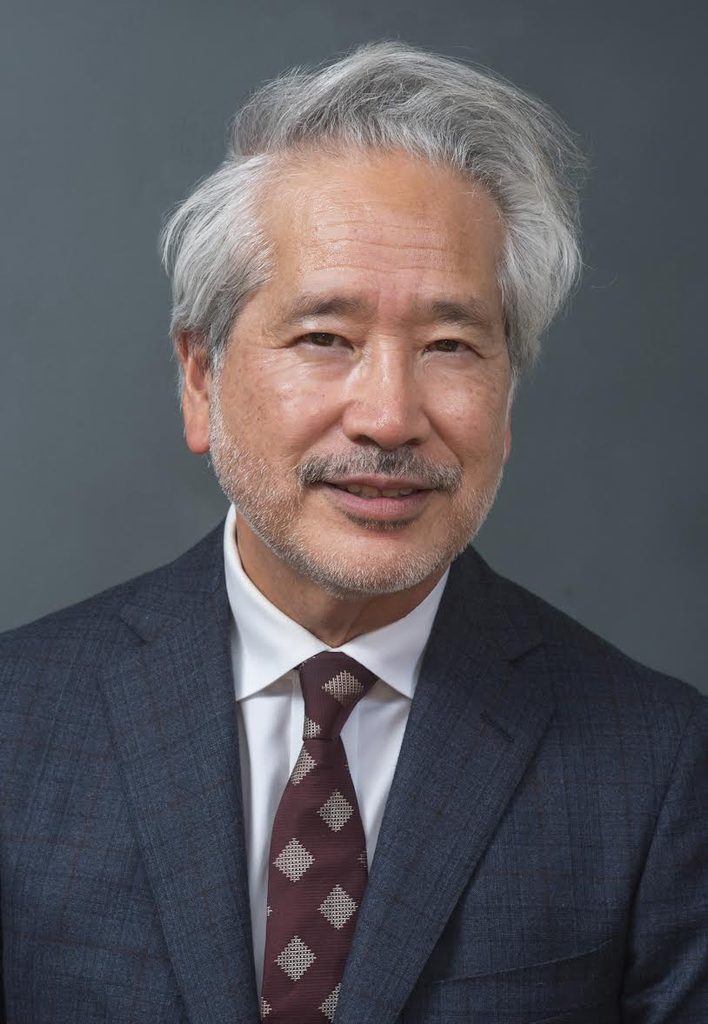
“Of course, people like to talk about the 1882 Chinese Exclusion Act and legislation targeting Japanese Americans, but you really have to start in 1619 and connect the dots from slavery and Jim Crow to the arrival of Japanese Americans and other immigrants, and to the present,” Tamaki said. “That racial pathology continues to be recycled through history and has huge consequences for the groups it impacts.”
“And it says something about how fragile democracy is,” Tamaki continued. “Replacing one disfavored group with another, or adding them to the list of disfavored groups, is just part of the culture. This happened to us. Yes, it was a huge violation of human rights, but it is part of a continuum that has been going on for three or four centuries.”
Together, the lecture and digital history project invite audiences to consider how the history of Japanese American incarceration speaks to broader questions of constitutional rights, racial injustice, collective memory, and government accountability.
Produced by Full Spectrum Features Education in partnership with Humanities Dean Jasmine Alinder, Reckoning with Redress is an open educational resource designed to bring the history and legacy of the Japanese American Redress Movement to new audiences. The project includes Enough, a short film, an immersive game, and an interactive learning website, offering educators and students multiple ways to explore the movement and its continuing significance.
The project grew out of Alinder’s years of scholarship on Japanese American incarceration and her collaborations with Full Spectrum Features, an arts and media nonprofit that works to uplift stories from underrepresented groups.
Alinder has served as lead academic adviser and content curator on the organization’s two earlier cinematic digital history projects: Resettlement: Chicago Story, and The Orange Story, and has worked with the organization on other public history projects exploring the experiences of Japanese Americans during and after World War II.
Alinder also co-directed a National Endowment for the Humanities-funded summer institute for K-12 educators that focused on Japanese American resettlement in Chicago and the history often left out of standard accounts of World War II.
For Alinder, the history of incarceration also encompasses the struggles of survivors and their families to rebuild their lives, confront the stigma imposed on them, and win recognition of the injustice they had suffered.
“I hope the audience comes away with a better understanding of the kind of organizing efforts that made Japanese American redress possible,” Alinder said. “I hope they make the connection to persistent efforts for reparations for African Americans in this country.”
She also hopes the audience draws parallels between the fate of Japanese Americans during World War II and the exclusion and prejudice that immigrants face.
“The current federal administration is trying to create hysteria around immigrants and cultivate fear that causes exclusion and prejudice,” Alinder said.
While it is important to recognize and celebrate achievements such as the Japanese American redress movement, the work does not end with those victories, Alinder said.
“As we have seen with civil rights and reproductive rights, progress can be rolled back, and preserving those gains—and building on them—requires consistent effort,” Alinder said. “We cannot take those achievements for granted, especially as issues people fought hard against, including the Alien Enemies Act, have become newly relevant.”
The work for justice and freedom continues, said History and Critical Race and Ethnic Studies Professor Alice Yang, who also contributed to Reckoning with Redress and whose work documenting the Japanese American redress movement spans original oral-history research, scholarship, public exhibitions, and the new digital history project.
“Japanese Americans continue to emphasize the need to challenge and protest violations of civil liberties and human rights because of racism, hysteria, religious intolerance, and political pandering,” Yang said. “This includes opposing Islamophobia after 9-11 that led to attacks on Arab, Muslim, and South Asian Americans. Activists also have denounced and demonstrated against the recent invocation of the Alien Enemies Act and ICE raids targeting individuals believed to be undocumented migrants or refugees.”
Remembering how few Americans protested mass removal and incarceration during World War II, these Japanese Americans want to prevent history from repeating and victimizing another group, Yang said. They also hope that supporting other redress campaigns will play a vital role in educating the public about the legacies of past and present systemic racism, colonialism, and discrimination.
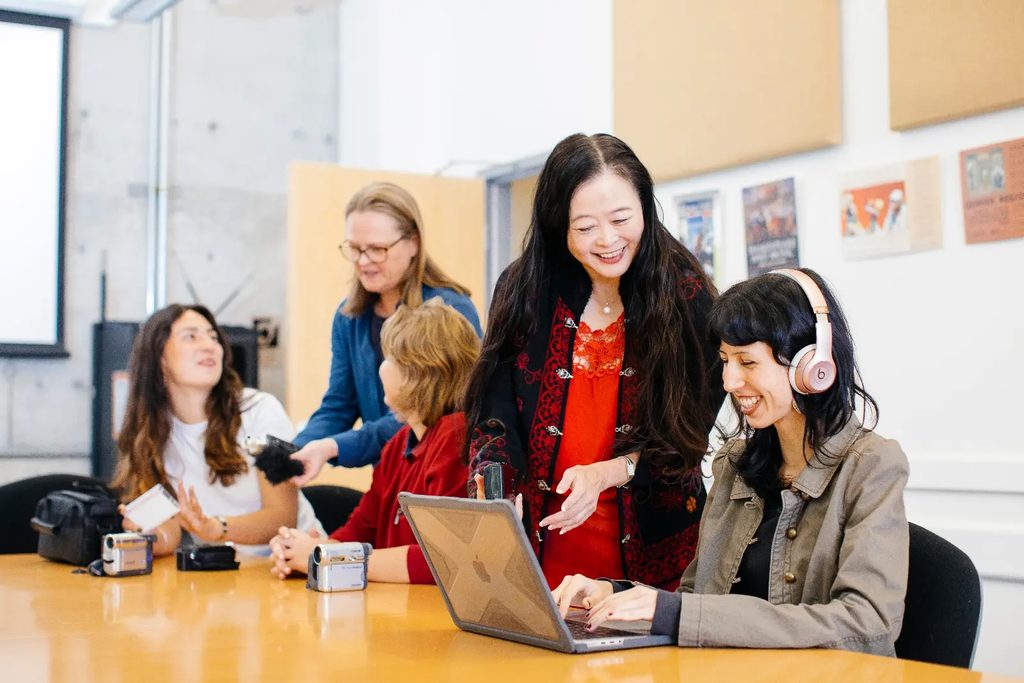
The project also offered an opportunity for emerging scholars to explore how archival materials can speak to contemporary audiences. Benyamin Alfaro, (Merill, ‘25, history and education) who contributed to the digital redress project as a Humanities EXPLORE research fellow, said the experience showed him the value of making historical documents accessible through storytelling and community collaboration.
“Working on the Japanese American redress project highlighted to me the value of working with archival materials in an educational context,” said Alfaro, who is currently a graduate student at UCLA to become a community archivist. “It outlined the significance of having modes of storytelling with archival materials made accessible rather than tucked away in an archive.”
The event also reflects a wider commitment within UCSC Humanities to making scholarship accessible beyond the university. Alinder’s work has included collaborations with filmmakers and educators, public exhibitions, and initiatives to deepen the teaching of Japanese American history.
By combining historical scholarship with cinematic storytelling and interactive learning, Reckoning with Redress aims to help students and the public engage with a history that remains essential to understanding American democracy and the ongoing struggle to secure civil liberties for all.
This event is presented by The Humanities Institute and the Humanities Division on November 5th at 6pm at the Cultural Center at Merrill. This event is free and open to the public, and registration is highly encouraged.
The Ethics Lecture is made possible by the Peggy Downes Baskin Humanities Endowment for Interdisciplinary Ethics, which enables the Humanities Division to promote a dialogue about ethics and ethics-related challenges in an interdisciplinary setting. The endowment was established in honor of Peggy Downes Baskin’s longtime interest in ethical issues across the academic spectrum.