Student Experience
Clearing the path to a career-building summer
For many students, a summer internship has meant choosing between gaining valuable career experience and earning a paycheck. A UC Santa Cruz pilot program is helping students do both.
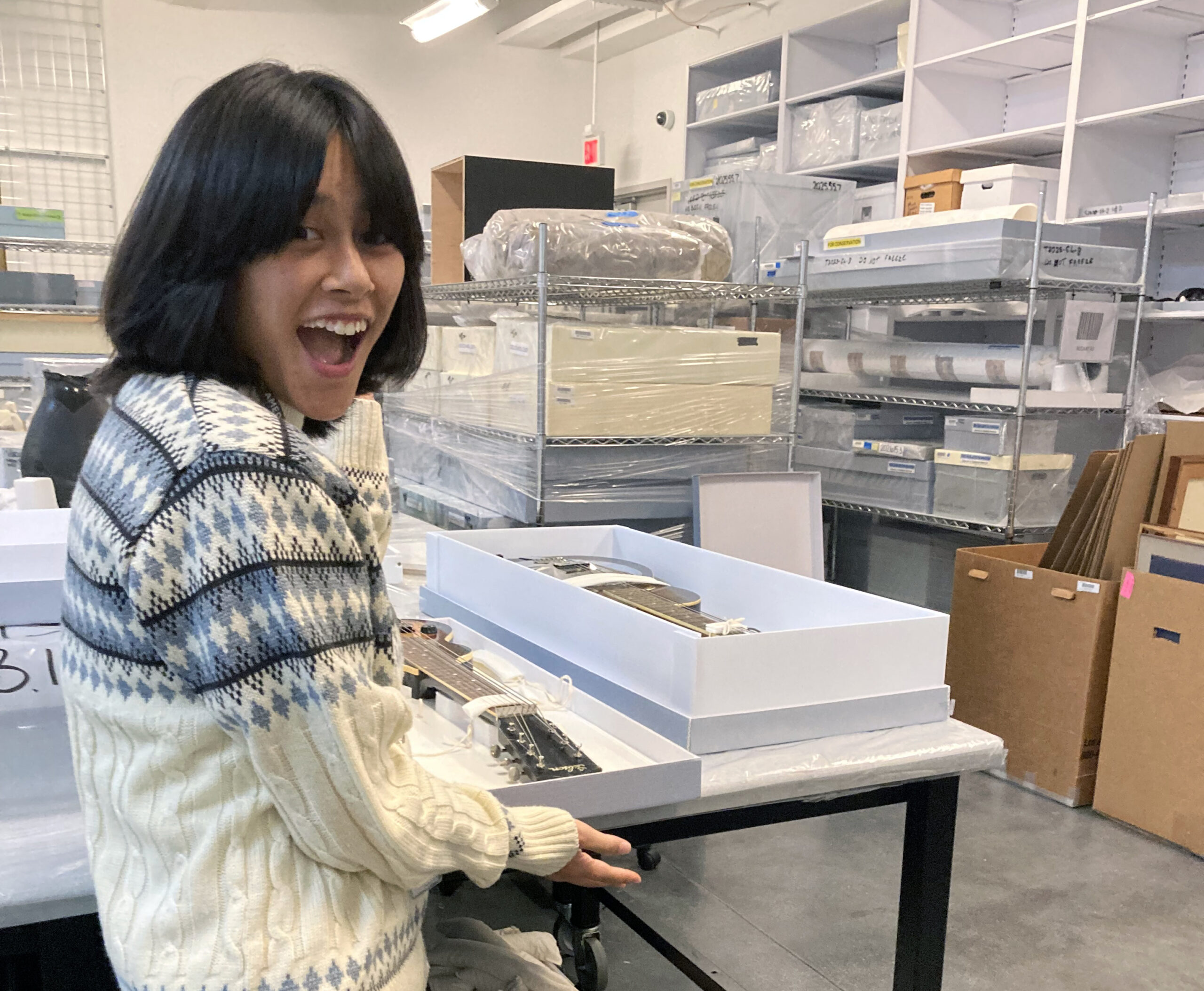
Momoko Nakazawa in the archives of the Autry Museum of the American West, where she spent the summer researching the museum’s history.
Momoko Nakazawa, a fourth-year linguistics major at UC Santa Cruz, spent her summer researching the honky-tonks and performers keeping country music alive in Japan for an upcoming exhibition at the Autry Museum of the American West.
“The research is a perfect fit for me,” she said. “I love music, and I’m Japanese.”
The Autry is just a few blocks from where Nakazawa grew up in Los Angeles. She wanted to spend the summer at home with her family, and a funded internship through the university’s Summer Humanities EXCEL program meant she could get paid to do archival research, a field she’s hoping to build a career in.
In Santa Cruz County, Virginia Martinez Najera, a business management economics major, spent the summer introducing a universal children’s savings account program to new parents. A first-generation transfer student from Santa Maria, Martinez Najera knew the internship she wanted with Ventures, a Watsonville nonprofit, couldn’t afford to pay her. And she also knew staying in Santa Cruz for the summer would be expensive. Funding through the campus’s Transforming Futures program made it possible for her to take the internship and stay on campus.
“The program has given me the opportunity to continue learning through the summer and getting that hands-on experience that I think is hard to find,” Martinez Najera said.
Summer internships and research can launch careers and help students build professional networks. But many students can’t fit these experiences into the academic year, and many can’t afford to work without pay over the summer.
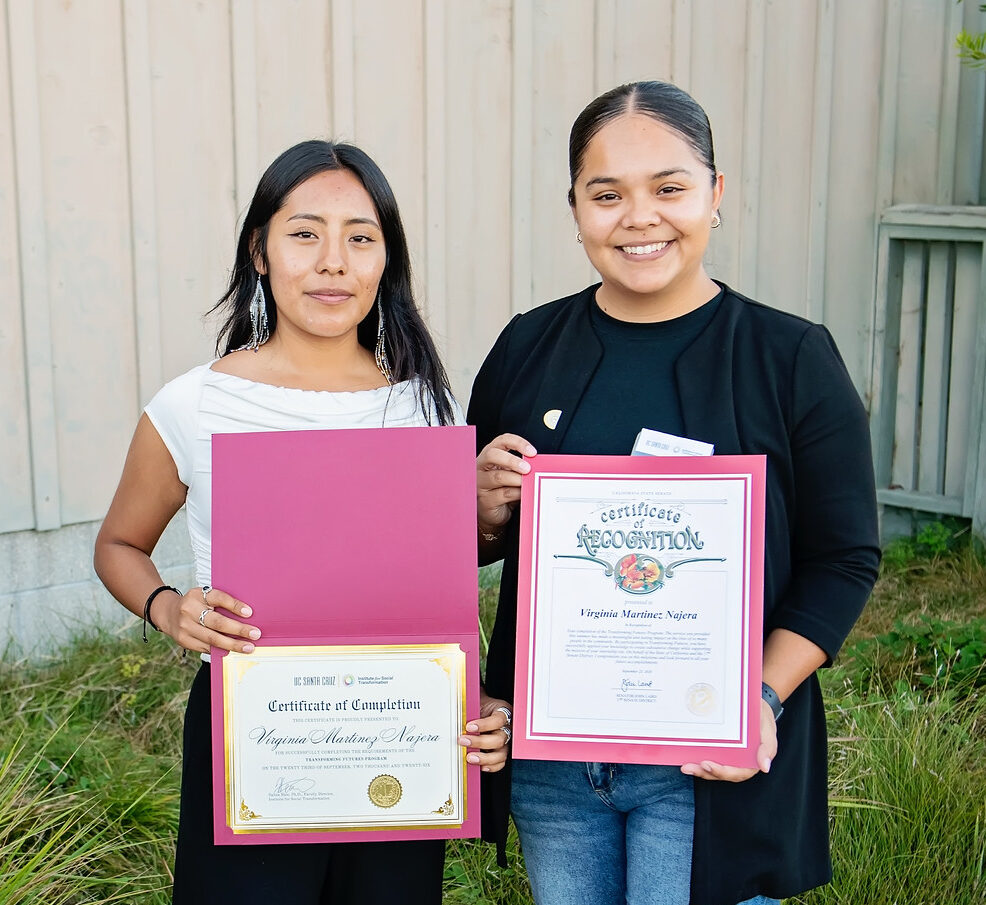
UC Santa Cruz’s answer is its Summer Research and Internship Pilot, which gives a shared structure to internship and research programs the campus already runs. Students in those programs enroll in a faculty-designed course alongside their summer work, earning academic credit. The chancellor waives tuition and the Office of Financial Aid and Scholarships covers the campus fee, so enrolling costs nothing, and scholarships and fellowships can go toward living expenses.
Nakazawa and Martinez Najera were among 300 students who participated this summer, nearly double the number in the pilot’s inaugural year in 2025. In that first summer, students received more than $1.2 million in scholarships and financial aid, with half of the participants among the campus’s students with high financial need.
Students worked in biotechnology companies, research labs, and campus core facilities. They interned with public defenders, immigration law organizations, museums, local governments, and community nonprofits. They conducted archival research and community outreach, learned to use specialized scientific equipment and worked alongside professionals in their fields.
“No student should have to pass up one of these opportunities because they can’t afford it.”
Richard Hughey
vice provost and dean of undergraduate education
“We already had opportunities going on. We didn’t have a framework to host these things,” said Pedro Morales-Almazan, associate teaching professor of mathematics, who helped develop the summer research course framework for the Physical and Biological Sciences Division.
Long-running science programs like MARC (Maximizing Access to Research Careers) had placed undergraduates in research labs every summer for nearly 20 years, he said. But students couldn’t earn academic credit for that research, which also made financial aid harder to access.
Programs across campus have since joined, spanning the sciences, humanities, and engineering.
The courses are built to help students find mentors, reflect on their work, and connect what they’re learning to their career plans. “It kind of forces you to view your internship from a more broad, macrocosmic level,” Nakazawa said.
“These summers can be transformational for our students,” said Richard Hughey, vice provost and dean of undergraduate education. “No student should have to pass up one of these opportunities because they can’t afford it.”
Inside the archive
During the academic year, Nakazawa works in the University Library’s Special Collections, where she has digitized tapes and researched the Grateful Dead Archive. That experience helped her land the internship at the Autry, where she could continue developing her archival research skills over the summer and learn from professionals in the field.
Because she grew up visiting the museum, returning as an intern was especially meaningful. “I got to see how the museum had changed since I was a kid and become part of the tradition of work I had experienced when I was younger,” she said.
“These internships are taking place in their home communities, and they’re getting to have a positive impact there,” said Kylie Rachwalski, assistant director of experiential learning in the Humanities Division, who manages Summer Humanities EXCEL and the Employing Humanities Initiative, “But there’s still a strong tie back to campus, so they feel supported during the experience.”
Funding the work that doesn’t pay
Many internships in the social sciences and nonprofit sector are unpaid, so students who need to earn money over the summer usually can’t afford to take them. Transforming Futures, run by the Institute for Social Transformation, provides donor-funded scholarships to students with financial need so they can take advantage of those opportunities.
“It opens the door for small nonprofits or other organizations that can’t afford to pay for an intern,” said Evin Knight, the institute’s director of operations and student programs.
“Students describe it as a life-changing experience that helped them with career exploration, trying something and figuring out that it’s what they want to do, or that it’s not what they want to do,” Knight said.
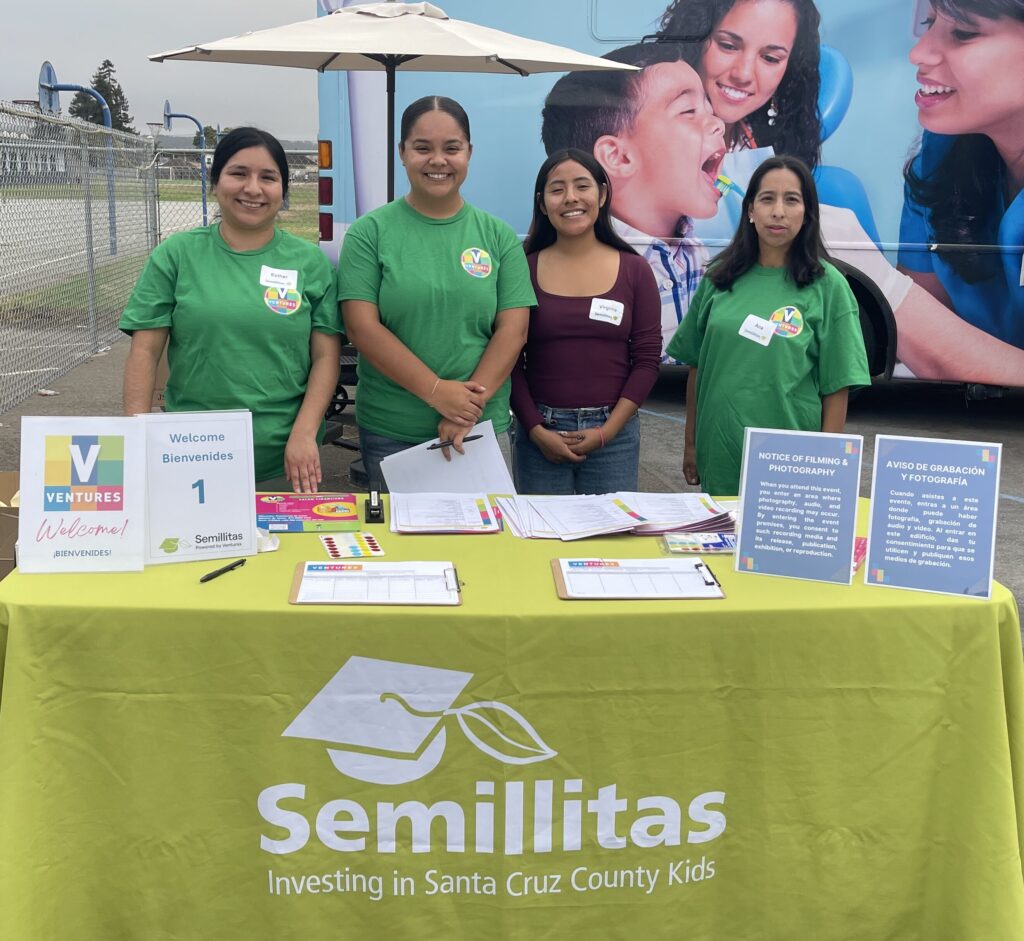
At Ventures, Martinez Najera explained to parents how their children’s accounts work, helped families access them, and helped run community listening sessions where residents shared their priorities, which helped shape recommendations for how local funds should be spent.
“I consider myself a pretty shy person,” she said. After a summer of conversations with parents, she added, “I feel like, OK, it’s not that bad talking to people.”
After one session, a father came up to thank her and some of her colleagues. She remembers him saying, “You guys are feeding us, you guys are giving us valuable information, and you guys are actually listening to us.”
“Seeing myself there and being able to help them, and help them be heard, that was really touching for me,” she said.
Earning while building a career
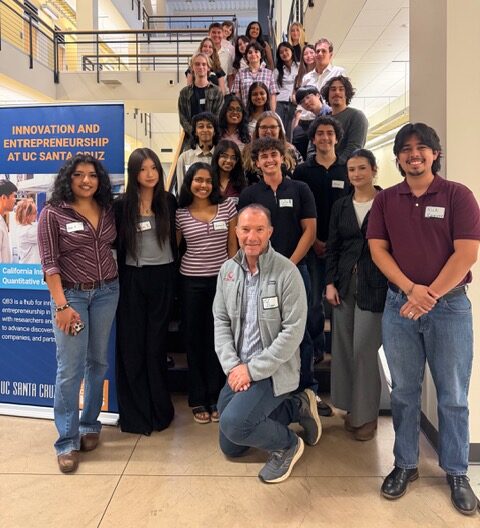
In the sciences, QB3-UC Santa Cruz’s summer internship program provides fellowships that allow students to earn money while gaining experience in research labs and at companies such as Bonsai Robotics and Open Culture Science. Through the pilot, interns also enroll in a companion course, BME 35, earning academic credit for their summer work.
“Students feel the need to get a job and earn some money, and too often it’s a job that can’t advance their career. It’s just a paycheck,” said Richard (Ed) Green, professor of biomolecular engineering and director of QB3. “A funded internship lets them earn money while building toward a career. In every way, it’s a win.”
This past summer, QB3 intern Oliver Young wrote code now running on Bonsai Robotics’ autonomous farm machines in California and Australia, Baskin Engineering News reported.
Green has also watched interns build professional networks. Though they work across dozens of labs and companies, students come together at the beginning and end of the summer to share their experiences and make connections. For host companies, the internships can serve as extended interviews, and some have led to permanent jobs for students.
Beyond the summer
For Nakazawa, interviewing her mentors at the Autry Museum about their career paths as part of her summer course confirmed her interest in graduate school and showed her that she prefers archival work to curation. For Martinez Najera, the summer meant being able to stay in Santa Cruz, contribute to her community, and build confidence working with people as she looks toward a career in accounting.
To her fellow students, Nakazawa said, “Pick an internship that you’re passionate about. It’s really an awesome opportunity, so use it to do something that you would already love to do.”
Martinez Najera’s advice is to tap into campus programs like these. “See what you have out there,” she said. “UCSC has these resources that we can all use.”
How to get involved
A few of the programs in this summer’s Summer Research and Internship Pilot include:
- Summer Humanities EXCEL, part of the Employing Humanities Initiative (Humanities Division)
- Transforming Futures (Institute for Social Transformation)
- QB3 Biotech Undergraduate Summer Internship Program
- STEM Diversity summer research programs, including MARC and UC LEADS (Physical and Biological Sciences Division)
- Vertically Integrated Projects (Baskin School of Engineering)
To learn about summer research and internship opportunities in your field, reach out to your department or ask your instructors about openings in their labs and projects.
Support Summer experiences
Participating programs rely on donors, grants, and philanthropic support to fund students. To help more students take part, visit giving.ucsc.edu.