Earth & Space
UC Santa Cruz’s deep expertise with elephant seals vital to avian influenza monitoring
Well-trained students and scientists are the boots on the beach collecting the samples and observations needed to help a statewide collaboration of responders monitor the recent outbreak
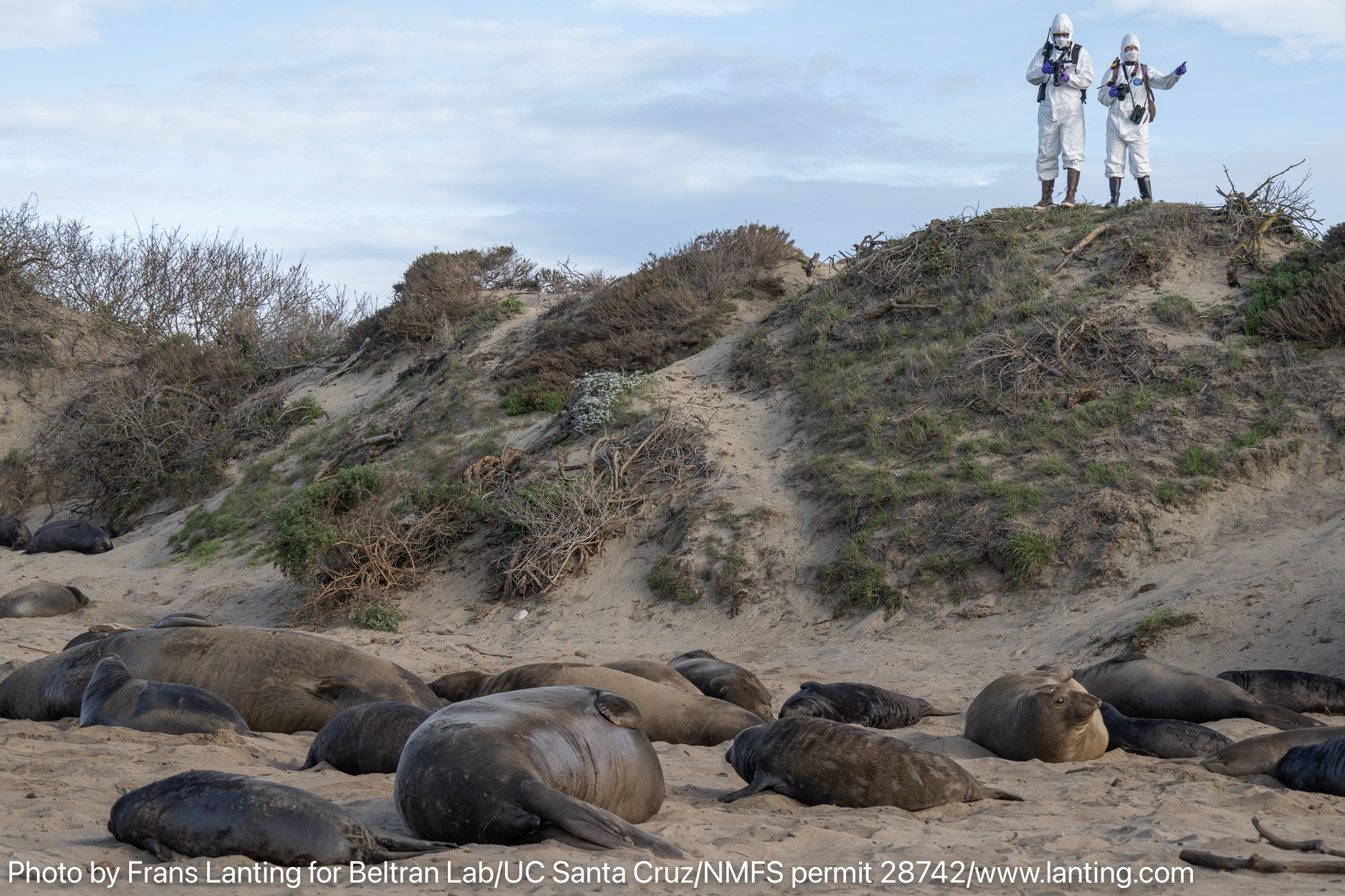
Researchers collect observational data to continue the long-term dataset including information about individually flipper tagged northern elephant seals and their symptoms.
Press Contact
As H5N1 avian influenza infection is confirmed among more northern elephant seals and adjacent coastal species including a southern sea otter and California sea lion at UC Santa Cruz’s Año Nuevo Reserve, researchers continue to monitor the impact on one of the world’s most studied marine mammal colonies.
Speaking at a press briefing last week, Reserve Director Patrick Robinson reported that the Beltran Lab is working in close collaboration with the UC Davis Center for Pandemic Insights, Marine Mammal Center, California Academy of Sciences, UC Santa Cruz Stranding Network, and multiple state agencies. Panelists from the organizations reported that researchers are closely monitoring seal-colony health and mortality rates, and noted that the outbreak appears concentrated around Año Nuevo.
Safety first: If you encounter a sick, injured, or dead marine mammal in California, Oregon, or Washington, call the NOAA Fisheries West Coast Region Stranding Hotline: (866) 767–6114. More information about the outbreak and updates are available at the UC Davis Institute for Pandemic Insights website.
Intensive daily monitoring
The UC Santa Cruz team of scientists and students, led by Assistant Professor Roxanne Beltran, has temporarily pivoted from standard research tasks to focused disease surveillance. Their current management efforts center on several key monitoring strategies:
- Daily systematic beach observations: Teams conduct daily surveys on the mainland to track symptomatic and dead animals. Currently, they observe an average of two newly dead and two newly symptomatic animals each day.
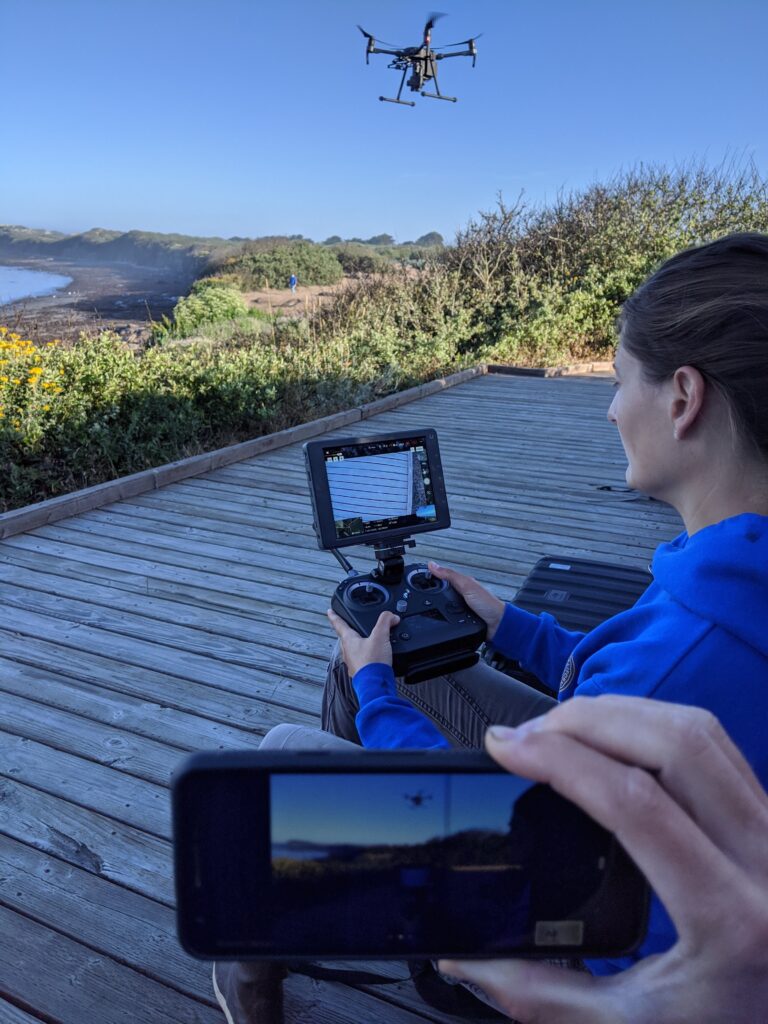
- High-tech surveillance: Researchers are utilizing drone surveys to assess colony-wide health, particularly on Año Nuevo Island, where the mortality rate appears to be three times higher than on the mainland.
- Sample collection: The team is working with UC Davis collaborators to collect swabs and samples from affected animals to be sent for confirmatory testing at UC Davis and U.S. Department of Agriculture laboratories.
Tracking impact across species
While the focus remains primarily on the elephant seals, the UC Santa Cruz team is also monitoring the broader ecosystem at Año Nuevo. Robinson personally discovered a southern sea otter on the beach that lacked typical shark-bite wounds. The team immediately swabbed the animal, which later tested positive for H5N1. It was then brought back to the Coastal Science Campus for necropsy by a team from the California Department of Fish and Wildlife and UC Santa Cruz Stranding Network. The results will help researchers understand the effect of the virus on marine mammals.
Furthermore, the team is investigating how the virus might move through scavengers. Frankie Gerraty—a graduate student in ecology and evolutionary biology who has tracked coyotes preying on harbor seal pups—has deployed trail cameras to monitor scavenger populations and carcasses to understand potential transmission between marine and terrestrial animals.
Hope amidst the outbreak
Despite the mortality—estimated at 47 seals on the mainland since the outbreak began—Beltran highlighted several reasons for optimism. As of February 19, approximately 80% of adult females had already departed for their migrations before the outbreak peaked; and currently, 17 seals instrumented by Beltran’s lab are behaving normally at sea.
The team has also observed symptomatic weaned pups that appeared to recover, a phenomenon they hope to study further. To better understand the “million-dollar question” of immunity and infection rates, Robinson stated that the team planned to sample asymptomatic animals. That began on March 17.
Looking ahead
While genetic testing of the virus has revealed markers of mammalian adaptation, the current risk to the general public remains very low. For public safety, Robinson reiterated that public tours will remain paused for the remainder of the season. He also urged beachgoers to report any stranded animals to the official hotline rather than approaching them.
Meanwhile, as the breeding seasons for seabirds and other sea lion species approach, the UC Santa Cruz team is preparing for continued surveillance on Año Nuevo Island. Robinson emphasized that the current crisis underscores the critical importance of long-term monitoring and science funding, noting that the depth of existing data on this colony provides a unique opportunity to understand the dynamics of this opportunistic virus.
To support the team’s tireless and intrepid work to better understand how our changing world affects these popular marine mammals, please consider a donation to the Beltran Lab.