Campus News
From climate resilience to forensic science, 2025 Innovation Impact Award recipients announced
Their work demonstrates how UC Santa Cruz innovation moves from discovery to real-world benefit.
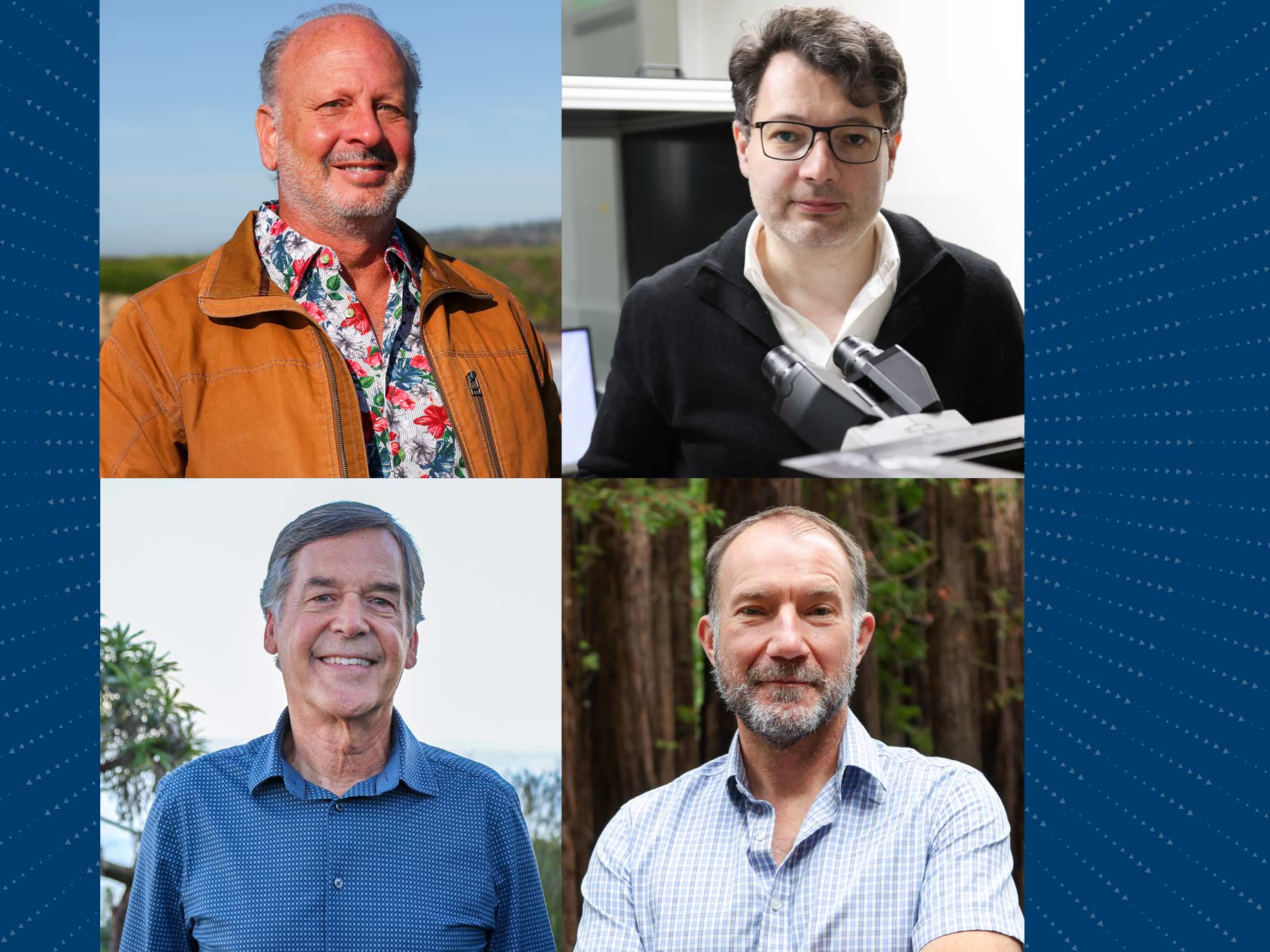
UC Santa Cruz has announced the recipients of the 2025 Chancellor’s Innovation Impact Awards, recognizing exceptional innovation and impact across four categories: Innovator of the Year, Translation of the Year, Community Changemaker, and Lifetime Achievement.
The 2025 award recipients are:
- Lifetime Achievement Award – Richard E. Green
- Innovator of the Year – Mike Beck
- Translation of the Year – NeuroSWARM3, developed by the Yanik Lab led by Ahmet A. Yanik;
- Community Changemaker – Bud Colligan
“These extraordinary honorees reflect the very best of UC Santa Cruz,” said Chancellor Cynthia Larive. “Their work is reshaping our understanding of the brain and our evolutionary past, advancing nature-based solutions that protect vulnerable communities, and expanding opportunity across our region. Together, they show how innovation at UC Santa Cruz changes lives. I am proud to celebrate their achievements and the powerful example they set for our students, our campus, and the world.”
Innovator of the Year
Mike Beck, director, Center for Coastal Climate Resilience
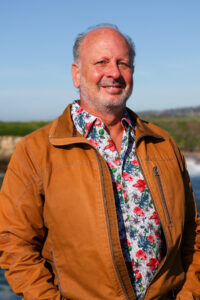
Mike Beck is being honored as the 2025 Innovator of the Year for advancing nature-based solutions that protect coastlines and communities from climate-driven storms and flooding. As director of the Center for Coastal Climate Resilience, Beck has emerged as a global leader in quantifying how ecosystems such as mangroves, coral reefs, and wetlands reduce storm damage and flood risk.
Over the past year, Beck and his collaborators published influential research that connects ecological protection to economic outcomes, translating scientific findings into terms that insurers, governments, and policymakers can act on. Through the development of innovative coastal protection strategies such as the Tesla Reef, which combines 3D-printed concrete structures with passive flow-control technology, along with advanced flood visualization tools and community partnerships, Beck is advancing practical approaches to shoreline protection. By integrating industry risk models with environmental science, his work is reshaping how coastal resilience projects are prioritized and funded, elevating nature-based solutions as cost-effective alternatives to traditional infrastructure.
Translation of the Year
NeuroSWARM3
Developed by the Yanik Lab, led by Ali Yanik, associate professor of Electrical and Computer Engineering
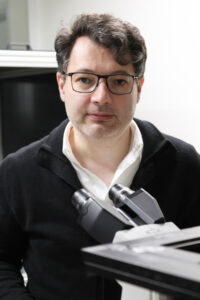
The 2025 Translation of the Year Award recognizes NeuroSWARM3, a groundbreaking neurophotonic technology developed in the Yanik Lab that enables wireless, minimally invasive monitoring of brain activity at unprecedented scale and resolution. NeuroSWARM3 uses biocompatible system-on-a-nanoparticle approach that can convert neural electrical signals into optical signals, allowing researchers to record activity across large regions of the brain without electrical implants or open-skull surgery.
Over the past year, the innovation has made significant progress toward real-world application and commercialization. The team has partnered with Subsense, Inc., a neurotechnology company developing the first non-surgical, nanoparticle-based bidirectional brain-computer interface, to advance translational studies. The Yanik Lab has scaled production of NeuroSWARM3 reporters, validated their performance, and expanded testing into increasingly complex biological models, positioning the technology for future impact in neuroscience research, brain-computer interfaces, and clinical translation.
Community Changemaker
Bud Colligan
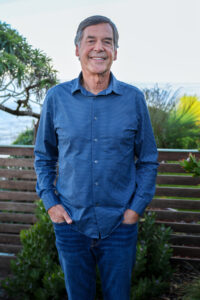
Bud Colligan is being honored with the 2025 Community Changemaker Award for his innovative use of venture capital and philanthropy to strengthen the economic vitality, health, and opportunity of the Monterey Bay and Central Coast regions. Following leadership roles in Silicon Valley, including work at Apple and service as CEO of Macromedia, Colligan turned his focus to building inclusive regional growth.
He founded and supported initiatives such as the Monterey Bay Economic Partnership, South Swell Ventures, and Central Coast Angels, while also providing early support to Digital Nest and serving as a founding board member of Santa Cruz Works. Together, these efforts have helped expand opportunity across the region’s technology, workforce, and entrepreneurial ecosystems.
Colligan and his wife, Rebecca, have also been generous supporters of UC Santa Cruz, including establishing the Colligan Presidential Chair in Pediatric Genomics and funding the Colligan Clinical Diagnostic Laboratory. Initially critical during the COVID-19 pandemic, the lab now focuses on rare pediatric diseases, including childhood cancer, extending Colligan’s community impact to life-saving research and care.
Lifetime Achievement Award
Richard E. Green, professor of Biomolecular Engineering
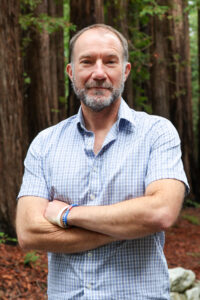
Richard E. Green is being honored with the 2025 Lifetime Achievement Award for a career defined by groundbreaking innovation in genomics and computational biology, and for translating fundamental science into lasting societal impact. Green is internationally recognized for his pioneering work in paleogenomics, including key contributions to the Neanderthal Genome Project that helped establish an entirely new field of molecular evolution. Green’s advisor, Svante Pääbo, won the 2022 Nobel Prize in Physiology or Medicine for his research on human evolution, and Green was a co-author of four of the six “key publications” cited in the Nobel announcement.
Green’s work has translated into broad real-world impact. Methods developed in his lab have been applied, licensed, and commercialized for use in biotechnology, forensics, and genomics. His technology has enabled non-invasive techniques, helping develop safer prenatal diagnostics. It has also served as the foundation for three regionally based startups. He is the co-founder and scientific advisor of Astrea Forensics, which applies ancient DNA techniques to complex forensic casework and the identification of human remains. He also founded Dovetail Genomics, now part of Cantata Bio, and Claret Biosciences, which develop advanced genomic technologies for complex and degraded DNA analysis. As a teacher and mentor, he has guided generations of students toward discovery and entrepreneurship, including co-founding startups with his trainees.
Green is the current director of the California Institute of Quantitative Biosciences (QB3) at UC Santa Cruz. QB3 is the University of California’s hub for innovation and entrepreneurship in life science, working with UC researchers and other scientists at Berkeley, San Francisco, and Santa Cruz to launch startup companies and partner with industry.
The awardees will be honored at a celebratory gathering on May 7, 2026. If you would like to learn more about how you can support these awards and the celebratory event, please contact Ryan Sharp at sharp@ucsc.edu.
Photos by Carolyn Lagattuta