Student Experience
From founding faculty to future generations
Celebrating Jim Pepper’s 50-year legacy of teaching, mentorship, and environmental leadership

Professor Jim Pepper delivers the provost's remarks at the 1989 College Eight (now Rachel Carson College) commencement, where he noted how his gardening hat symbolized planting seeds, nurture, and organic growth. The graduates cheered. Courtesy Special Collections, University Library, University of California, Santa Cruz.
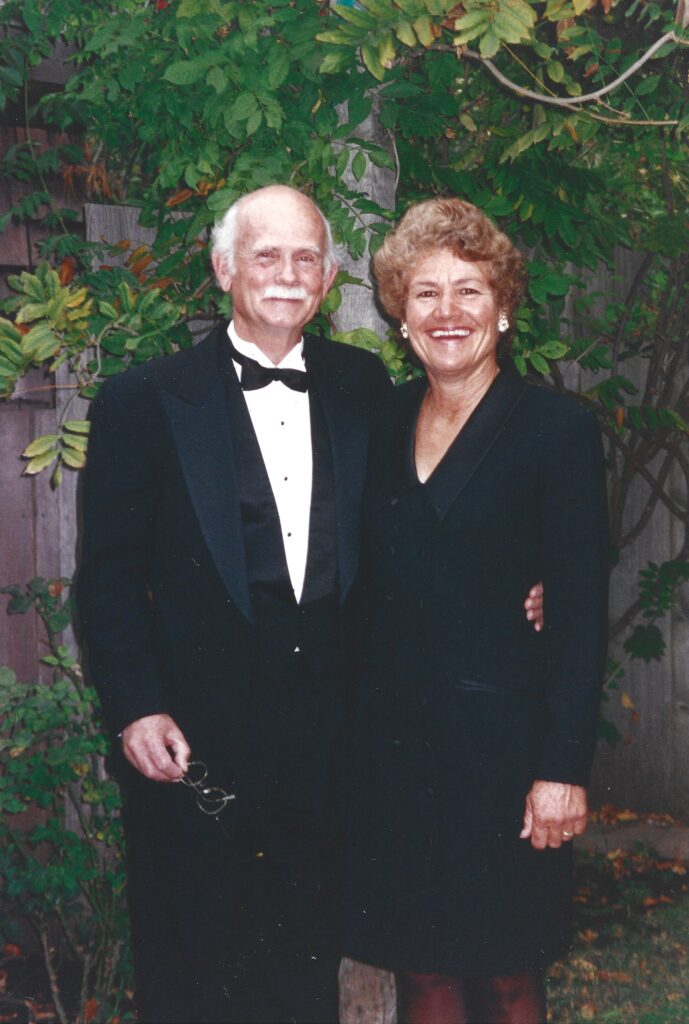
In fall 1972, when Jim Pepper arrived at UC Santa Cruz, he was one of two assistant professors specifically recruited to help launch an academic program in environmental studies—an emerging interdisciplinary idea not yet recognized as an academic field. Although there was no program or curriculum, there was a handful of existing UCSC faculty, primarily young untenured professors, who taught courses focused on the emerging national concerns over environmental issues. There were also faculty skeptics who—as Pepper recalls—dismissed the effort as “tree-hugger” activism rather than rigorous scholarship.
But Pepper and this handful of colleagues, led by Richard Cooley, professor of geography, recognized the pressing need for the academic world to address the growing scope and scale of human impacts on the global environment. These pioneering faculty were committed to the creation of an academic program to address this void. More than half a century later, the field of environmental studies is no longer considered radical or an anomaly; it is now recognized as critical in addressing global challenges ranging from climate change to sustainable development and environmental justice.
Now, through the newly established James and Sherry Pepper Founders’ Scholarship Endowment, the Peppers are ensuring that future generations of students can follow the path he helped create. The scholarship also reflects Pepper’s strong support for internships as an invaluable part of a student’s education, noting that bringing theory into practice, combined with hands-on opportunities, allows students to gain and apply interdisciplinary knowledge to real-world problems, honing their skills and building confidence prior to graduation.
Early days
Pepper’s path to UC Santa Cruz had roots in an undergraduate degree in architecture in 1959, a field requiring the artful synthesis of engineering, socioeconomics, and aesthetics. His subsequent interest in ecology during the early 1960s led him to UC Berkeley, where he earned two professional degrees: a master’s in landscape architecture and a master’s in city and regional planning. Pepper soon found himself at the center of the emerging environmental movement, serving as a teaching assistant for a large initial interdisciplinary course on the global environment at Berkeley. In 1969, he participated in the 13th National Conference of the US Commission for UNESCO: Man and His Environment—A View Toward Survival held in San Francisco; a year later, he was the Berkeley campus organizer for the first Earth Day.
“It was my good fortune to be at Berkeley when Congress enacted the National Environmental Policy Act and the environmental decade of the seventies began,” Pepper recalls. His academic focus wasn’t the classic “space, form, line, color, texture” approach to landscape architecture and the built environment, but rather on bringing ecological knowledge into the planning and design of regional-scale landscapes—wildlands, agricultural lands, and human settlement patterns.
“I was greatly influenced by landscape architect Ian McHarg’s seminal work Design with Nature,” Pepper notes.
Recruited to UC Santa Cruz by visionary geographer Professor Dick Cooley, Pepper brought exactly what the nascent environmental studies program needed: professional experience, practical skills, and a commitment to integrating theory and practice. He also brought something equally important—the capacity to undertake interdisciplinary endeavors, the ability to work outside of traditional academic silos and to speak multiple disciplinary “dialects.”
This ability to synthesize knowledge from multiple disciplines and make it understandable to general readers became a hallmark of Pepper’s teaching and creative work. He understood that solving environmental challenges requires the synthesis and integration of methods and knowledge from natural sciences, social sciences, humanities, as well as professional practice.
“Environmental studies requires a willingness to work together to solve problems. It takes a team spirit to look at issues from different angles, represented by different people from different disciplines. Jim did that very well,” says Jenny Anderson, lecturer and assistant to the chair, who worked in the Environmental Studies Department for 28 years.
Building a flagship program
Pepper was part of a remarkable founding generation that transformed environmental studies into one of UC Santa Cruz’s flagship programs. He speaks with deep respect and gratitude about the colleagues who provided the institutional framework and platform upon which the program emerged.
UC Santa Cruz’s Founding Chancellor Dean McHenry advocated for such a program in the early 1960s via his central role in authoring the California Master Plan for Higher Education. He was joined in his commitment to a program focused on the conservation of natural resources by another distinguished political scientist, Professor Grant McConnell, and by Professor Stanley Cain, a nationally prominent ecologist who had founded the School of Natural Resources at the University of Michigan, the first such program in the nation, a decade earlier.
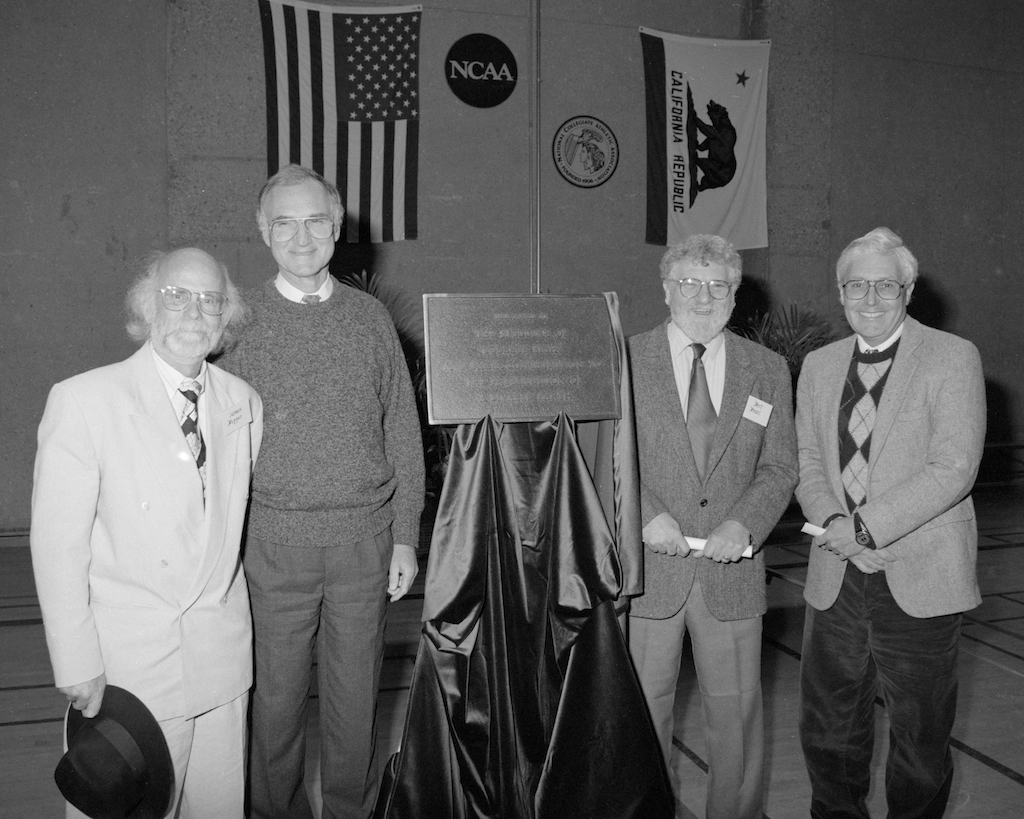
“It was founding chairman Dick Cooley who brought a warrior spirit and a global perspective to launching the environmental studies program,” Pepper recalls.
As a freshly minted Ph.D. from Michigan, Cooley had joined the Conservation Foundation where he helped shepherd ecologist Rachel Carson to complete her seminal book Silent Spring, the book credited with igniting the modern environmental movement in the United States. UC Santa Cruz’s College Eight, of which Pepper was a founder in 1972, was named Rachel Carson College in 2016.
At UC Santa Cruz, Cooley also recruited assistant professor Gerald Bowden, an environmental lawyer, who, like Pepper, arrived in 1972. Although Bowden’s academic strength was in environmental law and policy, his approach to teaching stressed the pressing need for students to think and write clearly, to develop the capacity for critical thought, and to understand complex topics well enough to communicate effectively.
“Jerry was a champion of academic rigor,” Pepper notes. “He was central to debunking the image of environmental studies as glorified tree-hugging.”
Team teaching was one of the key ingredients in the success of the interdisciplinary enterprise, although team teaching was not encouraged and frequently devalued in personnel reviews. Nonetheless, Environmental Studies held a positive view, and Pepper collaborated in the classroom throughout his career. The Pepper-Bowden classroom combination was electric, a former student was heard to remark; they were a natural team. Pepper also collaborated with several interdisciplinary-minded colleagues, including Professor Gary Griggs, whose expertise in coastal processes and marine sciences enabled them to advise the California Legislature on the efficacy of coastal protection.
“These colleagues had the right stuff for that time,” Pepper recalls. “Appropriately philosophical and reflective about what interdisciplinary academic life in environmental studies is all about.”
Griggs notes that Pepper was the ideal hire for the fledgling department.
“He [Jim] was bright, creative, thoughtful, and—importantly—had experience in real-world environmental planning and impact assessment,” Griggs says. “Students flocked to his classes for good reason. He inspired an entire generation of young students who have gone on to their own impressive careers.”
Teaching as transformation
For a quarter of a century, Pepper taught a wide range of foundational courses, including The Idea of Planning, Land Use and Ecology, and Modes of Thought in Environmental Studies. He also ventured into more exploratory subjects, such as The Mind of the Designer (co-taught with Assistant Professor Kristina Hooper, a cognitive psychologist) and Resource Conserving Architecture. His legacy lives in the several thousands of students whose lives he helped transform via the classroom and studio.
In recognition of his outstanding teaching, Pepper was honored by the establishment of the Pepper-Giberson Endowed Chair in Environmental Studies. The endowed chair was established in 1995 through a gift from Alan G. Giberson and Margaret S. Lyons Giberson to recognize Pepper’s profound impact on their son, Erik.
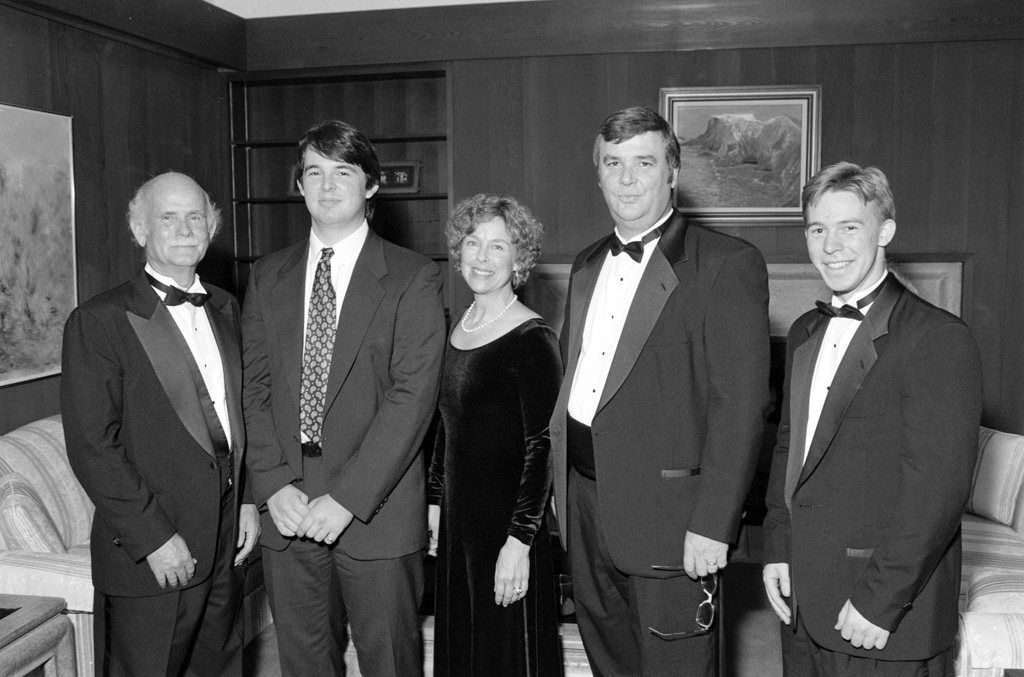
“It took my breath away that a family would feel so compelled as to endow a chair in my name because of the effect I had on their son,” Pepper says. “It was the highlight of my teaching career.”
Beyond the classroom
Pepper’s commitment to creative work combining theory and practice extended beyond the confines of the campus. In response to the October 1989 Loma Prieta earthquake, which destroyed the heart of downtown Santa Cruz, he restructured his forthcoming winter course to include a public lecture series. The Idea of Planning: Thoughts on the Rebuilding of Downtown Santa Cruz included 10 weekly lectures at the Louden Nelson Community Center and broadcast on local access television. The series brought national and regional urban planning experts to Santa Cruz to help shape the city’s recovery as well as share their thoughts and expertise in planning with the students in the classroom.
The series helped inform Vision Santa Cruz, a public-private advisory body of which Pepper was a member, created specifically to oversee the planning and rebuilding of downtown Santa Cruz. The professionals hired to prepare the recovery plan commented on the high degree of public knowledge exhibited in subsequent community participation events. It also exemplified Pepper’s belief that universities should produce informed action, not just abstract knowledge. In 1990, the lecture series was awarded a gold medal for Best Community Education and Community Relations Project by the National Council for Advancement and Support of Education.
Throughout his academic career, Pepper maintained professional practice primarily with Mintier & Associates, a widely respected planning firm based in Sacramento. Here, he brought his expertise in environmental planning and design to a wide range of public and private sector projects, including over 20 local government General Plans. His significant early contributions to the fledgling field of environmental impact assessment led to assessments of several projects for the University of California. This real-world experience enriched his teaching and kept his creative work grounded in practical application. He invariably recruited a significant number of students to assist in this professional work.
A living legacy
Looking back on more than half a century of connection with UC Santa Cruz, Pepper seeks to honor the faculty who created and built environmental studies at UC Santa Cruz.
“I want to ensure that the founding faculty and academic administration are recognized for their crucial pioneering contributions to the establishment of Environmental Studies,” Pepper emphasizes.
In recent months, he’s helped form the Environmental Studies Alumni Council to amplify the department’s success and maintain connections with the generations of graduates who have gone on to careers in a number of fields including conservation, planning, law, education, and environmental advocacy. This multi-generational advisory body will help facilitate relationships between alumni and the academic program, as well as within the program alumni. He envisions the council assisting with guest lectures, internships, and recruitment, as well as offering financial support through sponsorships, scholarships, and other gifts.
Pepper also reflects on the field he helped create, one that is now heavily focused on the issue of global climate change. He recalls, “When I arrived at UC Santa Cruz in 1972, Assistant Professor of Geography Bill Brown was teaching an introductory course on climate change, which drew only modest enrollments at that time. Today, 50 years on, public concern has grown to the point where two-thirds of the U.S. population are worried about global warming, with nearly half considering it a serious threat to themselves or their way of life within their lifetime. Moreover, nations and their citizens throughout the world are increasingly demanding action.”
“We must continue championing the kind of education that is the cornerstone of environmental studies,” Pepper says. “We must overturn the efforts of those who deny science, and instead, translate scientific knowledge into the creation of an informed public with the capacity to take action necessary to effectively address this pressing existential issue. A strong interdisciplinary collaboration at UC Santa Cruz could be integral to this task. It is our legacy, indeed our moral imperative, that we succeed.”