Campus News
Erica Simpkins is honored for quietly transforming student systems
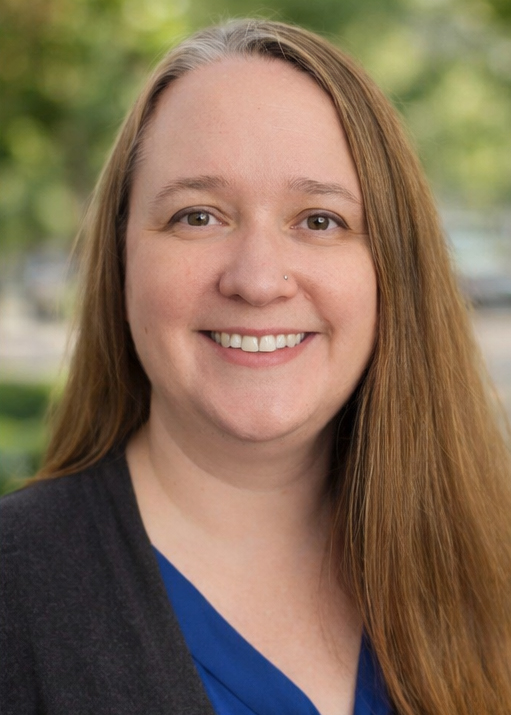
Erica Simpkins has been selected as this year’s Outstanding Staff Award recipient, recognizing her dedication to transforming how students and staff navigate essential academic and administrative processes.
For most UC Santa Cruz students, the systems that support their academic lives simply work. They enroll in classes, accept financial aid, track degree progress, and complete essential requests without needing to think much about what happens behind the scenes. That quiet reliability is by design.
Erica Simpkins has been selected as this year’s Outstanding Staff Award recipient, recognizing her dedication to transforming how students and staff navigate essential academic processes. The award is presented through a partnership between the Staff Advisory Board, the UCSC Alumni Association, and the Chancellor’s Office.
“I’m humbled and honored by the recognition, and grateful to work alongside so many dedicated and collaborative colleagues across campus that make my work rewarding” Simpkins said.
A role built on translation and perspective
Simpkins has spent 22 years at UC Santa Cruz, including time in Undergraduate Admissions, the Graduate Division, and, since 2016, Information Technology Services (ITS). As a business analyst supporting student systems, she works at the intersection of technology and campus operations, translating complex needs into systems that are intuitive, accurate, and responsive.
“It’s almost like a technical translation role,” she said. “I help gather requirements for improvements to the system or entire new business processes and work with the technical team to implement them, test them, and help with the transition of those changes into operations.”
That translation requires constant movement between detail and big picture.
“I’m really good at zooming into the details,” she said, “and then zooming all the way back out to see, from a 30,000-foot level, how this little change is going to impact a student or an office and whether it’s still on the right trajectory.”
Designing systems for people
What makes Simpkins particularly effective in this role is a background that many do not expect. She earned her bachelor’s degree in journalism with an emphasis in public relations from Cal Poly Humboldt, followed by a master’s degree in publication design from the University of Baltimore.
“For public relations, you’re absolutely taught to write for your audience,” she said. “And I design for my audience.”
That means thinking carefully about how users move through a system, what information they need at each step, and where confusion or frustration is likely to arise. It also means recognizing that processes rarely affect only one office.
“Sometimes units work within their own silos,” Simpkins said. “They may not see how the way they do their work is impacting another unit. Because I work with so many of them, I can see where there’s room for improvement.”
“I’ve worked with Erica for nearly twenty years, and she has never ceased to amaze me,” said Paul Bauman, enterprise applications manager in ITS’s Student Systems unit.
“Early in my career as a developer, I was already struck by her fluency with student information systems, her skill in translating between technical and non-technical worlds, and her ability to build shared understanding and consensus across multiple business offices. Over the course of years of collaboration with campus partners and leading increasingly complex projects, she has deepened her knowledge of campus operations and interdependencies, brought clarity to complexity, and developed an uncommonly versatile technical toolkit to improve our services.”
Transforming campus processes
Much of Simpkins’s work flows through MyUCSC, the system students and staff rely on to manage essential academic tasks. For students, it is the self-service portal where they enroll in classes, accept financial aid, pay bills, and review degree progress. For staff, it supports admissions decisions, curriculum management, advising workflows, and other core academic and administrative functions. Designing that experience to be intuitive and reliable is central to her approach.
“We know that people don’t go to MyUCSC for fun. It’s not Facebook,” Simpkins said. “So, we really want to make the business that they need to do easy to find.”
One of the most significant ways Simpkins has improved campus systems is through redesigning complex, multi-step processes to be clearer, more accurate, and easier to navigate. A major part of that work has involved expanding the use of electronic forms that do far more than replace paper.
“When I say forms, it doesn’t sound like much,” she said, “but it’s so much more than a form.”
Because the system already knows key information about a student, these forms can dynamically ask the right questions, present accurate options, route requests automatically, and, in some cases, take action in the system once approvals are complete.
“The accuracy is one of the biggest wins,” Simpkins said. “We’re not relying on students to remember course numbers or details we already have. They can select from correct information.”
The same approach has shaped work to improve how students understand their degree progress and graduation requirements. By making degree information more accessible and up to date, students are better able to make informed decisions about the classes they take and the paths they pursue.
Simpkin’s work reflects the qualities recognized through the Outstanding Staff Award, which is presented annually through a partnership between the Staff Advisory Board (SAB), the UCSC Alumni Association, and the Chancellor’s Office. The award honors staff members who go above and beyond in service to students, staff, and faculty; foster the Principles of Community; and contribute to an inclusive, respectful, and supportive campus environment.
A career grounded in community
“I work with a big community of analysts across campus, and a really large advising community,” Erica said. “The people that I work with are a huge part of the reason that I’ve stayed.”
After more than two decades, she continues to find meaning in collaboration, problem-solving, and making everyday experiences a little easier for students, advisors, and staff across campus.