Arts & Culture
Uncovering the troubling legacy of racism in fairy tales
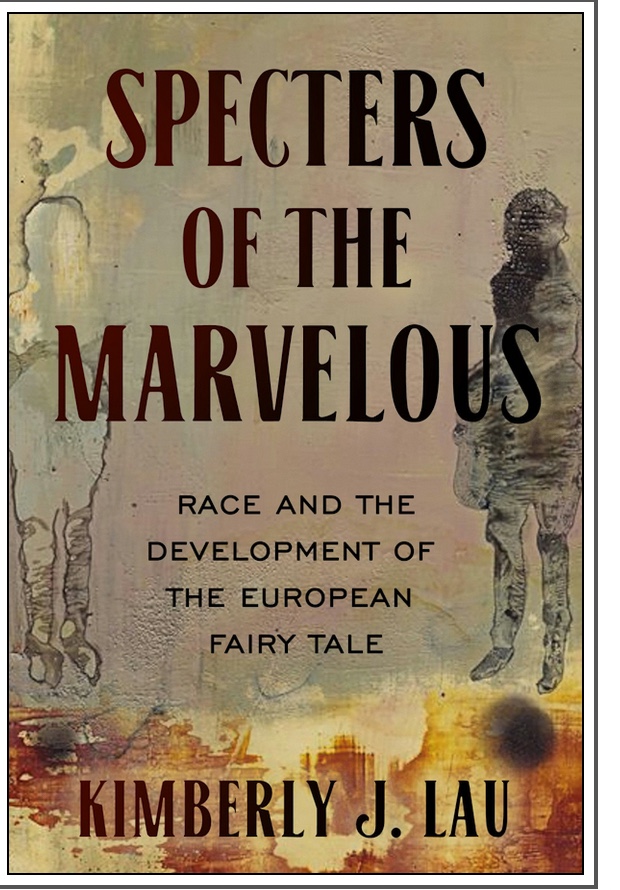
In Specters of the Marvelous: Race And The Development Of The European Fairy Tale, Literature Professor Kimberly Lau reveals how “innocent” stories often encoded virulent prejudice.
Long before Disney turned Beauty and the Beast and The Little Mermaid into global blockbusters, European writers, editors, and folklorists captivated readers with their fairy-tale collections as early as the 17th century.
Readers entered a world of enchanted castles, ogres and princes. These stories dazzled audiences with transformations, quests, and the triumph of virtue over evil.
Yet beneath the magic, these tales carried the imprint of racism and racialized thinking.
In Specters of the Marvelous: Race And The Development Of The European Fairy Tale, Literature Professor Kimberly Lau explores these currents, revealing how “innocent” stories often encoded virulent prejudice—with plotlines featuring wicked, animalized Black characters, negative Jewish stereotypes, and the persistent portrayal of non-European peoples as exotic curiosities at best and beasts at worst.
Organized into four historic sections, the book, which won the 2025 Chicago Folklore Prize and the Best Book Award from the Brothers Grimm Society of North America, delves into the fairy-tale collections of Giambattista Basile in Italy, Madame d’Aulnoy in France, Jacob and Wilhelm Grimm in Germany, and Andrew Lang in England, among others.
In a laudatory review in Hyperallergic, writer Tomar Boyadjian highlights the originality of Lau’s argument. “Scholarship around fairytales has traditionally centered whiteness,” Boyadjian said. “This book breaks with that by foregrounding people of color. It shows us very clearly that from the beginning, the worlds of these fairy tales were always centered around race.”
In doing so, “this book opens our eyes to the largely unseen but crucial aspect of race in familiar fables, folk tales, and fantasies that have unknowingly influenced us for centuries,” Boyadjian writes.

Encoded racialized worldviews in fairy tales
“In Specters of the Marvelous, I argue not just that race is a theme, but that racial thinking was formative in the development of the fairy-tale genre across 200-plus years,” said Lau, who teaches a popular summer course called Introduction to the Fairy Tale with enrollments of 350 students per class. She is also the provost of John R. Lewis College and College Nine.
Though some scholars debate what counts as a fairy tale, Lau uses the popular definition: the canonical European tales, often with rags-to-riches plots, intrigues about marrying a princess, or embarking on a quest.
Even the earliest of those tales use ethnic stereotypes.
“In the Basile collection (early 17th century), female Black slave characters are portrayed as conniving—the ‘false brides’ who steal princes from the rightful brides,” Lau said. “There are two early variants of the Beauty and the Beast stories in which the character we later recognize as the ‘beast’ is actually a handsome Black slave who turns white at night.”
One point Lau makes is that the explicit racialization of these characters becomes more hidden —and metaphorical—over time.
While the “false bride’’ characters were initially portrayed as Black, the Brothers Grimm blur these evil figures’ ethnic backgrounds, instead describing them as “lazy and impudent’’—popular German stereotypes of Africans at the time.
Often, the collections were billed as “authentic’’ stories taken straight from the mouths of humble villagers or “exotic’’ legends from far-off lands, yet they bore the unmistakable imprint of their European collectors and editors.
“In the 19th century—especially with Andrew Lang’s Colored Fairy Books—European scholars suggested that the fairy tale is universal,” Lau said. “They subsumed many other narrative genres under the umbrella term fairy tale.”
In doing so, these editors and writers displayed the imprint of imperialism by assimilating stories and compressing them to fit a European mindset, Lau argues.
Lang, for instance, used tales gathered by missionaries and early anthropologists from Indigenous peoples in Australia, parts of Africa, and North America. But his wife, Nora Lang, edited them explicitly so white people would like them and to perpetuate ideas of white British racial superiority—bolstering the empire as it became increasingly precarious.
The Brothers Grimm also made editorial changes that rendered some tales explicitly antisemitic. One example is the notorious story “The Jew in the Thornbush,” in which a Jewish character is portrayed as greedy and conniving and ultimately subjected to brutal violence before being executed.
“But earlier versions do not have a Jewish character as the villain,” Lau said. “The Grimms changed that tale over subsequent editions to make the Jewish character more and more villainous.’
Lau rejects the arguments of modern-day Grimms apologists who insist the brothers were simply “products of their time”: “They were more actively engaged with antisemitism than just being ‘products of their moment,” she said.
The Disney factor
Unsurprisingly, Lau has also been paying close attention to Disney’s film adaptations of fairy tales over the years and the controversies that erupt whenever the company casts a non-white actor in a leading role. Though recent productions have changed course, the early Disney fairy-tale films largely perpetuated the white world of fairy tale narratives, Lau said.
“For many people, the Disney animated versions are their originals—their first exposure—and the visuals are so evocative,” Lau said. “I open Specters of the Marvelous by saying: ‘Imagine yourself in a fairy-tale world.’ Many people, when they do this, see Disney imagery, especially from mid-century onward, or even earlier—Snow White came out in the 1930s.”
Those classic visuals are very white, Lau says. Later, during what Lau describes as the first ‘canon wars,’ Disney began broadening representation through films like Aladdin (1992), Mulan (1998), and The Princess and the Frog (2009). However, the first live-action remakes—including Beauty and the Beast (2017), starring Emma Watson and Dan Stevens—reproduced the whiteness of the mid-century classics even as Disney was diversifying its animated fairy tale-adjacent films.
When Disney later embraced more diverse casting in their live action versions, such as choosing Halle Bailey, a Black actress, to play Ariel in The Little Mermaid, controversy erupted.
“They are just trying to hit as many markets as possible,” Lau said, “but it is not possible to make everyone happy, right? In some ways it is great—you read stories of little Black girls saying, ‘Oh my, I can be a mermaid,’ and then there is all this awful backlash. So it brings all the ugliest discourse to the surface. Disney kind of can’t win, right? They are either ‘too white’ or ‘too woke…’”
Lau says this discourse ultimately reinforces her point.
“In the cultural imagination, the ‘original’ is white,” she said. “People get upset about ‘wokeness,’ when most original tales do not name race at all. Basile names race with Black slaves, but after that everything becomes metaphorical. The depth of ingrained whiteness explains why people insist certain characters can’t be portrayed by non-white actors.
“There are critics who talk about appropriation regarding Moana (2016) but at the same time, it is exciting to see the idea of animating another culture,” Lau continues. “Disney is in a tough bind. This is where it overlaps with my work a little bit: Disney brought to visual life what everyone was already imagining about the fairy tale—the naturalized white world. They made it vivid for people and locked it in, especially after the home video market. The dangerous thing is that people begin to believe that this version is the authentic version.”