Student Experience
Students in summer field school unearth artifacts and a new passion for archaeology
Interns funded by a UC-HBCU grant learned key professional skills and found their calling while excavating an archaeological site in West Africa

In a rural village in Benin, emerging archeologists spent the summer uncovering the history of Saclo Village, an archaeological site managed by the University of California, Santa Cruz, and the Université d’Abomey-Calavi. The village was once part of the rural outskirts of the powerful West African kingdom of Dahomey, known for its military might and central role in the Transatlantic Slave Trade. The research team’s goal was to investigate the long-term development, transformation, and resilience of rural communities on the Abomey Plateau.
Over the course of six weeks, students from UC Santa Cruz and Howard University worked alongside faculty mentors and peers from Benin on a careful excavation, participating in everything from digging through layers of soil to hauling and screening dirt and washing artifacts with toothbrushes.
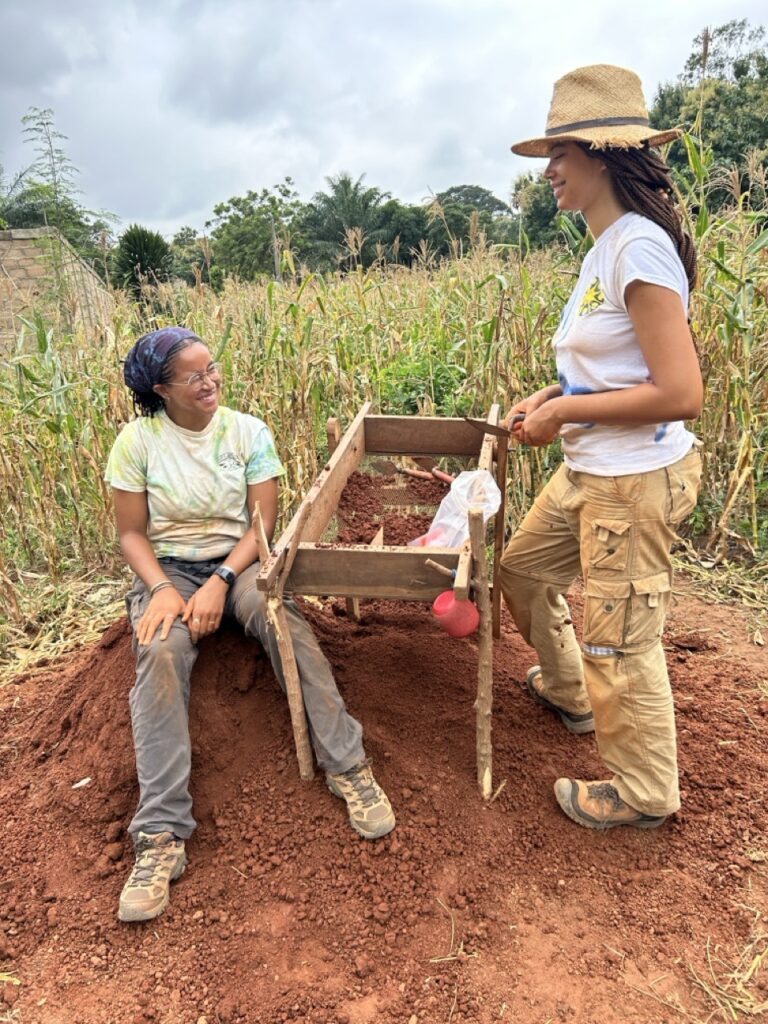
“You’re doing long hours of hard work in the field all day, but there’s a joy to the work that I find captivating,” said recent UC Santa Cruz graduate Gaëlle Ames, who participated in the field school both this summer and a year prior.
Over the course of the field school, students immersed themselves in the local community and participated in a community archaeology day led by students from Benin that offered mini-lectures and tours of the archaeological site to answer questions and celebrate history with local people. Students also benefited from the cultural and intellectual exchange of working closely with one another.
“Before these field experiences, I was not convinced at all that archaeology was for me, because I didn’t think there was any community engagement to it, and I saw it as only a destructive process,” Ames said. “Field school has completely changed my mind, and I feel like I’ve found something that I’m very good at.”
Ames isn’t alone in that sentiment. Field experience has proved pivotal for helping students discover a passion for archaeology, especially among those from groups that have historically been excluded from the discipline. The field season for the program is bookended by sessions on campus at UC Santa Cruz, where UCSC and Howard University students take intensive archaeology classes and then analyze recovered artifacts. Alumni say the program has helped them find their calling, and many have gone on to further their education at institutions such as UCLA, UC Berkeley, Stanford, and Harvard.
This summer’s field school was the final year funded by a grant from the UC-HBCU Initiative. The program has also received a past grant from the UC Santa Cruz Growing Our Own initiative. Anthropology Professor J. Cameron Monroe, who leads the program, hopes to secure new funding to continue this work and the growth opportunities it provides for students.
“These students are learning very abstract concepts in their classes about the layers of an archaeology site and how artifacts change over time, but when you get them into the field, there’s always a moment where you see it all start to click for them, and the questions they ask start changing from really basic ones to ones that show you they’re really thinking like archaeologists,” he says. “They can suddenly look at an archaeological unit and start making professional decisions, and that always excites me the most.”
Illuminating histories of rural resilience
Monroe, who chairs UC Santa Cruz’s Anthropology Department and formerly directed the campus’s Archaeological Research Center, has been working in Benin since the ‘90s and first identified the Saclo Village archaeological site in 2013 as part of his work on the regional Cana Archaeological Survey. Archaeologists have since been reconstructing the spatial organization of life in the village, providing insight into social and occupational structures. The site holds much more history than once thought, with items dating back to the 1st millenium AD and continuing through the 19th century.
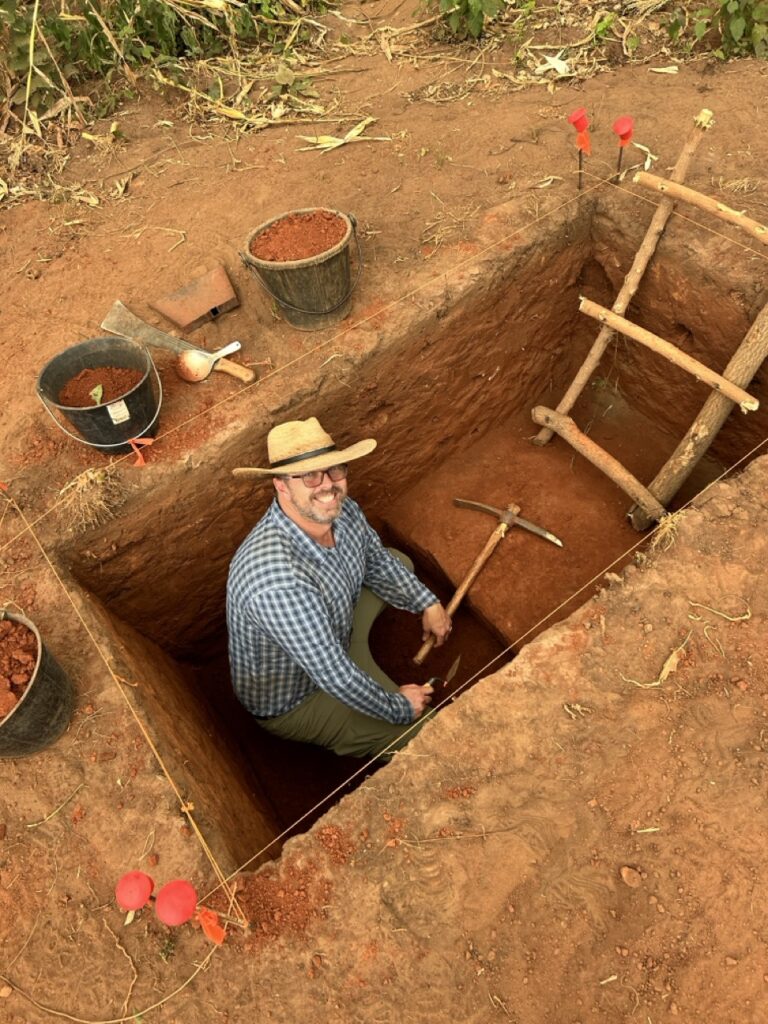
Findings from Saclo Village are particularly important because archaeological evidence from the site seems to demonstrate an unusual resilience following the rise of the Kingdom of Dahomey, which came to power in the 17th century and ushered in a series of societal upheavals in most communities throughout the region.
“One of the first things the Kingdom of Dahomey did as they came to power in new regions was move people around, break local kin groups, and bring people in from neighboring villages to make new villages,” he explained. “They disrupted the local social fabric in order to establish themselves as a political force. Saclo doesn’t seem to have undergone that disruption, so what is it that allowed them to maintain community integrity?”
One theory suggests that the production of weapons, including iron swords and machetes, enabled the village to form an alliance with the state in exchange for independence and peace. The name Saclo itself means “good friend,” which may suggest how the Kingdom of Dahomey thought of the village and its role in the empire’s economic and military development.
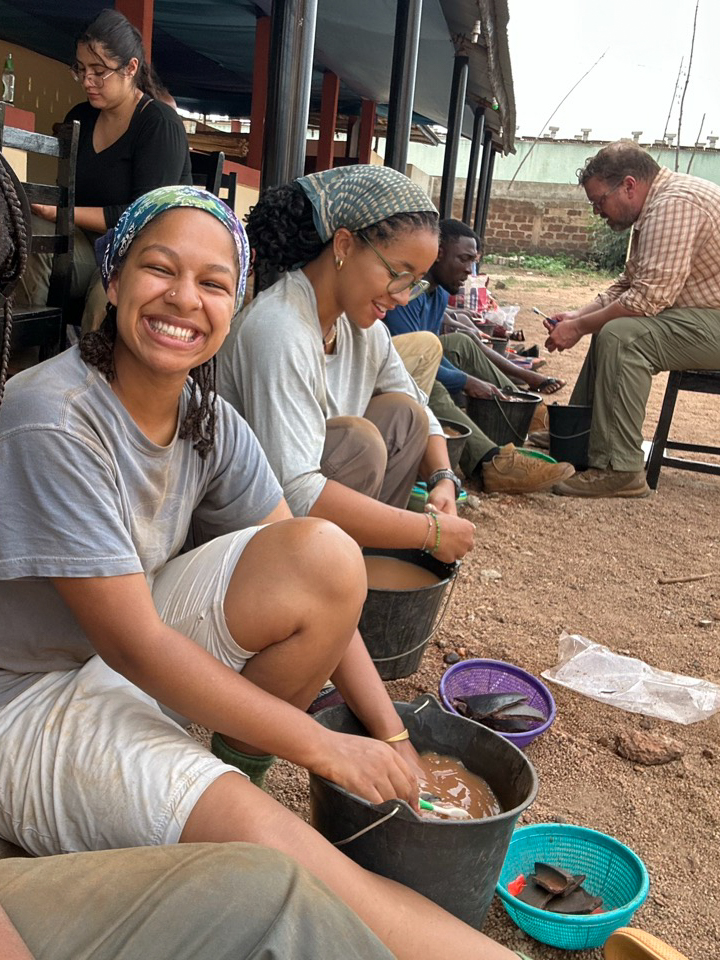
Sadiya Quetti-Goodson, an Afro-American studies major from Howard University who participated in the summer field school for a second time this year, was leading a student excavation team when the group made an exciting find that seems to support this theory.
“We were sifting through the soil and someone passed this object to me that had a certain shape like it might be part of a weapon, so we bagged it,” she recalled. “Then, later, we found the other half and connected the two halves to realize that it was an iron spear. There was a lot of interesting iron production evidence and also charcoal, which is exciting for archaeobotanists to see what people were eating.”
Ames led the group’s specialized archaeobotany student team this past summer and was similarly thrilled with the finds from the season.
“I now have access to all this amazing material, like grind stones, pottery shards, charred botanic materials, and I want to use it to analyze food ways and medicinal practices,” she said. “I’ll be able to use data from these excavations for my dissertation and applying to graduate schools. So there are really direct applications from this field experience to further my career and get my doctorate.”
A life-changing learning experience
Professor Monroe was pleased with the discoveries students made this field season, both at the excavation site and within themselves. He says the partnership with Howard University originally evolved because few Historically Black Colleges and Universities (HBCUs) have anthropology departments, and none have archaeology programs. Students at these universities would not usually have exposure to the possibility of archaeology careers, yet they bring many complementary academic strengths that can constructively inform the discipline.
“The Howard University students we’ve worked with have volumes of experience—lived and academic—in Africana studies, and there are many interesting insights that emerge from that perspective,” he explained. “Meanwhile, our UC Santa Cruz students have had tons of archaeology methods courses, so the conversations that happen between students on site, from a methodical and theoretical perspective, are always really interesting. I think the students learned a lot from one another.”
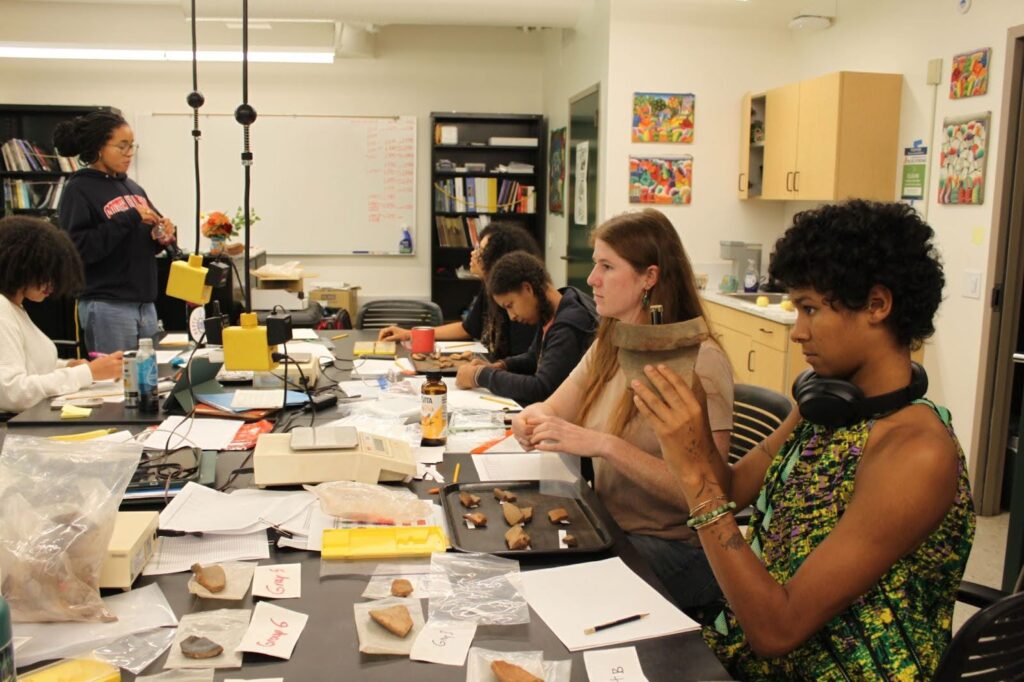
Quetti-Goodson, who approaches archaeology from an Africana framework herself, says this perspective fuels her desire to do ethical, community-engaged work and to pair oral history with the archaeological record in order to generate new insights through collaboration with community members. As a result of her field experiences, she now plans to pursue a Ph.D. in anthropology, with a focus on diasporic studies and archaeology. Her goal is to fill gaps in historical narratives and share this knowledge through creative means.
“I had never really considered it to be attainable for myself to have a career in anthropology, but this experience changed that for me,” she said. “Archaeology presents an opportunity to ask questions about the aspects of the past that have been historically overlooked.”
Ames added that specifically contributing to archaeology that shows how the Transatlantic Slave Trade came about and affected communities in Africa was deeply meaningful to her on a personal level.
“For many of us who are members of the African Diaspora, learning about the heritage of our ancestors and why this trauma happened offers a level of understanding that is deeply healing for us and for our family members who get to hear about our experiences,” she said.
Your support for UC Santa Cruz’s archaeology field programs can remove financial barriers to ensure more students have access to these life-changing educational opportunities.
Learn more about how we’re supporting Student Success through our Inspiring Change fundraising campaign.