Campus News
PhD history student Linda Ulbrich helps bring Santa Cruz’s past to life in the city’s expanded online history page
Santa Cruz’s official government website now offers a brisk virtual tour through influential, intriguing, tragic and overlooked moments from the city’s past. The updated and lavishly illustrated Santa Cruz history timeline is the handiwork of history Ph.D. candidate Linda Ulbrich, whose work encourages further exploration.
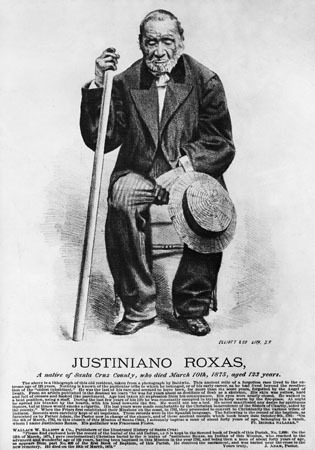
Yrachis, a Chipuctac man who was famously misidentified as Justiniano Roxas, an Indigenous man who lived at Mission Santa Cruz.
Santa Cruz’s official government website now offers a brisk virtual tour through influential, intriguing, tragic and overlooked moments from the city’s past.
The updated and lavishly illustrated Santa Cruz history timeline is the handiwork of history Ph.D. candidate Linda Ulbrich, who begins this exploration of the city’s past with a look into the lives of the Quiroste, Cotoni, Uypi, Sayanta, Chaloctaca, and Aptos tribes who settled in the region.
This year, Ulbrich received The Humanities Institute’s Graduate Summer Public Fellowship with the City of Santa Cruz, through which she broadened the City History page with information about local tribal communities and significant figures such as London Nelson, who was born into slavery, later gained his freedom, and ultimately settled in Santa Cruz.
The result is a more inclusive narrative of Santa Cruz, complete with curated resources to encourage further exploration, THI’s research programs and communications Director Saskia Nauenberg Dunkell said.
“City of Santa Cruz Communications Manager Erika Smart reached out to us last year about working with a student to update and enrich the City History page,” Dunkell explained. “We were really happy to support Erika and her colleagues with this project, recruiting a skilled graduate researcher and suggesting campus and community partners Linda could connect with as she developed the page.”
The timeline Ulbrich created is grounded in archival photographs and includes short descriptions of the people, places, and events that made Santa Cruz the place it is today, along with resources for learning more about and getting involved with the city’s past, present, and future.
Ulbrich noted that the site will continue to evolve over time, with updates and new additions to make the timeline more representative of the city’s population.
Visitors may be surprised by some of the darker corners of Santa Cruz history on the site, including the tragic lynching of Francisco Arias and Jose Chamales Spanish speakers of Mexican and Indigenous heritage—who were arrested and charged with murder based on circumstantial evidence. The site also discusses the 1812 assassination of Padre Andrés Quintana in retaliation for his mistreatment of Indigenous people.
Other highlights include the history of Evergreen Cemetery, established in 1858 and the burial grounds for many of those who helped build Santa Cruz, including early Black pioneers and Chinese immigrants; the development of the expansive Cowell Ranch, parts of which became UC Santa Cruz; and the story of the three Hawaiian princes who brought surfing to the U.S. mainland in Santa Cruz in 1885.
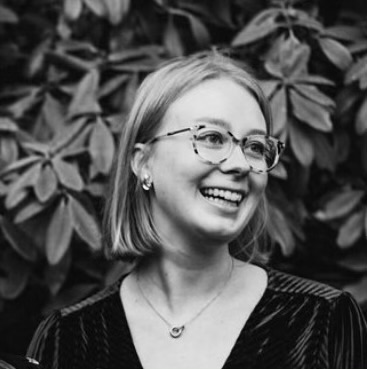
As she researched and developed the page, Ulbrich collaborated closely with local scholars and cultural experts, including Assistant Professor of the Arts Martin Rizzo-Martinez, UC Santa Cruz community archivist Rebecca Hernandez, George Ow Jr., and staff at the Santa Cruz Museum of Art and History.
Discussions with Rizzo-Martinez encouraged her to explore the broader context of Indigenous survival and resistance in the 19th century, prompting her to include information about an Ohlone burial site uncovered during construction.
She was particularly interested in presenting Indigenous history in ways that foreground responses to the mission system rather than centering the missions themselves.
Guidance from George Ow Jr. helped her trace the complex history of the city’s various Chinatowns, which emerged beginning in the 1860s after Chinese laborers stayed in the area to work as barrelmakers for the California Powder Works.
The page documents the many challenges Chinese American residents faced, including fires, a devastating flood in 1955, legal discrimination, and the threat of mob violence.
Ulbrich’s research for the website is a marked departure from her doctoral work on nurses who treated wounded soldiers during World War I, but she viewed this shift as an advantage—approaching Santa Cruz history with a fresh perspective and without preconceived assumptions.
She also consulted her friend and fellow historian Meleia Simon-Reynolds, a UC Santa Cruz postdoctoral fellow who has extensive knowledge of Santa Cruz’s past.
Ulbrich takes well-deserved pride in the finished website, which pairs vivid storytelling with striking archival images to guide visitors through the city’s complex and multifaceted history.
“It’s been really exciting to know that something I created will always be a part of Santa Cruz,” Ulbrich said.