Campus News
Nine major wins worth celebrating for 2025
From amazing research discoveries to high-impact new education and fundraising initiatives, UC Santa Cruz created significant positive change, despite headwinds

Photo: Kasey Morales
Let’s face it: 2025 was a challenging year. Science and education were under attack from a federal government that has cancelled, suspended, or delayed billions of dollars in funding and specifically targeted the University of California. Those efforts have taken an undeniable toll. But looking back over the past year, it’s clear to see how the resilience and resolve of our faculty, staff, students, and supporters has shone through.
We made major contributions in research and culture, launched new academic programs and facilities that meet the emerging needs of our students and society, and kicked off new fundraising initiatives to expand our public impact across our region and around the world. These accomplishments are well worth taking a moment to celebrate. In doing so, we remind ourselves and the world what we’re capable of and what we stand for.
At UC Santa Cruz, we believe in the importance of discovery, whether in the lab, the classroom, the community, or within ourselves. We’re committed to producing and applying knowledge in ways that improve lives and help to make the world a better place. If you share these values, we invite you to celebrate with us. And please consider lending us your support in the year ahead.
Top UC Santa Cruz accomplishments of the year
Developing new tools for archaeology, forensics, and conservation
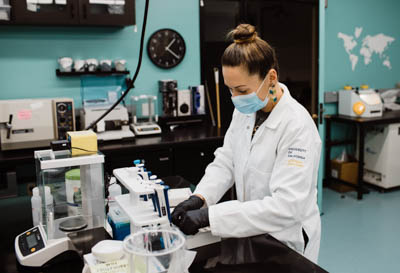
A team of researchers led by Anthropology Professor Vicky Oelze used computer modeling techniques and more than 2,000 environmental samples to create the first strontium isotope map for all of Sub-Saharan Africa, revealing how chemical signatures that function like unique “geologic fingerprints” for the region leave their traces across the landscape and in all life that arises from it. Values from the map can now be matched against those observed in artifacts and plant, animal, and human remains to identify their most likely regions of origin within Africa, offering new insights ranging from the history of the transatlantic slave trade to modern wildlife trafficking and human migration patterns.
Protecting habitats and leading on organic agriculture
UC Santa Cruz and The Conservation Fund collaborated to conserve more than 200 acres of previously privately held land adjacent to the residential campus. These lands, which contain environmentally sensitive habitat, will be stewarded by the UC Santa Cruz Campus Natural Reserves to ensure long-term protection and enable research, field internships, outdoor experiential learning, and wildlife conservation. UC Santa Cruz and The Conservation Fund are also working to secure an additional 200-plus acres of private farmland adjacent to the Coastal Science Campus, which would help expand UCSC’s national leadership in organic agriculture research and education.
Advancing justice through film
UC Santa Cruz’s Film and Digital Media Department opened a new state-of-the-art lab at the Westside Research Park to support graduate students in the M.F.A. in Social Documentation and the Ph.D. in Film and Digital Media. Both programs prepare emerging film and digital media creators to thoughtfully tackle social and political issues, with an emphasis on equity and ethics. The new lab supports this work through a classroom, a high-end color grading suite, an installation gallery, and a professional audio mixing and recording studio. The design of the space prioritizes accessibility, collaboration opportunities, and hands-on experience with industry-standard production tools and workflows.
Generating ocean health insights, with help from seals
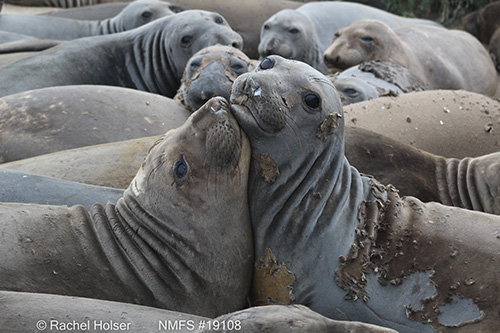
Marine biologist Roxanne Beltran led a research team that included 14 undergraduates in discovering how California’s elephant seals can essentially act as “smart sensors” for monitoring fish populations in the ocean’s eerily dim and poorly understood “twilight zone.” This layer of the ocean holds the majority of the planet’s fish biomass. Ships and floating buoys only allow measurements of a tiny fraction of the ocean, while satellites can’t measure below the surface where fish occur. But elephant seals regularly feed in the twilight zone, so tagged seals whose foraging success is tracked can provide a previously impossible way to measure the availability of fish populations across a vast ocean.
Training the Central Coast’s next generation of doctors

UC Santa Cruz and UC Davis are partnering to launch a new program called PRIME Central Coast that will train future physicians deeply committed to the health and well-being of Central Coast communities. UC Santa Cruz students interested in PRIME Central Coast will apply through the UC Davis medical school in Sacramento. After admission, they will frequently return to the Central Coast for their clinical rotations, under the supervision of physicians at area hospitals and clinics. The program aims to enroll an inaugural cohort in 2027, cultivating a physician workforce that is from the Central Coast, trained in the region, and stays local, addressing health disparities in the region.
Honoring Indigenous languages

The Humanities Institute at UC Santa Cruz has been developing a community-engaged research project that explores the hundreds of languages spoken by Indigenous people from Oaxaca, Mexico, including the underlying language science, the role these languages play in identity, and how they have contributed to sustaining a vibrant immigrant culture along California’s Central Coast. Graduate and undergraduate fellows are working to develop an exhibition at the Santa Cruz Museum of Art and History that will combine academic scholarship with the voices of local transnational Indigenous activists to shed light on the complex dynamics of language, identity, and power in the modern world.
Revealing the ‘factory settings’ in our brains
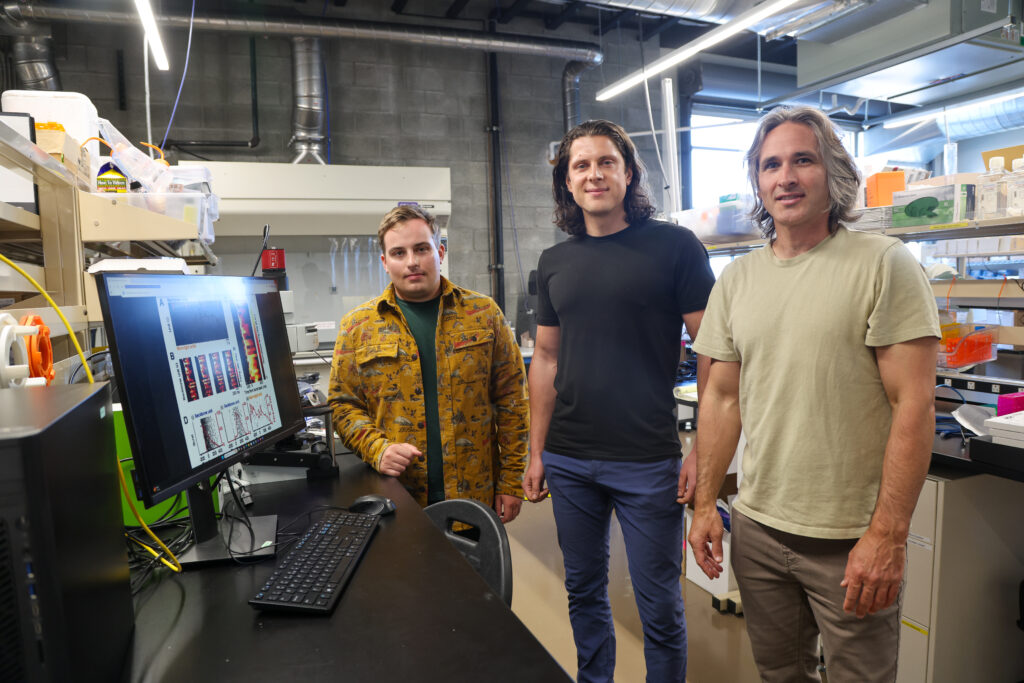
Researchers at the University of California, Santa Cruz, are using tiny models of human brain tissue, called organoids, to study the earliest moments of electrical activity in the brain. They recently found that the earliest firings of the brain occur in structured patterns without any external experiences, suggesting that the human brain is preconfigured with instructions about how to navigate and interact with the world. In improving our fundamental understanding of human brain development, these findings can help researchers better understand neurodevelopmental disorders and pinpoint the impact of toxins like pesticides and microplastics in the developing brain.
Blurring the lines between past, present, and future

In October, acclaimed artist, filmmaker, and Distinguished Professor of the Arts and History of Consciousness Isaac Julien launched an innovative new 10-screen film installation that unfolds within the historic rooms of Palazzo Te, a renaissance-era Italian palace. The installation is called All That Changes You. Metamorphosis, and it features internationally celebrated actors who appear as prophetic figures, seemingly conjured from frescoes, slipping fluidly across time and space. Julien’s work is already receiving rave reviews for how it “bridges Renaissance myth with contemporary visions of ecology, identity, and technology” to “speak across centuries about the possibility of co-existence in a damaged world.”
Inspiring change and funding a bright future
UC Santa Cruz announced a $750 million comprehensive fundraising campaign called Inspiring Change: The Campaign for UC Santa Cruz. It’s the largest fundraising campaign in the campus’s history and aims to accelerate UC Santa Cruz’s positive impact through transformative education, high impact research, and service that benefits the public. The campaign’s themes reinforce historical strengths of the campus, including student success, climate and environment, health and well-being, breakthrough research, and creativity and expression. In addition to supporting university-wide initiatives, the campaign will generate new resources for all five academic divisions.