Climate & Sustainability
New analysis of home sales makes economic case for resilient coastal forests
Houses in Florida nearest mangroves saw much smaller price declines after major hurricanes, Zillow sales data show
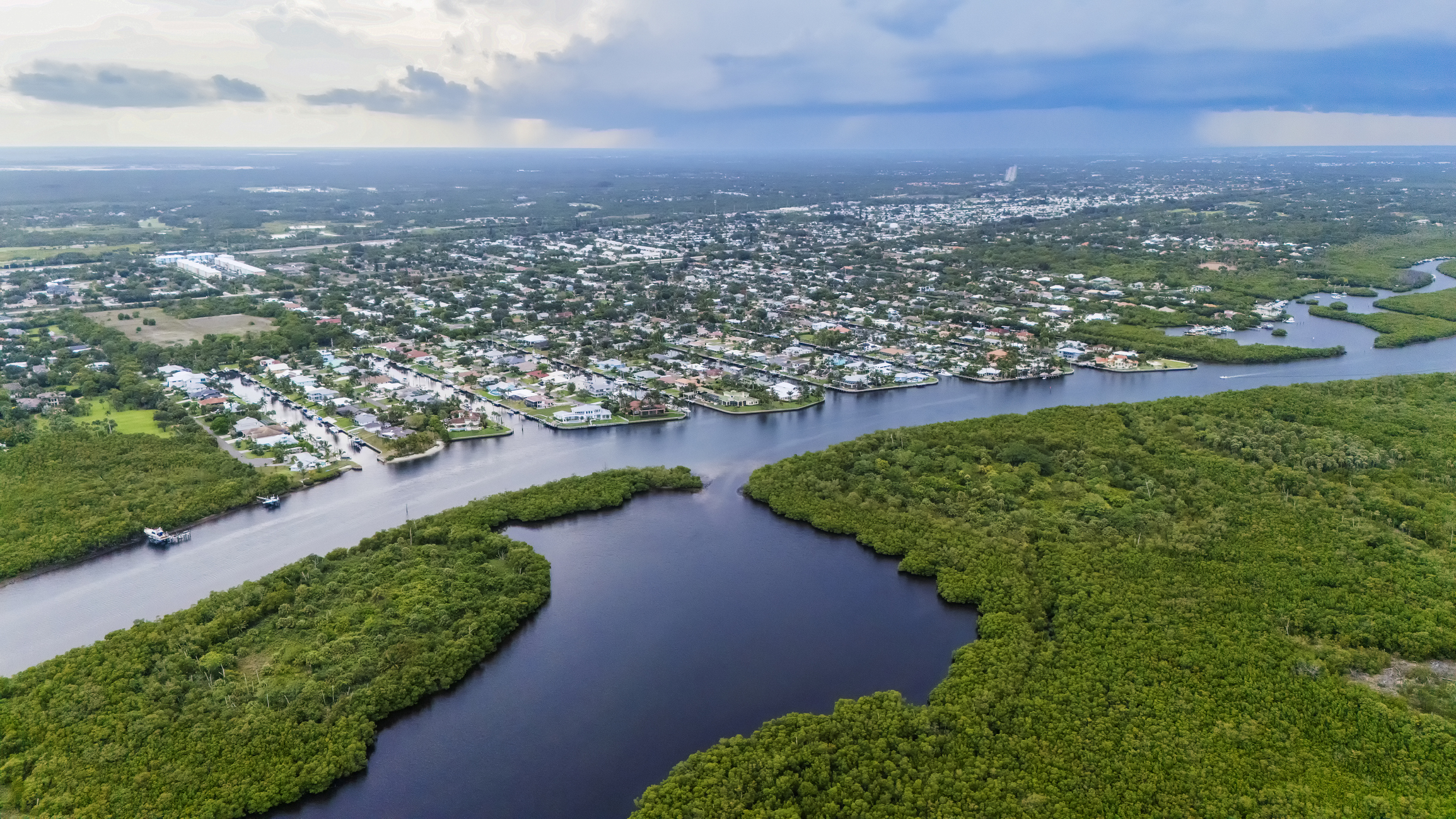
Mangrove forests can protect waterfront homes from storm surges and, as this new study found, big price dips when the homes are sold in the wake of major hurricanes. (Source: Getty Images)
Press Contact
Key takeaways
- Proximity to mangroves translated into substantial financial protection for homeowners in coastal Florida, averaging $20,000 to $40,000 in preserved value per $1 million home, and reaching as much as $60,000 in some cases.
- The study is the first to use real housing market data to directly measure how buyers price the storm-protection value of mangroves, showing that consumers actively perceive and pay for nature-based coastal defenses.
- Beyond individual homeowners, the findings demonstrate strong financial incentives for insurers, developers, and investors to support mangrove protection and restoration, while reinforcing mangroves as a critical climate-adaptation strategy with broad economic and ecological benefits.
An interdisciplinary team of researchers at the University of California, Santa Cruz, has published a new study using transaction data provided by Zillow to show that homebuyers price in the natural-defense value of mangrove after heavy storm seasons.
The new research, published in the journal Review of Finance, finds that homes in coastal Florida saw smaller price declines after storms when they were near mangrove forests versus homes that were farther from them.
Overall, the team found that the magnitude of home-value declines following major hurricanes that struck Florida between 2004 and 2017 was nearly twice as large in areas that were further away from mangroves. Their analysis showed that, per $1 million home, dwellings near mangroves saw an average of $20,000 to $40,000 of property-value protection—and in some cases, the difference was as much as $60,000.
For their study, the team focused on areas across seven coastal counties in Florida deemed by the Federal Emergency Management Agency to be at medium risk of flooding from a major hurricane. Then, they analyzed home-price fluctuations around the time of Hurricanes Ivan and Jeanne, both in 2004, Sandy in October 2012, and Irma in September 2017.
“The goal of our study was to show the market-based value of mangroves,” said lead author Teng Liu, a fellow at UC Santa Cruz’s Center for Coastal Climate Resilience (CCCR). “To our knowledge, our study is the first to use market-based evidence to directly measure the mitigating effect of mangroves—or nature-based solutions more generally—on home sales value.”
The authors note that their analysis captures the value of properties as they are perceived by homebuyers. In prior work, these researchers and others have documented the benefits that mangroves and other natural defenses can have in directly reducing damages from flooding. This study documents a much wider impact of the protection mangroves offer and shows that homebuyers perceive and pay for that benefit, particularly after heavy storm seasons.
More generally, the new analysis adds to the growing body of research on valuing nature, ecosystems, and biodiversity. “Protection and restoration of mangroves could be an important part of the adaptation to climate change and an associated increase in hurricane frequency,” the authors conclude.
CCCR has recently published other studies showing the benefits of mangroves as nature-based solutions. Researchers from the center used industry models to price the benefit of mangroves during Hurricanes Irma and Ian at $725 million and $4.1 billion, respectively. Another study published in 2024 found that mangroves provided $855 billion in flood protection worldwide—research that was featured in the World Bank’s 2024 edition of The Changing Wealth of Nations.
Given the reduction of physical damages that mangroves can provide and stabilization of housing prices in the areas protected by mangroves, there are private financial benefits to individuals and organizations invested in real estate. “Mangroves provide benefits to residential property owners as well as developers, insurance companies, and financial institutions,” said study co-author Galina Hale, professor of economics and coastal science and policy. “These private agents have a financial interest in investing in the protection and restoration of mangroves.”
Hale, also faculty director of UC Santa Cruz’s Institute for Social Transformation, said more work is needed to design financial instruments that would allow for such contributions. “Private financing will help alleviate climate adaptation costs for federal, state, and local governments while reaping the co-benefits in terms of ecosystem and biodiversity protection,” Hale said.
In addition to the positive effect of mangroves on home prices, the authors said other benefits that stem from these trees should be taken into consideration as part of a broader cost-benefit analysis. Mangroves also protect non-housing assets such as agricultural land, public infrastructure, and open spaces. Mangrove forest conservation and restoration also bestow the benefits of tourism, recreation and fisheries, said co-author CCCR Director Michael W. Beck.
“This study provides a new and strong economic case for coastal wetlands and even more importantly shows that homebuyers get it and place real value on these benefits,” Beck said.
UC Santa Cruz environmental studies Ph.D. student Brook Constantz also co-authored this study, titled “Financial value of nature: coastal housing markets, mangroves, and climate resilience.”