Climate & Sustainability
Beast of a supercomputer to bring next-level horsepower to climate research
Scientists at the University of California, Santa Cruz, will soon have access to a powerful new computing system for critical climate research

Thanks to funding support from UC Santa Cruz’s Center for Coastal Climate Resilience (CCCR) and collaborative expertise from ITS Research Computing, the campus is about to launch “Elkhorn,” an advanced computing system offering more power and flexibility for research.
“Elkhorn opens many new possibilities in high-performance computing for climate researchers across campus,” said David Gutiérrez-Barceló, a senior coastal modeler with CCCR. “It will support research to understand climate risks and solutions with atmospheric simulations, computational fluid dynamics, genetic analysis, ecological models, and many other workflows.”
Nearly two years ago, Gutiérrez-Barceló joined a small team tasked with developing a new breed of resources to support UC Santa Cruz’s robust climate-research initiatives. The team spent months deep in conversations with researchers, studying resources available at other universities and national facilities, and analyzing the current market.
The result is Elkhorn, a new high-performance computer (HPC) that significantly expands the research power available to researchers. It quadruples the resources previously provided by the open-access computational cluster Hummingbird, and includes 4,608 CPU cores; 8 GPUs (1 node X 64 CPU cores); 42 TB RAM and 5 PB high-speed parallel storage.
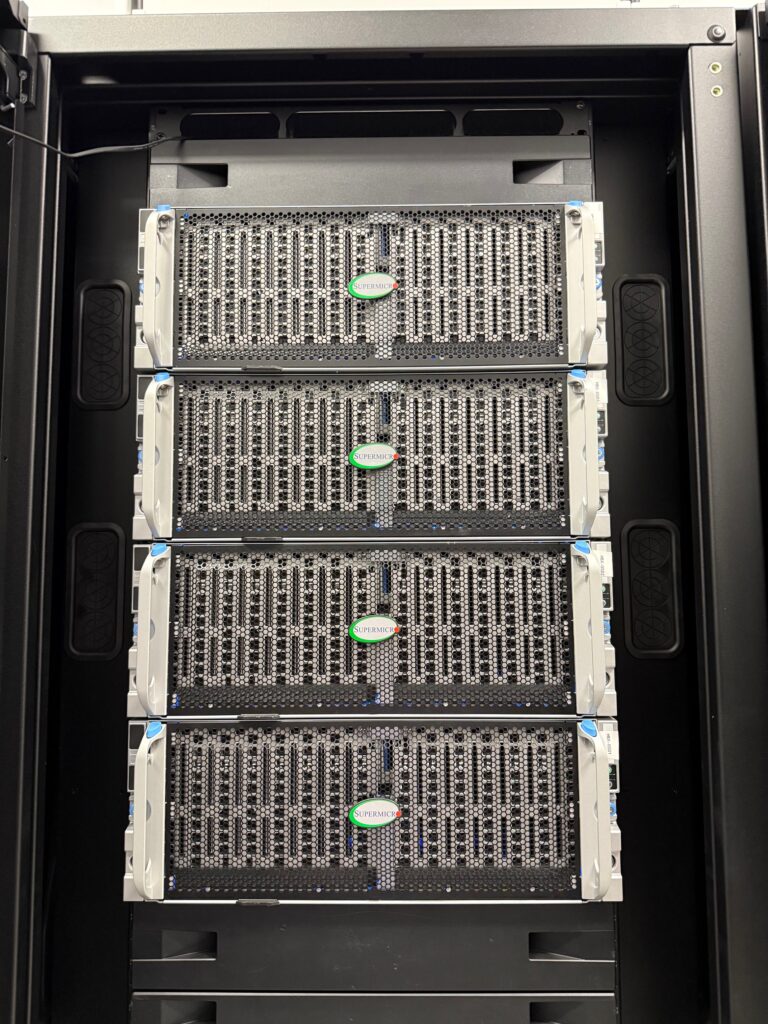
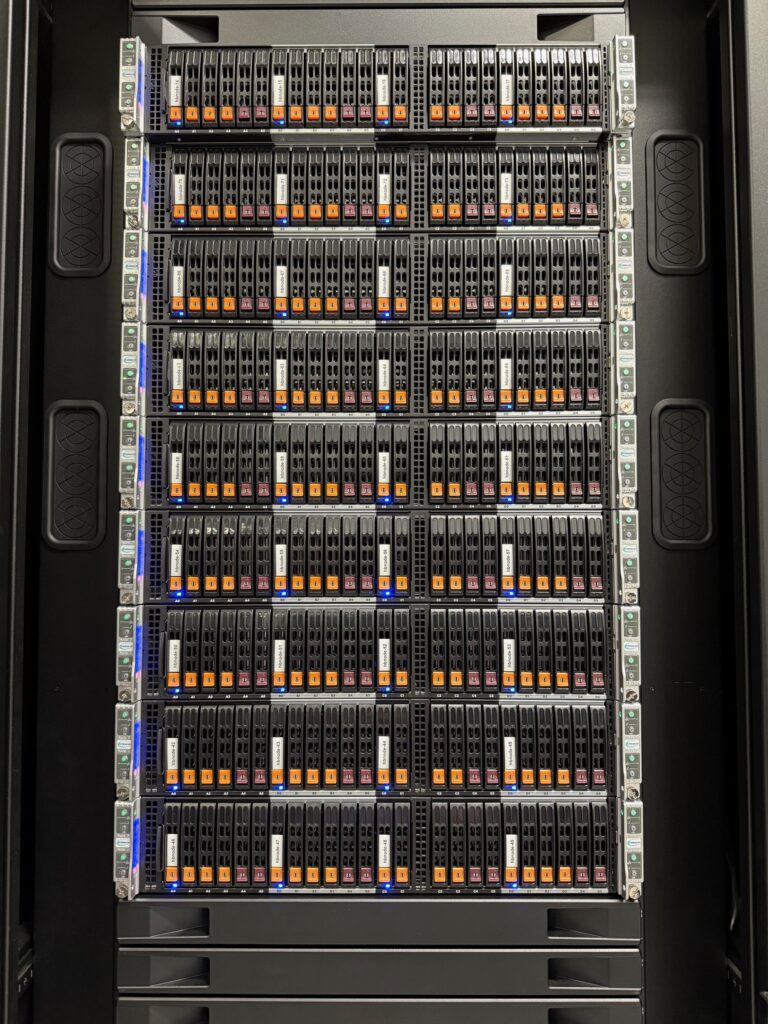
According to Gutiérrez-Barceló, “In this case, size does matter and many researchers will benefit from the speeds possible with 64-core computers with large memory.”
The signficance of the name Elkhorn is multi-pronged: honoring the regional wetlands in the Elkhorn Slough, the Elkhorn corals that protect Caribbean communities, and the elk that inhabited the Central Coast historically. The ecological diversity reflected in the name also mirrors the diverse research this system is designed to support, which is a core mission of CCCR.
“Strong computing capacity is essential for many aspects of today’s integrative research,” said Gutiérrez-Barceló. “This will support researchers from all departments and divisions and is one more way that the center supports collaboration across campus.”
While Elkhorn is focused primarily on climate-related research, it is open to all researchers on the UCSC campus through an application process that starts with a consultation with ITS Research IT.
More information about Elkhorn is available on the ITS website.