Climate & Sustainability
Leading marine conservation across the Pacific
Alumna Stacy Jupiter (Ph.D. ’06, ecology and evolutionary biology) is the Executive Director of Marine Conservation at the Wildlife Conservation Society.

Alumna and Executive Director of Marine Conservation at the Wildlife Conservation Society Stacy Jupiter (Ph.D. ’06, ecology and evolutionary biology).
Stacy Jupiter (Ph.D ’06, ecology and evolutionary biology) knew she wanted to be a marine biologist since she was 12 years old. At that age, she went on a family trip to the Bahamas, where she went snorkeling at a coral reef. That trip, as well as reading marine biology books, inspired her to build a career learning about coral reef ecosystems.
Jupiter grew up in the Boston suburbs and studied biology at Harvard University, graduating in 1997. Following graduation, she joined the Peace Corps in Gabon for two years, where she worked with rural farmers to build fish ponds and integrate them with sustainable agriculture.
Jupiter decided to attend UC Santa Cruz for her Ph.D after working with local communities in Gabon. She was enamored by the community-based conservation work she did in Gabon, but wanted to gain more technical skills through graduate school to be better prepared to do similar work in her career.
“I left a piece of my heart in Santa Cruz,” Jupiter said. “I really feel like I found myself and I found a community of people in Santa Cruz.”
She attended UC Santa Cruz from 2000-06 while also spending part of her time conducting research in Australia. She received a Fulbright Scholarship in 2003 to study at the University of Queensland for a year. She returned to Australia for extended research visits throughout the remainder of graduate school under a NASA Graduate Student Research Fellowship.
Jupiter credits her graduate student supervisor, Don Potts, for guiding and preparing her for her career. She said Potts granted significant independence to his graduate students who were in charge of writing their own grant proposals and funding their own research, skills that served Jupiter well in her career at an NGO.
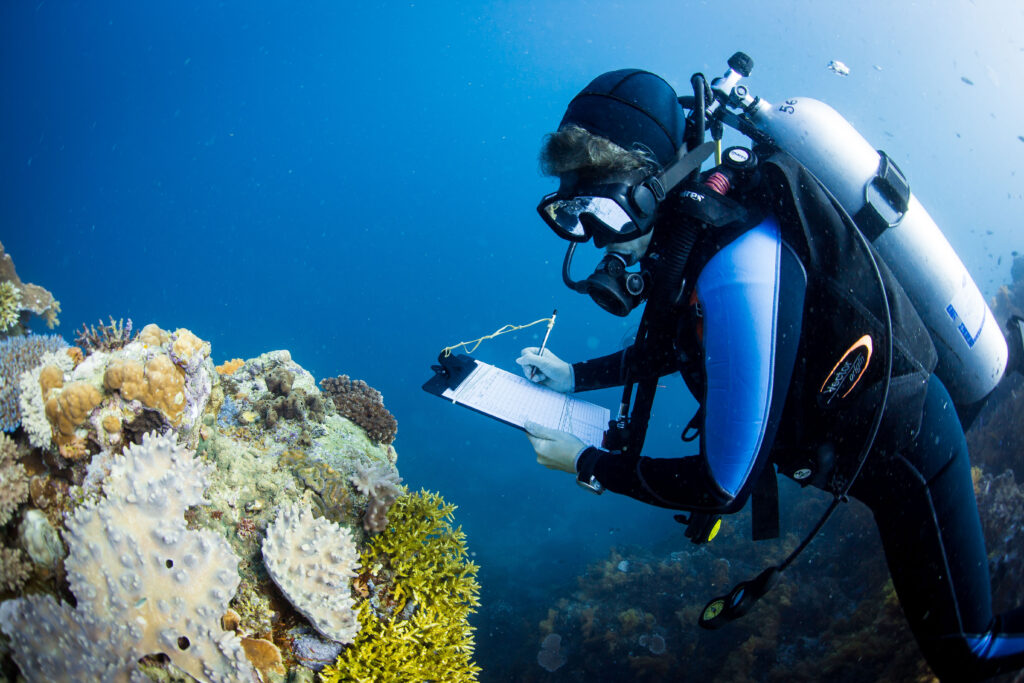
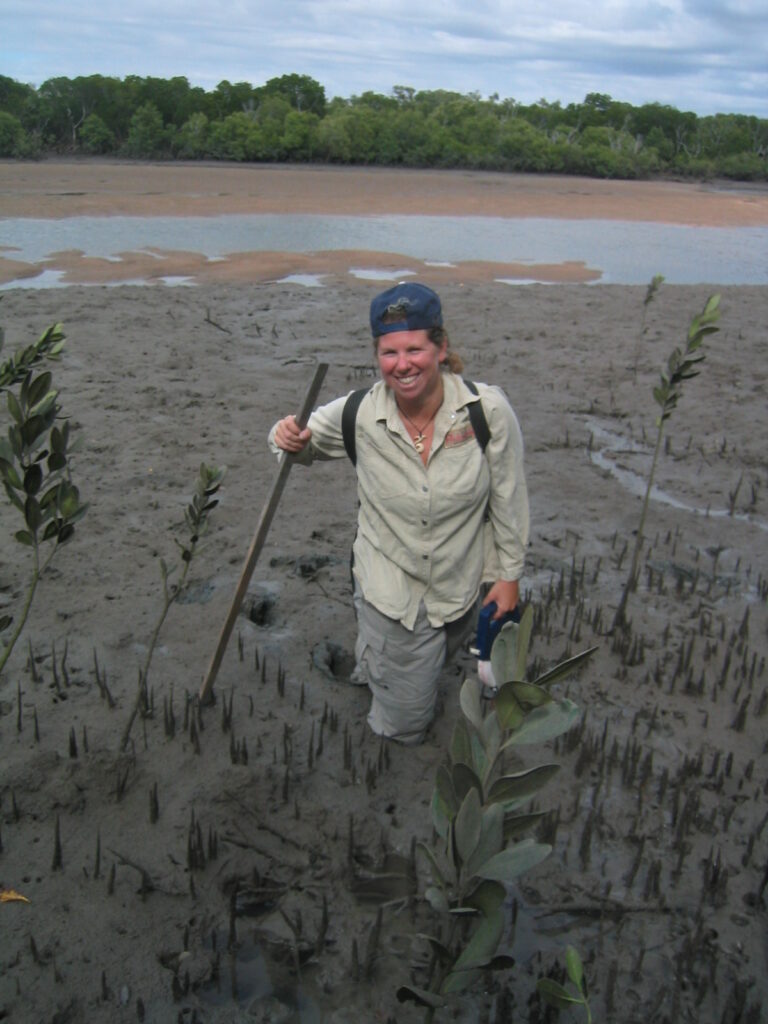
Jupiter started to connect with the Wildlife Conservation Society toward the end of her time at UCSC. She attended a talk by a researcher who introduced her to the Wildlife Conservation Society, and she applied for a position in Papua New Guinea.
While she was waiting to hear back about that position, she learned of her acceptance into a post-doc program in Australia. At the ARC Centre of Excellence for Coral Reef Studies, Jupiter studied the links between changes in land activities within watersheds and impacts to coastal and nearshore marine ecosystems.
Following her post-doc, Jupiter moved to Fiji in 2008 to work for the Wildlife Conservation Society. After one year in a scientist position, she was promoted to run the Fiji program for five and a half years. Then she oversaw the Melanesia program for 10 years, where she also started the organization’s Solomon Islands program. In 2024, she became Executive Director of Marine Conservation for the organization.
Jupiter said one of her greatest accomplishments in her career so far is an ongoing project with her colleague, Aaron Jenkins, to improve watershed management across different countries. For the past 17.5 years, Jupiter and Jenkins have been driving efforts to ensure lasting government commitment and investment in watershed management. They have received funding from the Australian Government and the Bloomberg Ocean Initiative, among others.
Jupiter takes pride in helping advance the careers of Pacific Islanders, dedicating significant time to mentorship and support. While there is strong interest and talent in conservation across Fiji, she noted that pathways to professional opportunities remain limited. Through her guidance, several Pacific Islanders have gone on to earn Ph.D.s and work for regional organizations.
Additionally, Jupiter has worked to elevate local knowledge to address environmental challenges in the Pacific Islands. In the Solomon Islands, she and her team partnered with local fishers who knew the spawning grounds best, collaborating with them to protect key areas and create community rules that set fishing seasons and banned the sale of certain species.
Jupiter lives with her husband, Jason Allport, and their nine-year-old son Cooper. Jupiter and Allport met while she was a postdoc student in Cambra, Australia, and he was the chef on their research boat.
“He wooed me with his food,” Jupiter said.
Jupiter is grateful for the time she spent at UC Santa Cruz, instilling a strong sense of community.
“People are really interested in looking after the environment and each other,” she said about the Santa Cruz community.
“I really felt more proximately connected to wildlife and nature during my time at UC Santa Cruz than I had ever experienced growing up on the East Coast,” she said. “From an almost spiritual sighting of a mountain lion among the redwoods at Nisene Marks to dodging otters while surfing at Steamers Lane to watching aggregations of breeding elephant seals up the coast at Ano Nuevo, I always felt surrounded by the calming presence of nature.”