Social Justice & Community
Empowering community organizations to lead on economic development
The Institute for Social Transformation organized a recent statewide gathering that brought together partners from the Community Economic Mobilization Initiative.
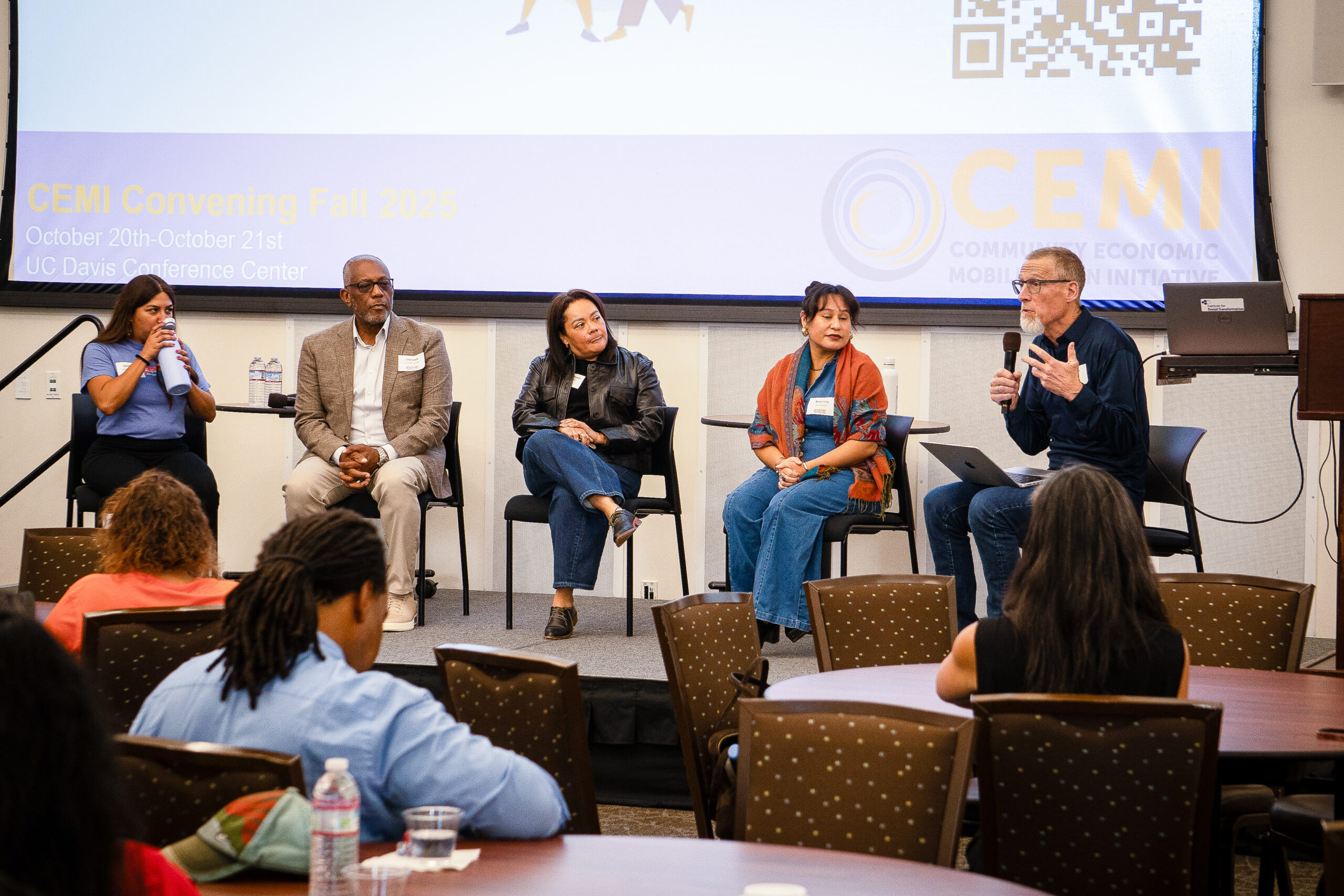
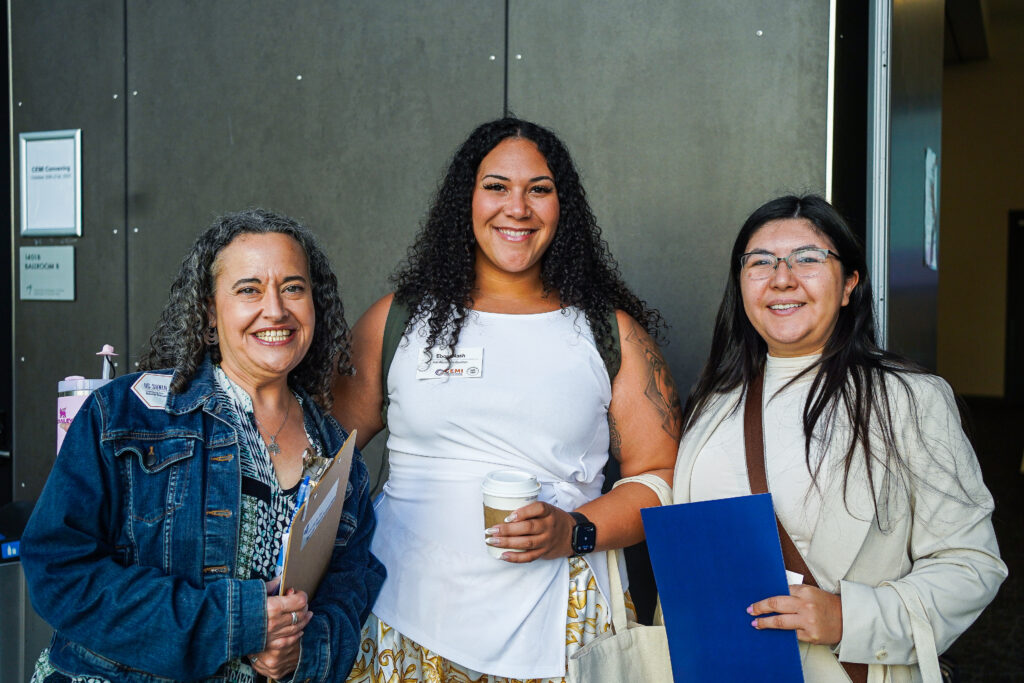
On Oct. 20-21, Institute for Social Transformation faculty fellow Chris Benner and staff members Azucena Beltran, Erika Katske, Darío León, Gabriella Alvarez, and Jessica de la Cruz led an event in Davis, Calif., that gathered partners from across the state to discuss challenges and opportunities in continuing their equitable economic development work in the current political landscape. For the past three years, the Institute’s team has worked closely with community-based organizations as part of the Community Economic Mobilization Initiative (CEMI), providing technical assistance with the goal of unlocking public funding opportunities.
The landscape for this work is very different today than it was when the initiative first started. CEMI was initially launched in 2022, led by The Center at Sierra Health Foundation as a response to the Biden-era once-in-a-generation investments in economic development, part of which was earmarked to benefit underserved communities directly. The $22 million CEMI initiative aims to create a powerful network capable of solving economic problems with localized nuance, combining short-term and long-term strategic planning with the democratization of these processes.
However, more recently, historic investments in marginalized communities are being rescinded, and community-based organizations serving their communities find themselves shouldering the burden. The stakes are higher than ever for organizations to self-advocate, build capacity, and find new funding. And the need for equitable economic development has only grown. As communities across the state face financial hardship, thoughtful economic development projects and planning can help create an economy built on mutuality and interdependence that benefits everyone.
Luckily, CEMI itself has also grown significantly, and these successes were highlighted throughout the event. What began as a partnership between several California philanthropic organizations has now blossomed into a statewide economic development effort that benefits over 50 non-profits and public partners. With support from the Institute for Social Transformation, the CEMI initiative opens doors for non-profit, public, and private organizations to participate in economic development activities through power-building and learning how to access crucial funding that makes their work possible. Partners leverage common resources, peer connections, and technical assistance.
“CEMI goes beyond incremental work and silos to build a broader movement about changing the way we understand our economy,” said Chris Benner, Institute for Social Transformation faculty fellow and lead developer of CEMI’s technical assistance resources. “We help our partners understand their biggest challenges and become leaders who build our collective futures, grounded in the visions, priorities, perspectives, knowledge, and capacities of the communities they work in.”
Technical assistance builds impact capacity
Alongside the Equity Research Institute (ERI) at the University of Southern California and PolicyLink, staff from UC Santa Cruz’s Institute for Social Transformation have driven the development of CEMI’s Technical Assistance Team, which offers training and tools to help community organizations effectively engage in inclusive community economic development. This work is complemented by online and in-person training workshops, as well as cohort learning track programs.
The Institute was selected to lead this work in part due to its strong regional partnerships and longstanding leadership in “Solidarity Economics,” a joint project with ERI that seeks to build a more inclusive economy through creating new language, policy, and practice surrounding our understanding of the economy. The principles of Solidarity Economics have been applied to CEMI’s technical assistance tools and support network, with a focus on supporting organizations in Northern California, the Central Coast and Central Valley, and near the U.S.-Mexico border, where the team already had strong relationships to build upon.
A significant portion of this work involves assisting partners in securing access to public funding and ensuring they have a voice in the allocation of public funds. By participating in this process democratically, community-based organizations can help create equitable access to publicly funded goods and services. CEMI has been instrumental in helping many organizations find their voice to advocate for their causes and communities.
“Once you open that door to power, influence, and the ability to shape systems for these community organizations, you can’t really go back,” said Erika Katske, training coordinator at the Institute. “So, even though we’re in this difficult political moment, our partners now understand more about the tables they should be sitting at, and that is a big step forward.”
Institute staff have also acted as consultants to help organizations fulfill their grants and goals, allowing organizations to allocate more of their funding to doing, rather than strategic planning or filling staffing gaps.
“I think this is really important because a lot of these organizations work in marginalized communities where their experience with academia has been more of an extractive research one,” explained Azucena Beltran, a project manager for the Institute. “In the process of building an authentic relationship with these community organizations, we’ve been able to forge many non-traditional partnerships.”
One example of the resulting impacts is the formation of Imperial Valley Equity and Justice (IVEJ), a nonprofit organization dedicated to ensuring Imperial Valley residents have a sense of belonging, work opportunities, and the opportunity to thrive. With the help of CEMI, IVEJ went from a side project of another organization to a fully fledged non-profit. Within a few years, the organization grew to support almost 10 staff members and a seven-figure operating budget. IVEJ is now working to align several cities on their inclusive economic development goals in order to build a broader regional effort.
Gathering sparks hope, solidarity
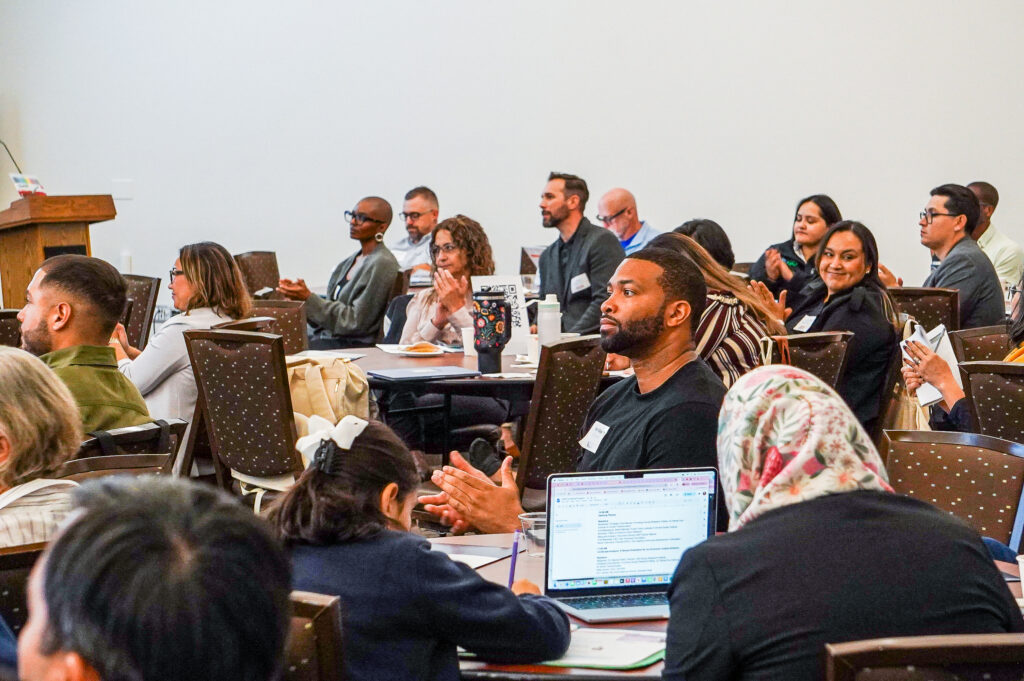
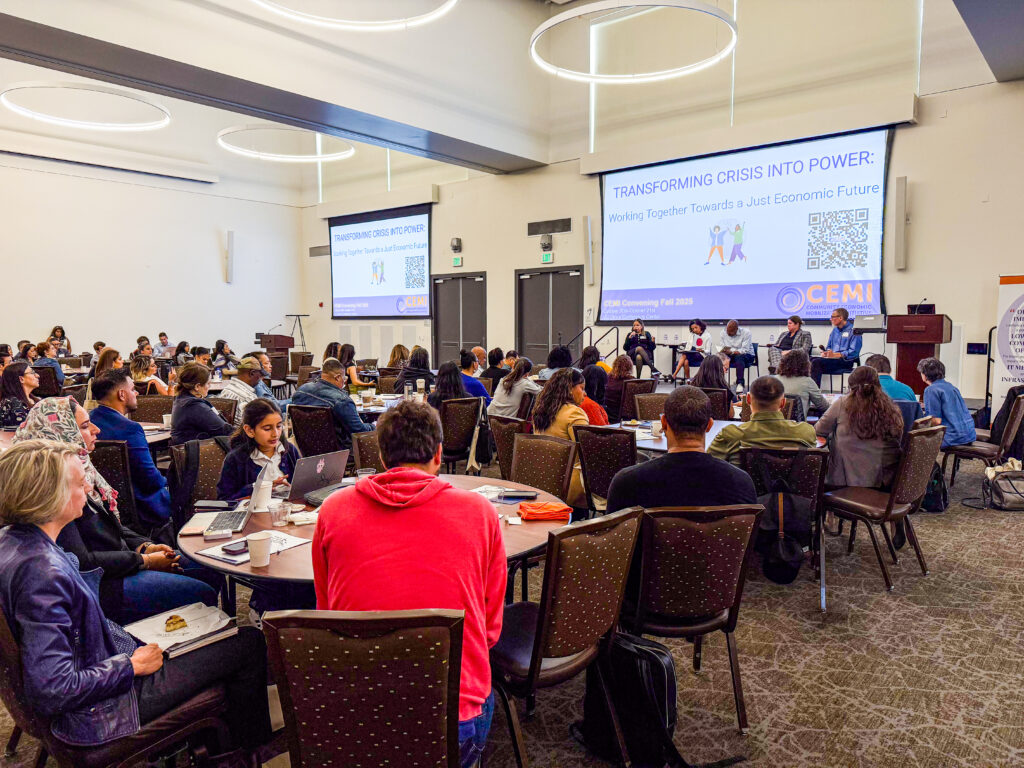
The recent CEMI gathering planned by Institute staff brought together over 150 community-based organizations, foundations, and public sector allies to deepen relationships and align strategies. Sessions explored scenario planning, peer learning, case studies, and meaningful dialogue with funders and public agencies.
“One of the key goals of the convening was to have open and honest conversations about the current challenges and what’s needed going forward, particularly in the context of strengthening partnerships between attendees,” said Benner. “We are all in this work for the long haul and need to make sure there are resources and the courage to move forward. We have to recognize that the traditional strategies might not be appropriate for this moment.”
For many, this event was a breath of fresh air amid shifting priorities and mounting pressures.
“I heard a lot of people say they were just grateful for the space, since things have felt really hard over the last year,” said Katske. “People described it as incredibly energizing, like a burst of energy for them; it was truly an infusion of hope. There’s always magic that happens when organizations from all over the state come together and hear about each other’s work, strategize, and think about how to approach their common problems.”