Student Experience
Are you experienced? Students from first year of immersive-learning initiative share stories of profound impact
From aquatic adventures and mountaintop stargazing to lab work aimed at saving lives, students describe how the Degree-Defining Experiences Program fosters unforgettable moments and deepens meaning

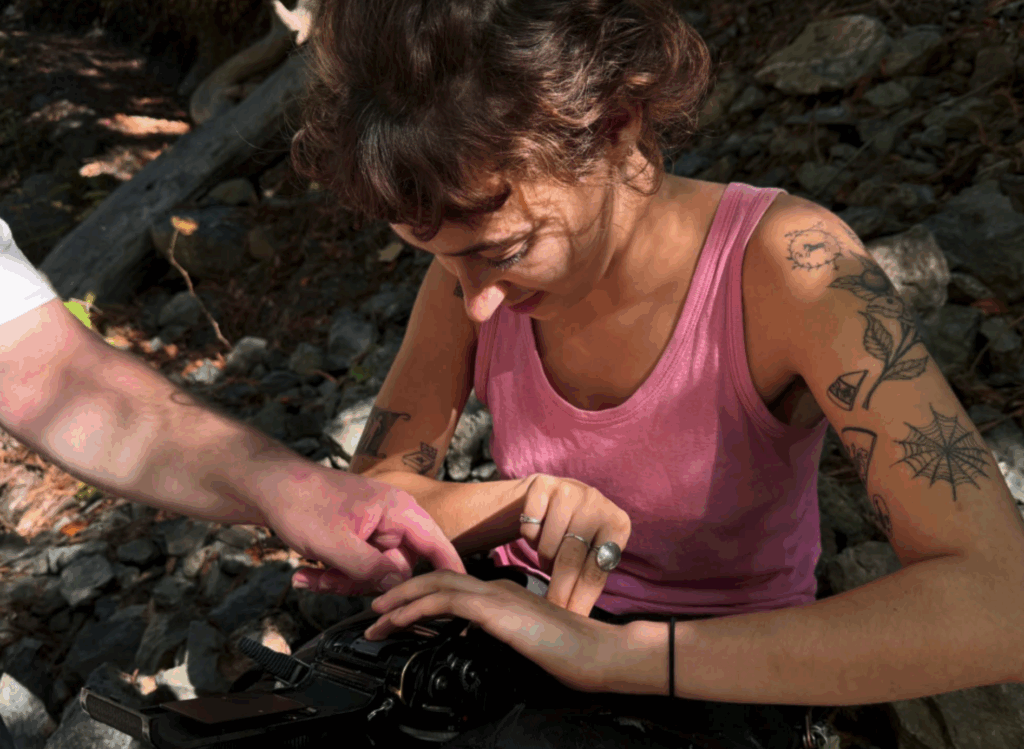
The Science Division’s Degree-Defining Experiences Program (DDEP) offers transformational opportunities for undergraduates across campus and majors, such as this arts field research course where students camped at Granite Mountains Nature Reserve. They learned how to forge connections with a site and designed projects that intertwined unconventional notions of nature and landscape. (photo by Karolina Karlic)
For a university to commit to creating “degree-defining experiences” for students might seem either overly ambitious or ambiguous. But at the University of California, Santa Cruz, undergraduates are actually having these pivotal experiences. They’re also grounding that lofty concept with personal stories of the real-world impact that these immersive educational activities have had on them, and their outlook on the future.
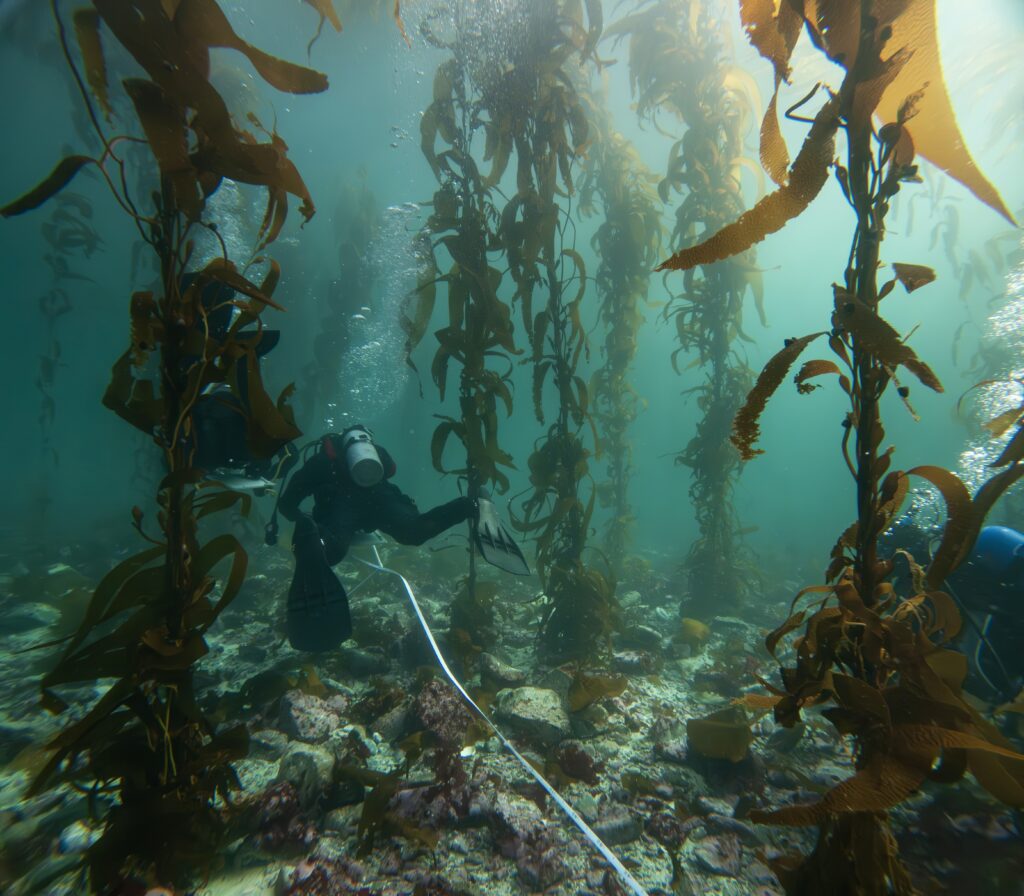
From scuba diving off the coast of Alaska to do hands-on marine research, taking artistic inspiration from the raw beauty of UC Natural Reserve lands, or delving into the computational biology behind cancer and genomics research, the UC Santa Cruz Science Division’s degree-defining experiences engaged over 2,300 students last fall and winter. They represented 26 majors, spanning arts, humanities, physical and biological sciences, social sciences, and engineering.
An impact assessment covering the program’s first year found that these activities fostered the kind of faculty-student connection and peer community that can be critical in defining an undergraduate’s overall academic experience. The assessment also found that participating students felt:
- an increased sense of community and belonging to the campus
- increased confidence in their analytical skills
- validation in their chosen paths of study
- readiness to enter the job market or to apply to graduate school
Below, students who signed up for these experiences put the impact in their own words:
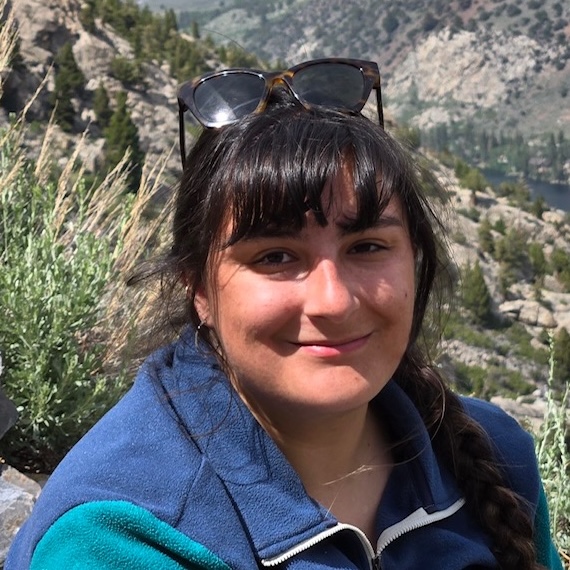
Bella Shamoon (Cowell ’25, ecology and evolutionary biology) took part in BIOE 159: Marine Ecology Field Quarter, which brought students to Sitka, Alaska, to design and complete a research project that involved scientific scuba diving to directly measure and observe the frigid, aquatic ecosystem.
When asked what a degree-defining experience meant to her, Shamoon replied: “It’s something you carry with you—fond memories or meaningful experiences you take with you when leaving college. But also, more literally, it’s something that makes your entire time at an institution feel worthwhile.”
She said plenty of students go to college and get through it so they can move on. But Shamoon is living proof that having an experience like the one that she had in Sitka can profoundly change how one values the educational journey.
“Maybe I’d call it giving your education more worth, more direction, more purpose,” she said.
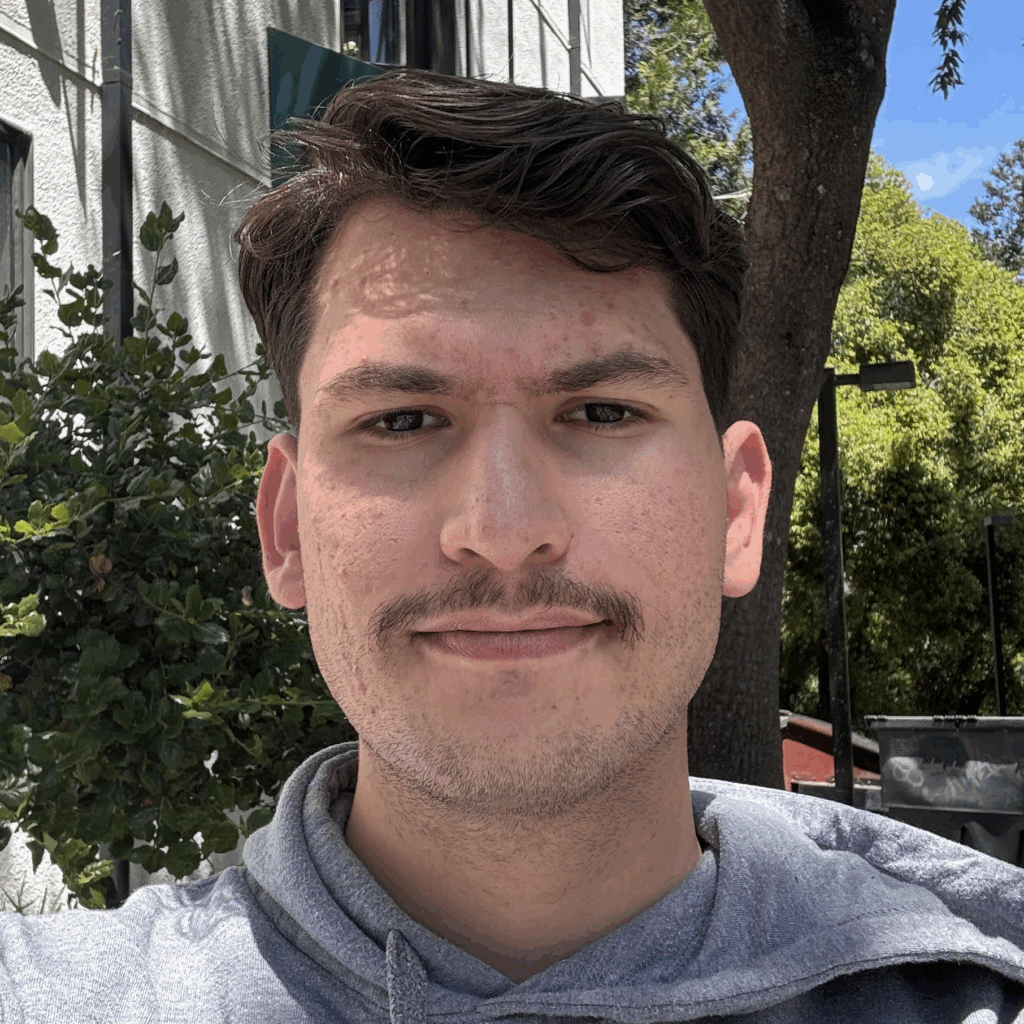
Diego Carranco (Carson ’27, biochemistry and molecular biology) participated in the Science Division’s Academic Excellence (ACE) program and UC Santa Cruz Natural Reserves field-experiences partnership, which first sent him 4,200 feet up Mount Hamilton to nearby Lick Observatory, and then down to the churning coast facing Ford Ord Natural Reserve.
“One of the main reasons I wanted to go on these experiences—and also to UC Santa Cruz as a campus—is that as a biochemistry major, my passion is uncovering the hidden patterns in nature and understanding the world around me,” Carranco said.
To him, having educational experiences set in the physical environment being studied made the lessons feel more tangible and important. The trip to Fort Ord “was an opportunity to connect more deeply with nature and learn about the microbiomes within it,” Carranco said. “I saw that as tied to my major, too, because at the end of the day, it’s all nature—and it’s all about the pattern recognition that I’m drawn to.”

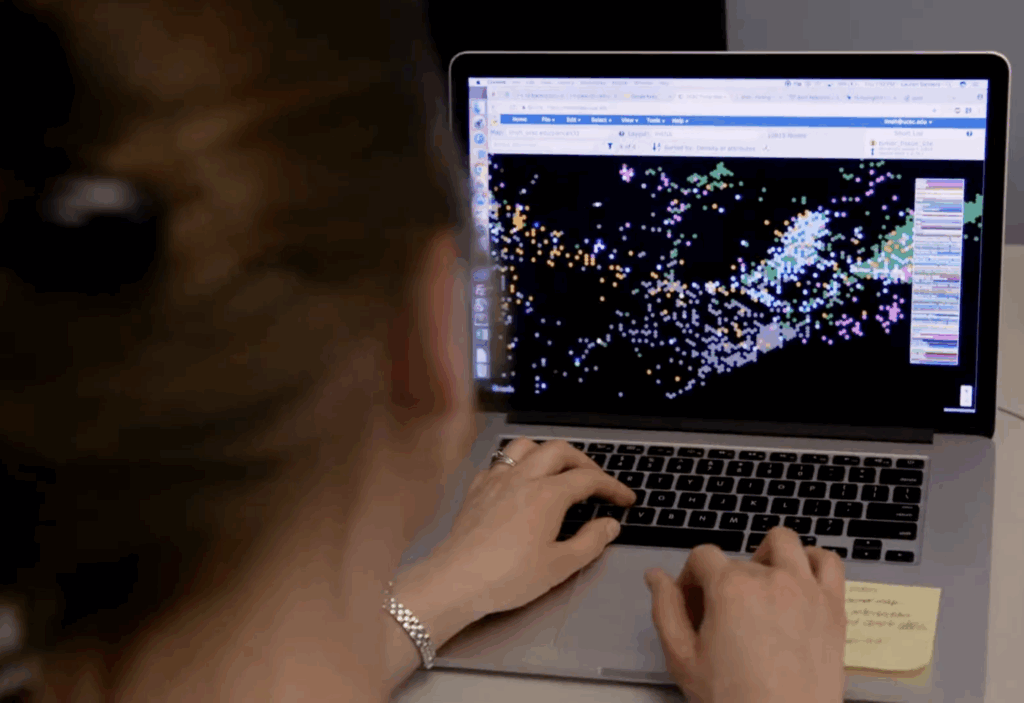
Zimin Cohen (Porter ’26, molecular, cell, and developmental biology) took part in the undergraduate bioinformatics-immersion experience (TUBI) offered by the Treehouse Childhood Cancer Initiative. It was literally a degree-defining experience for him.
“Once I did TUBI, I officially declared a bioinformatics minor,” Cohen said. “Before, I didn’t know what cancer research actually looked like in practice, or what the standard methods were in the real world.”
For Cohen, the immersion experience brought visceral meaning to the technical field of bioinformatics, as he learned to gather data, make inferences, and do work that can genuinely save a life. “That made me think: This is the kind of science I want to do. It feels good to do research with real impact,” he said. “That experience gave me clarity. I want to keep pursuing bioinformatics and cancer biology.”
Initially funded by a $1 million donation from the Helen and Will Webster Foundation, the Degree-Defining Experiences Program is the implementation of a core pillar identified by Science Division Dean Bryan Gaensler. An additional $1 million has been secured to offer 50% more opportunities—36 versus 24—in this second year of the program.
More degree-defining student experiences will be shared before the 2025-26 academic year ends. If you’d like to ensure that pivotal and unforgettable experiences like these are available to UC Santa Cruz students in the years ahead, you can support the program by donating here.
Students who want to sign up for one of these opportunities should start by visiting the Degree-Defining Experiences Program online or contact Program Manager Amber Wyld with any questions.
Your support for the Degree-Defining Experiences Program will create transformational learning opportunities for undergraduates in the form of experiential field courses and other activities outside the classroom.
Learn more about how we’re supporting Student Success through our Inspiring Change fundraising campaign.