Social Justice & Community
Connecting hearts, heritage, and higher education
By supporting The Humanities Institute and volunteering with Senderos, Carolyn and Curt Coleman help bridge campus and community—connecting students, families, and cultural traditions across generations.
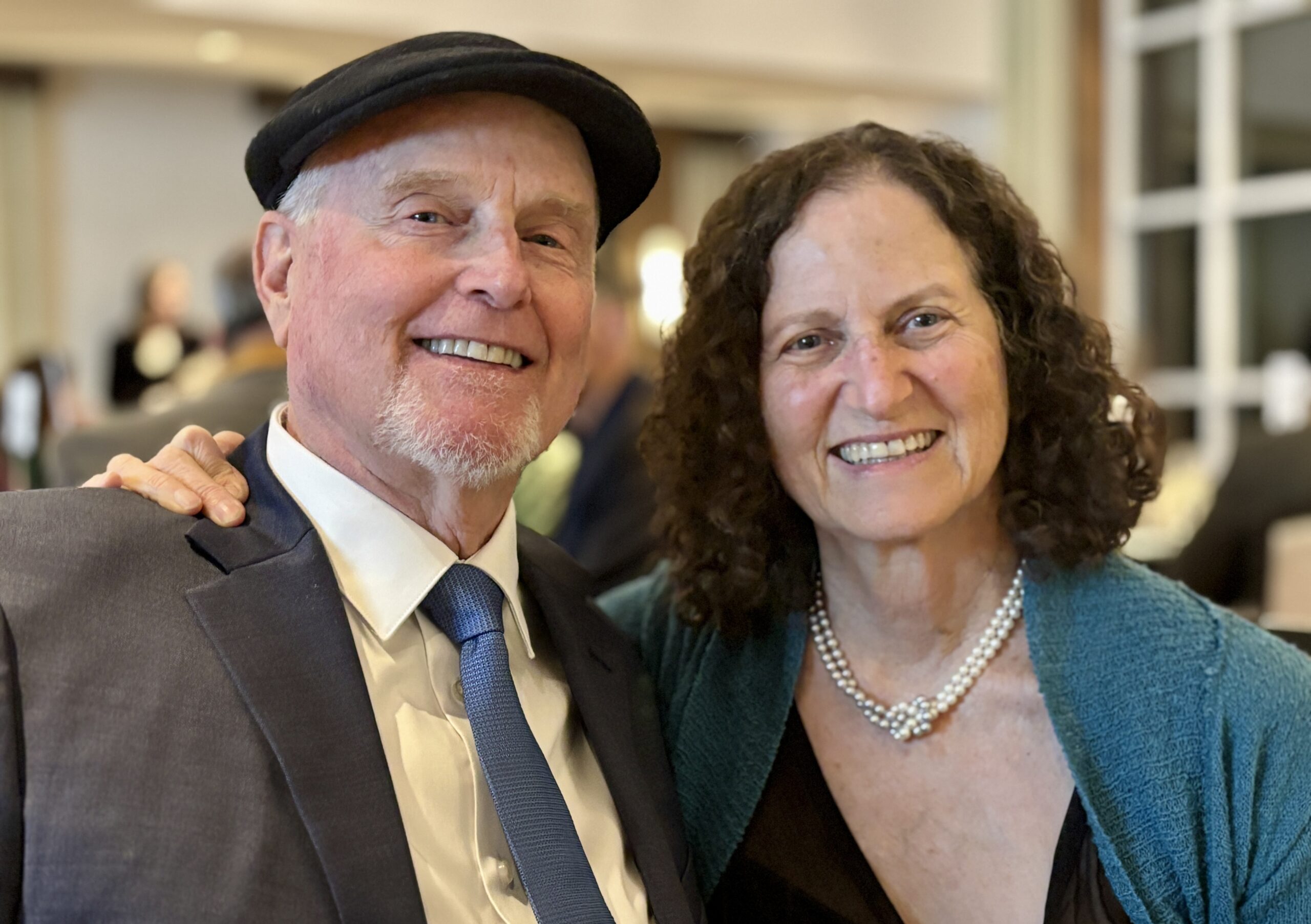
Curt Coleman (left) and Carolyn Coleman (right) at The Humanities Institute's 25th Anniversary Gala.
Since moving to Santa Cruz in 1979, Carolyn and Curt Coleman have been deeply woven into the fabric of the community—raising their family, contributing through work in public schools and nonprofits, and attending community events. Now in retirement, they continue to stay meaningfully engaged with their community, in part through The Humanities Institute at UC Santa Cruz.
Philanthropically, the Colemans balance their generosity between human service organizations, the arts, and The Humanities Institute (THI). They choose to give to THI because of the institution’s focus on public-facing and community-driven events.
“Collaboration is probably the best thing that humans do, and The Humanities Institute is great at it,” Curt Coleman said. “I think THI serves as a model for our whole community, the way they collaborate with the MAH, Bookshop, Senderos, and other organizations. It ends up creating very rich encounters that are really good for all of us.”
Carolyn and Curt attend many THI events throughout the year, but the one that stands out as their favorite every year is The Deep Read.
The Deep Read—THI’s largest community event—invites curious minds to engage deeply with literature, art, and the most pressing issues of our time. Each year, THI selects a thought-provoking book and hosts a series of events and discussions that culminate in a free, public campus gathering with the featured author. For Carolyn and Curt, the Deep Read is a chance to bring his book club members and spouses together for deep dish pizzas from Bookies and meaningful conversation.
“It’s more than just that one event,” Curt said about the Deep Read. “There are multiple ways to be engaged with the book throughout the weeks leading up to the actual Deep Read author event, which, in itself, is exciting.”
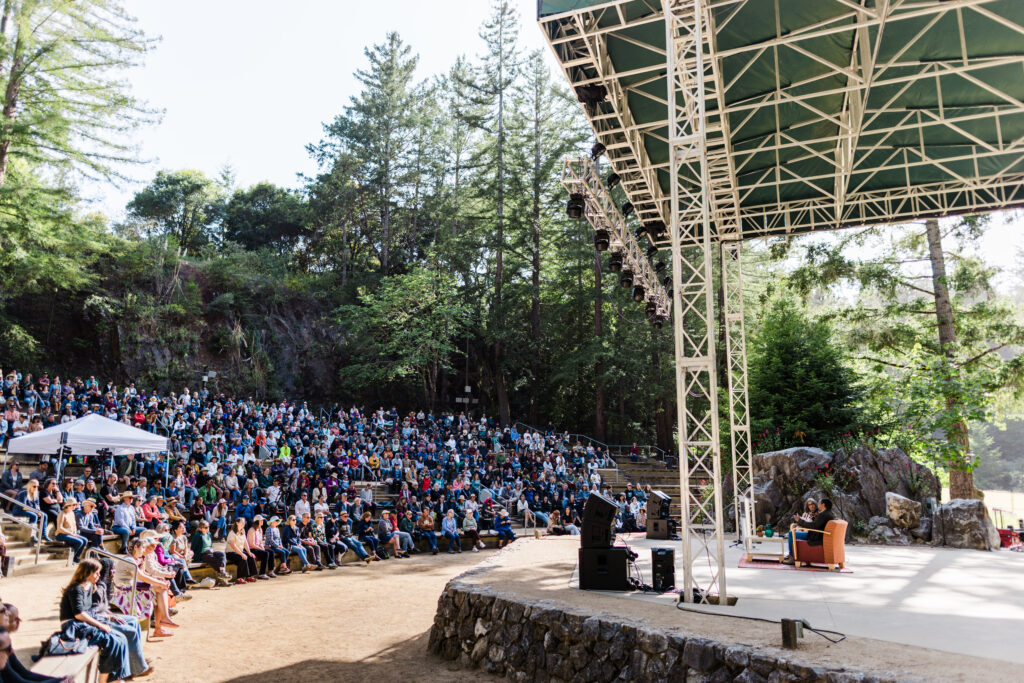
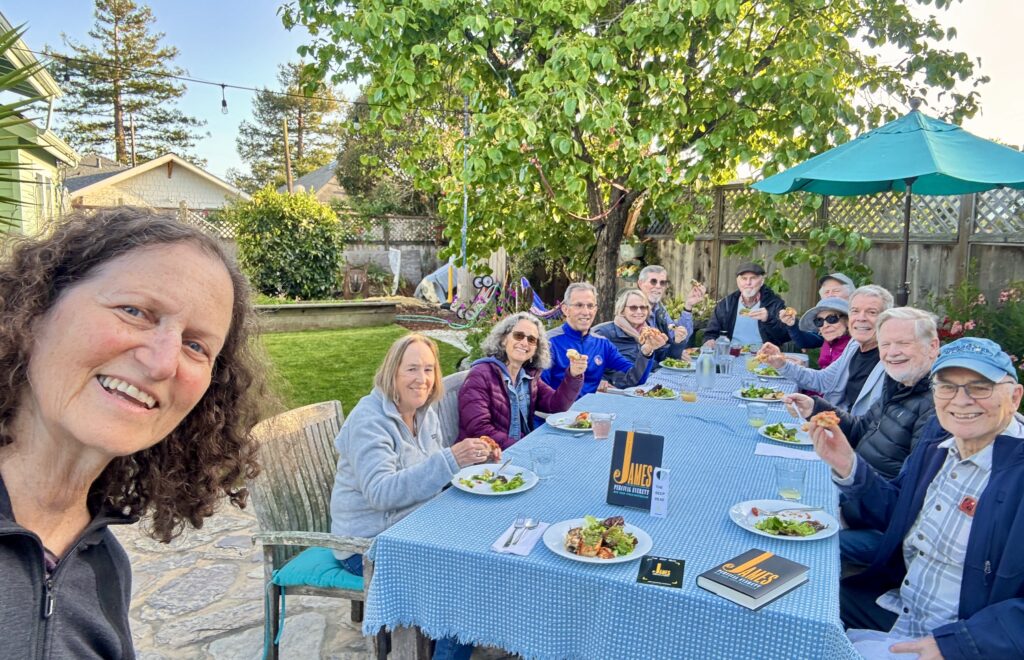
THI celebrated its 25th anniversary in 2025. Carolyn emphasized the need for the humanities in today’s world.
“We’re divided, and there’s an increase in social media and AI further isolating us,” she said. “I think the humanities enables us to understand people from different backgrounds and helps us to cross some divides and build relationships.”
The Colemans’ philanthropic support of THI is a natural extension of their work and passions. Both Curt and Carolyn worked within the community throughout their careers, and well into their retirement.
Carolyn retired in 2014 as the Executive Director of Encompass Community Services—the largest multi-service nonprofit in Santa Cruz County after a 30 year career there and has served on the Board and volunteered with a number of other organizations including United Way, Monarch Services and most recently joined her neighborhood Friends of Santa Cruz Public Library Branciforte Branch chapter.
Curt retired from Santa Cruz City Schools in 2011 as the principal of the Branciforte Small Schools Campus and teaches mindfulness and meditation at the Santa Cruz County Jail. Curt became involved with Senderos in 2002 after meeting Dr. Nereida Robles Vasquez and Fe Silva-Robles, co-founders of Senderos. Robles Vasquez and Silva-Robles hosted folklórico dance practices at his school.
“That’s what really gave me a passion for the organization,” Curt recalled. “When I was principal and I’d leave to go home, they’d be practicing down the hall. I would see people talking, young kids running around, teenagers in groups, parents talking to Nereida and Fe or to each other. And to me, that is the heart of Senderos, the community that it creates.”
Senderos is a nonprofit organization that creates successful pathways for the Latino community of Santa Cruz County while fostering cross-cultural connections locally and abroad. Through dance, music, tutoring, and scholarships, Senderos celebrates Latino culture and supports biliteracy, academic growth, and higher education—especially for students who are often the first in their families to attend college.
Inspired by the stories, community work, and commitment surrounding Senderos, Curt began volunteering with the organization. Once he retired, Curt’s involvement increased, and he helped Senderos gain nonprofit status in 2013. Once Carolyn retired, she was also brought into the fold.
“Their passion is very infectious,” Carolyn said about Senderos. “Fe and Nereida really saw what was going on in the schools in terms of immigrant youth being bullied or losing their way. It’s important for youth to stay connected to their family, their heritage, and to learn the value of education. It’s very inspiring, and you just want to do whatever you can to support them especially in these challenging times.”
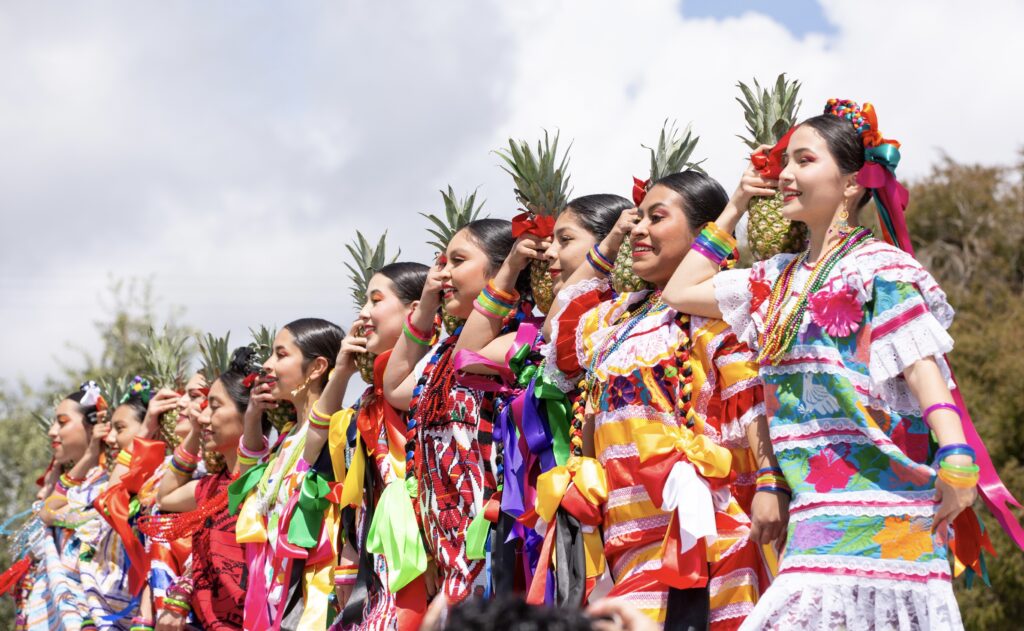
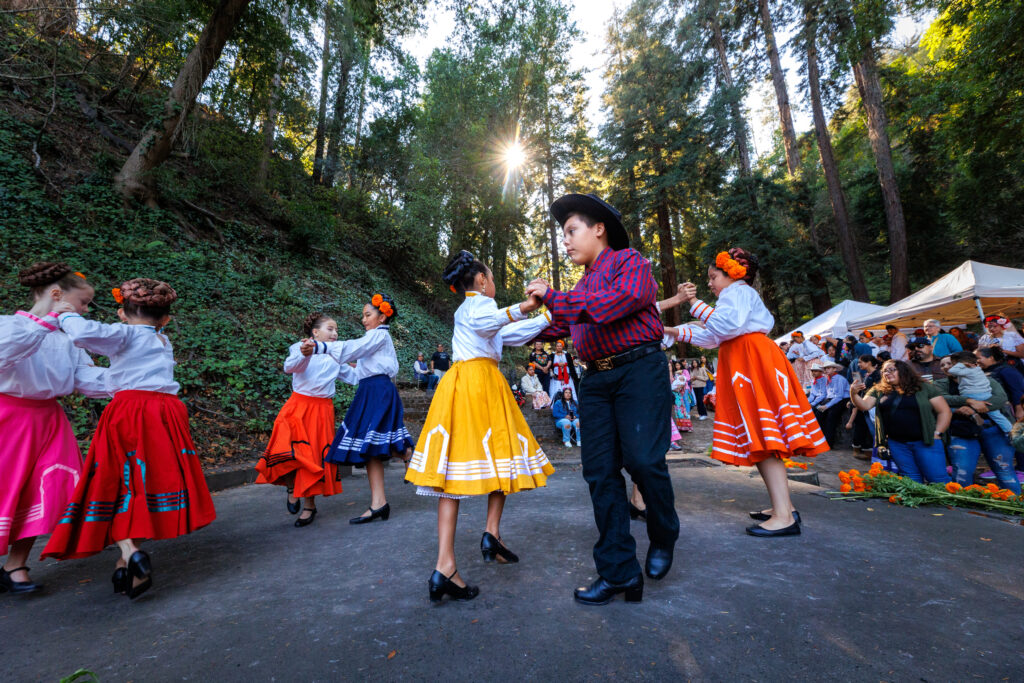
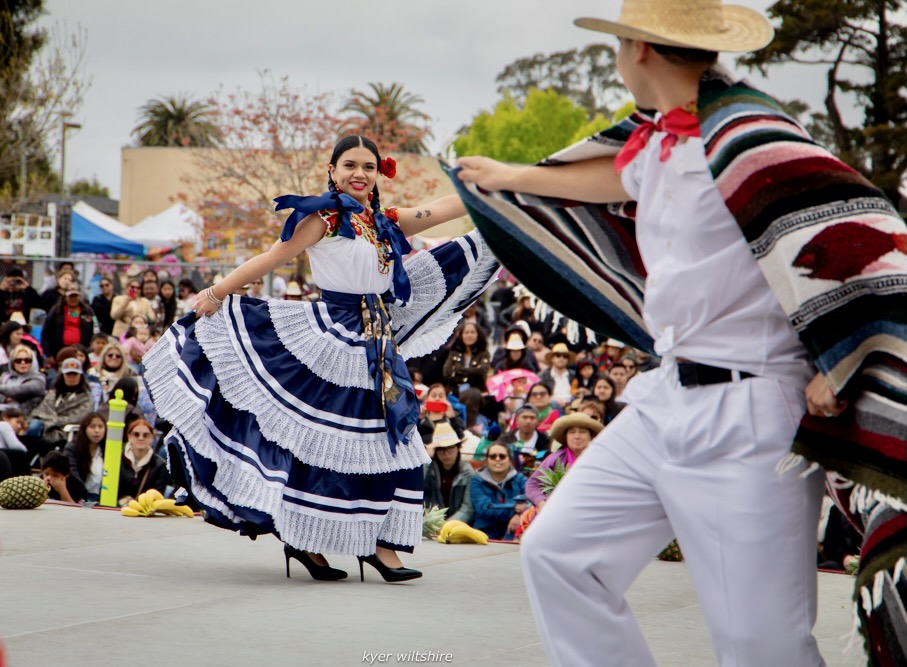
In collaboration with UC Santa Cruz and THI, Senderos builds bridges between the university and the community by engaging students in events that inspire young Latino participants and their families. Parents often share how meaningful it is to see their children participating with college students who serve as positive, relatable role models.
“I think it really makes the parents happy to know that examples are being shown to their kids, because they all want their kids to go to college,” Curt said. “When UC Santa Cruz recognizes Senderos, it makes the people in Senderos feel valued and seen. Having that connection with a huge university like UCSC feels really warm, and makes people happy.”
The collaboration between Senderos and UC Santa Cruz dates back to 2015 when Carolyn and Silva-Robles met Managing Director of the Humanities Institute Irena Polić at the MAH during the museum’s Creative Community Committee (C3) Program—the same year Senderos first collaborated with the MAH in celebration of Dia de los Muertos. From these early conversations grew the idea of connecting Senderos and THI through shared cultural and educational initiatives. In 2017, Silva-Robles strengthened this connection by collaborating with UCSC linguistics faculty, which led to the creation of the Nido de Lenguas project—a partnership that celebrates and preserves Indigenous Oaxacan languages through community events, language panels, and cultural exchanges in Oaxaca.
Over the years, UC Santa Cruz students have served as THI Public Fellows with Senderos, contributing to music and education programs while inspiring local youth as mentors and role models. The partnership also extends to the annual Latino Role Models Conference—now held at Cabrillo College—with support from THI, the Institute for Social Transformation, the Education Department, and other campus programs. Most recently, collaboration has expanded through a current THI partnership with Senderos and the MAH, Oaxacan Languages of the Transnational Central Coast, which will culminate in a major exhibition at the MAH in 2027.

Curt and Carolyn are grateful to Irena Polić, Pranav Anand, and Nathaniel Deutsch for their continued collaboration with Senderos.
“Even though we are not alums of UCSC, we feel very welcome, especially with the THI team who have created a warm sense of inclusion for a diversity of community members,” Carolyn said. “This is so important for the Latino community that Senderos represents, and we feel a strong commitment to doing whatever we can to support immigrants in this political climate. Senderos brings a lot of joy and hope to the community and we are honored to play a small role in that.”