Student Experience
ARCS Foundation scholarships support 14 outstanding graduate students in science and engineering for 2025-26
The scholarships are awarded to students who show exceptional promise of making a significant contribution to the scientific and technological strength of the country.
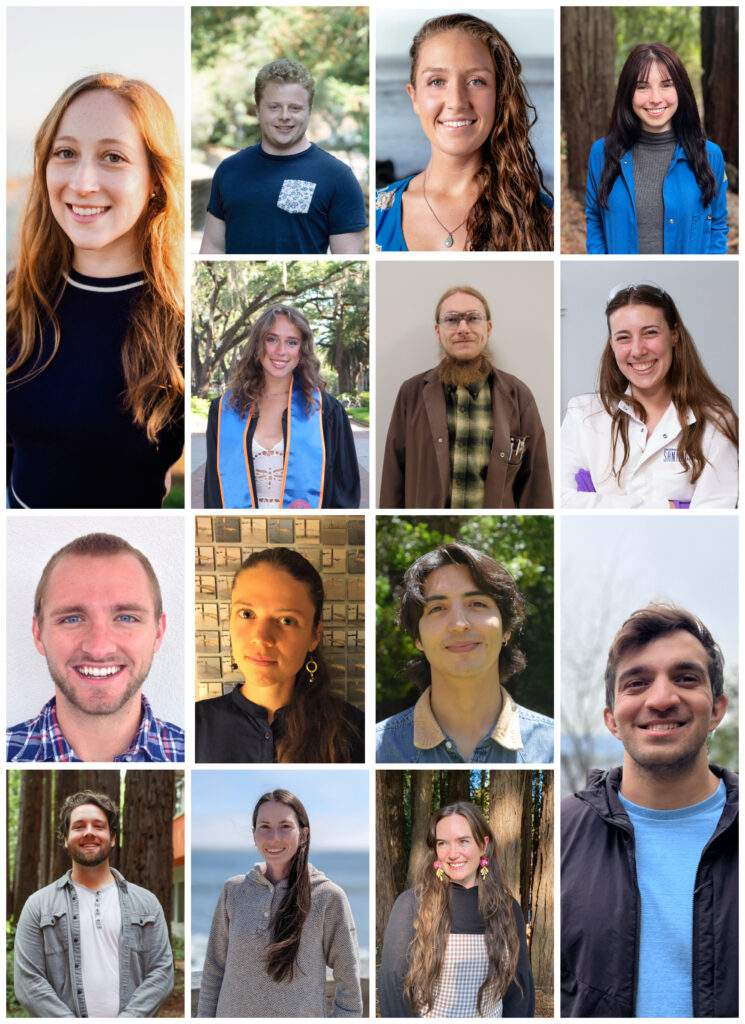
Fourteen outstanding UC Santa Cruz graduate students in science and engineering fields earned scholarships worth a total of $180,000 from the Achievement Rewards for College Scientists (ARCS) Foundation for the 2025-26 academic year.
The prestigious ARCS scholarships are awarded to students who have a record of past achievement and show exceptional promise of making a significant contribution to the scientific and technological strength of the country.
ARCS scholars can take advantage of mentoring and networking opportunities with other ARCS scholars and donors to the ARCS foundation through events, scholar symposia, and national conferences. The awardees receive unrestricted scholarships of a minimum of $10,000 they can use to make progress to graduation, such as housing, child care, and conferences.
The ARCS Foundation is a national organization that provides scholarships and fellowships for the country’s most promising science, medical, and engineering students. Since 1976, the ARCS Northern California chapter has supported more than 400 UCSC students with scholarships.
Meet the 2025-26 cohort of ARCS scholars:
Jordan Diaz, Astronomy and Astrophysics
Jordan’s research is focused on developing novel astronomical instrumentation to directly observe exoplanets—planets outside our Solar System. As a first-generation Latino scholar, he is interested in contributing to bridging the gap between science and society, particularly for underrepresented communities.
Jessica Gagliardi, Earth and Planetary Science
Jessica is a geochronologist and geochemist who analyzes Antarctic subglacial chemical precipitates to characterize past hydrologic activity of the Antarctic Ice Sheet and investigate its sensitivity to climate change. She was recognized for her commitment to teaching with a Graduate Pedagogy Fellowship in 2025, and volunteers at the Santa Cruz Museum of Natural History leading geology programs for the public.
Pierce Giffin, Physics
Pierce’s research bridges particle and plasma physics in exploring dark matter plasmas. Pierce has a strong passion for teaching and pedagogy and was awarded the Graduate Pedagogy Fellowship in 2022. He aided in founding the Santa Cruz Organization for Outreach in Physics and created a graduate-run physics help room, mentoring students across levels.
Kari Goodbar, Science Communication
Before joining the Science Communication program, Kari pursued marine mammal science in O‘ahu, Hawai‘i, developing technology to improve understanding of cetacean physiology. She also worked to translate complex scientific concepts into engaging educational materials for diverse audiences, and has worked with environmental non-profits in Hawai‘i that center Native Hawaiian land and ocean management practices in community conservation and education programs.
Mira Mastoras, Biomolecular Engineering
Mira’s research focuses on developing computational methods to improve the accuracy of genome assemblies, essential for understanding the underlying biology of organisms. Mira’s work on bioinformatics tools and applications has been presented at major conferences, and she is dedicated to mentoring junior researchers.
Olivia Maule, Science Communication
Olivia studied butterfly evolution in the Andes before shifting her focus to podcasting, video production and writing to highlight environmental and conservation efforts across the Americas. Her work in both Spanish and English allows for science to reach audiences beyond the lab bench and mobilize environmental consciousness throughout diverse communities.
Maya McElfish, Ecology and Evolutionary Biology
Maya studies sensory morphology and behavior through the lens of foraging ecology in order to understand how sensory stimuli contribute to foraging success. Her field work takes place on Santa Catalina island where she works with rocky reef fish, particularly the California moray eel. She is passionate about creating more hands-on opportunities for teaching STEM that center empowering student curiosity.
Nathan McGregor, Earth and Planetary Sciences
Nathan studies how planetary interiors evolve and influence surface and atmospheric dynamics, with a current focus on Venus. He teaches GED math test prep courses with the Project for Inmate Education, volunteers as a subject matter expert with the NASA Community College Network, and serves on the campus Committee on Teaching.
Cade Mirchandani, Biomolecular Engineering
Cade develops bioinformatic methods for evolutionary and population genomics research, with his current projects focus on developing computational tools for large-scale genomic analysis, as well as investigating evolutionary dynamics of host-symbiont interactions. His significant contributions to Snakemake, an open-source scientific workflow system essential for reproducible research, have earned him recognition as a project maintainer, and he actively mentors new students and maintains shared resources in his lab.
Allison Payne, Ecology and Evolutionary Biology
Allison’s research is focused on developing a novel instrument that is attached to Northern elephant seals in order to listen to the sounds of the deep ocean, including the elusive whale species. In addition to being a field biologist, Allison is a science communicator, teacher, and mentor, and has published multiple papers with undergraduate mentees.
Anna Schartman, Ocean Sciences
Anna is a paleoclimatologist investigating the history and drivers of the savanna biome development through Earth’s past, in order to enhance our understanding of the response of these critical ecosystems to climate and environmental change. She is a non-traditional, first-generation graduate student who pursued a career in English language teaching before making the transition into the geosciences, which she has funded with several prestigious and competitive fellowships including through the NSF.
Søren Tornøe, Electrical and Computer Engineering
Søren researches material science and thin film optics in the Nanostructured Energy Conversion Technology and Research Lab at UC Santa Cruz. His areas of research include protective coatings for astronomical optics, green hydrogen from seawater electrolysis, and device electronics.
John Tressel, Chemistry and Biochemistry
John is a materials chemist focusing on the design, production, and characterization of high-performance catalysts for water purification, through the degradation of organic dyes and bacteria. John has also previously been awarded a Sigma Xi research grant for his work on copper chlorophyllin based catalysts.
Chloe Wohlenberg, Molecular, Cell, and Developmental Biology
Chloe’s current research is focused on understanding how small molecules impact the cell’s ability to recognize problematic mRNAs and how this critical process changes with age. Chloe’s academic achievements led her to receive a spot on the department’s competitive T32 training grant, and she is passionate about mentorship and teaching as she trains undergraduates in the lab.