Climate & Sustainability
Students develop AI solutions for wildfire mitigation at Reboot the Earth hackathon
Student hackers tackled California’s wildfire crisis at the event co-hosted by the United Nations and the Baskin School of Engineering

Photo by Glenn Philip Martinez Aquino.
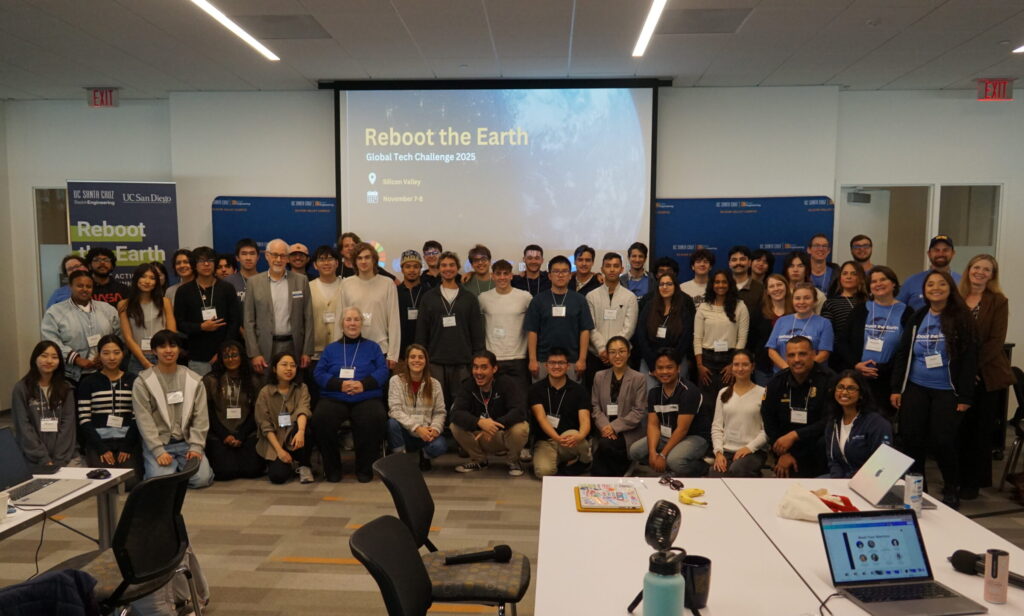
More than 50 student innovators from across the region worked intensively over two days to develop AI-powered solutions for wildfire mitigation and climate resilience during the UN’s Reboot the Earth hackathon held at the UC Santa Cruz Silicon Valley Campus on November 7 and 8, 2025.
The event brought together the United Nations (UN), the Baskin School of Engineering, the UC Open Source Program Office Network, industry leaders, and emergency response professionals to address one of California’s most urgent environmental challenges.
“This hackathon is more than a technical sprint—it’s a statement of purpose,” said Alexander Wolf, Dean of Baskin Engineering, during opening remarks. “It’s a belief that engineers, scientists, humanists, and builders from all walks of life can come together to tackle challenges that governments alone cannot solve—challenges like wildfire resilience, climate adaptation, and sustainable development.”
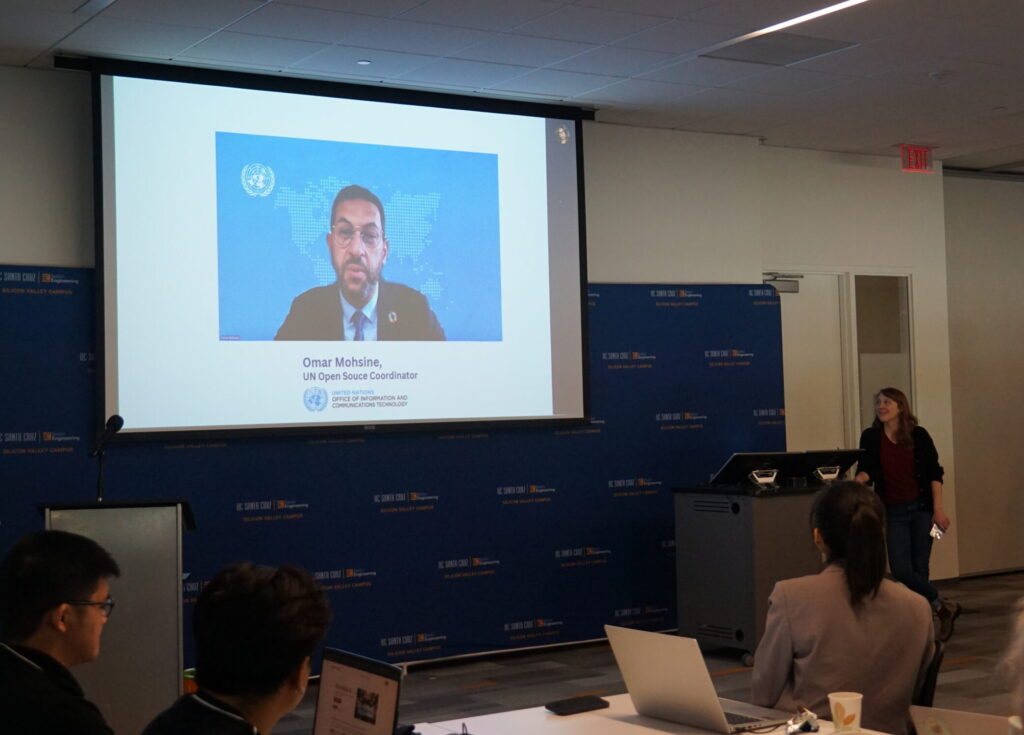
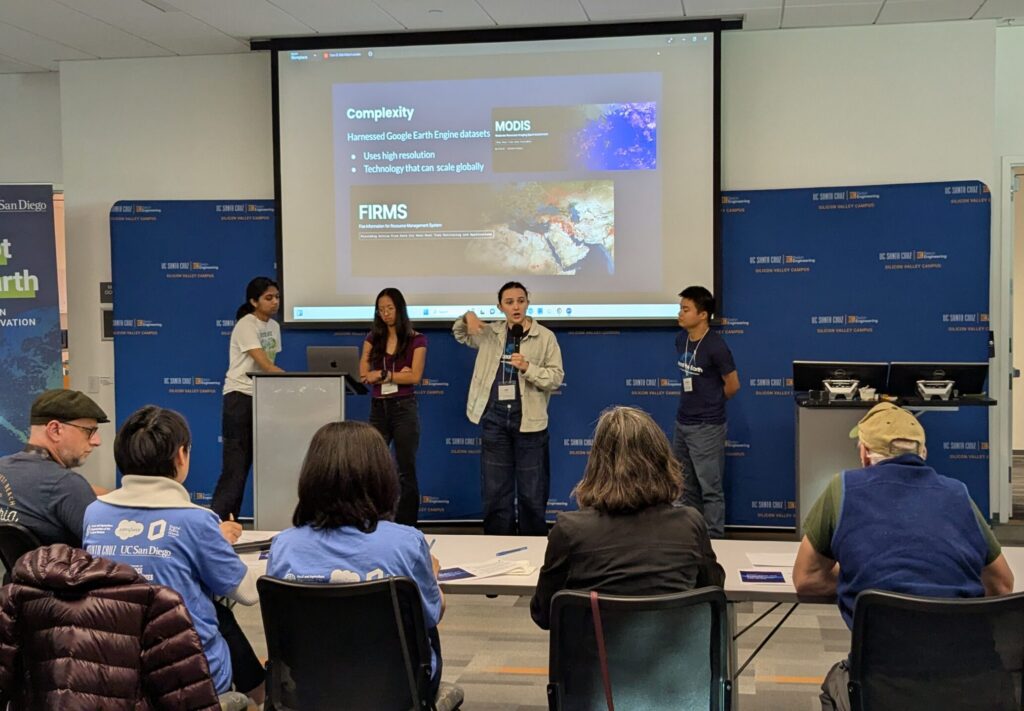
On left, UN Open Source coordinator Omar Mohsine addresses the group. On right, a group of developers present their solutions.
Student developer teams addressed one of two challenges developed by the Food and Agriculture Organization (FAO) and CAL FIRE:
- Smart water and irrigation planning under fire stress: teams developed AI systems to optimize irrigation during wildfire conditions, including tools that integrate utility shutoff maps, weather forecasts, and real-time fire risk data to protect agricultural operations while reducing fire spread potential.
- AI-accelerated environmental review for wildfire mitigation: participants created solutions to streamline the environmental review process for wildfire prevention projects, addressing the bureaucratic bottlenecks that slow critical mitigation efforts under California’s Environmental Quality Act.
After presenting to judges from academia, industry, and the public in a science fair-style showcase, five finalist teams advanced to final pitches before expert judges representing UC Santa Cruz, CAL FIRE, the Linux Foundation, Neo4j, Google, Bloomberg, Cisco, and CodeDay.
The winning teams were:
- First place: FireForm responded directly to challenges identified by CAL FIRE about the paperwork burden on firefighters. The team developed an AI-powered voice-to-form system using a local large language model that allows firefighters to complete required documentation by speaking naturally. The system automatically populates forms from verbal input, enabling firefighters to spend more time protecting communities and less time on administrative tasks. The solution runs on standard laptops without cloud connectivity, making it practical for field deployment. The team included Computer Science and Engineering (CSE) students Juan Alvarez Sanchez, Manuel Carrido Garriedo, Jan Sans Domingo, Marc Verges, and Vincent Harkins.
- Second place: Fire Oracle leverages machine learning to accelerate prescribed burn planning—a critical wildfire prevention strategy currently slowed by extensive paperwork and resource requirements. Trained on NASA wildfire data, vegetation indices, soil moisture levels, and geospatial information, the system predicts high-risk wildfire locations and provides automated feasibility assessments based on the official “Prescribed Fire Complexity Rating System Guide.” The team included Kai Tsutsumi (Business Management Economics), Malco Salcedo (CSE), Jake Poblete (CSE), Kevin Yang (CSE), and Daniel Gonzalez (CSE, Economics)
- Third place: SafeZone is a social, data-driven platform that enables neighborhoods to collectively assess and address fire risks. It solves a critical gap: in some California regions, only four firefighters cover six counties for door-to-door wildfire assessments. By integrating with Firewise programs and emphasizing that prevention costs far less than recovery, SafeZone creates a scalable model for community-based wildfire risk reduction. The team included Nell Brodkin (CSE), Cheryl Chuang (CSE), Dishita Jhawar (CSE), and Jonathon Tordilla (Physics, UC Berkeley).
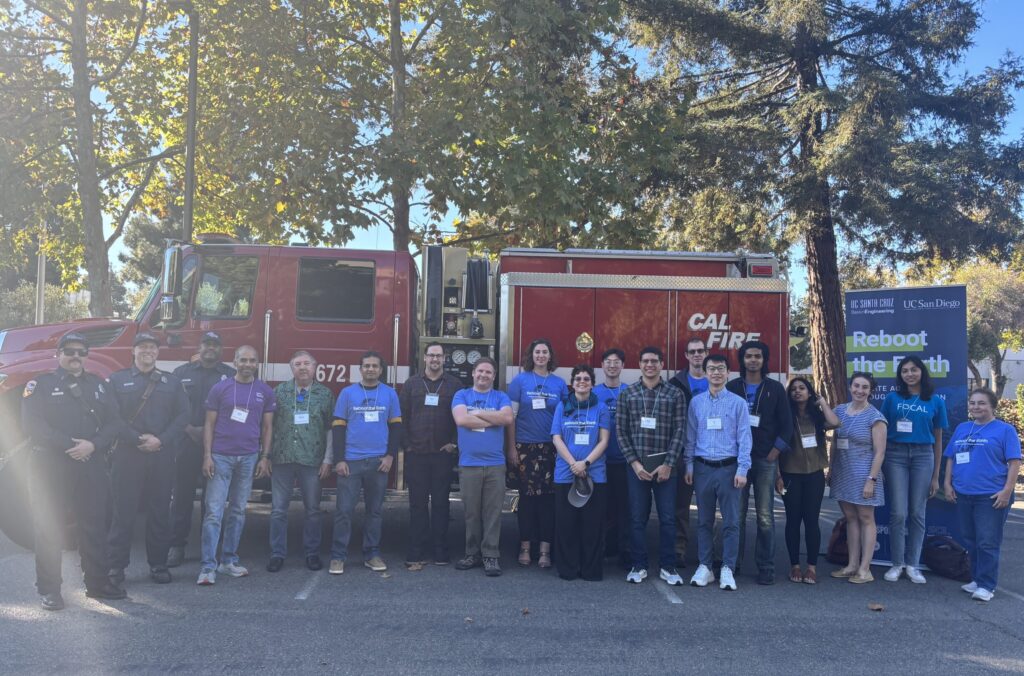
The first-place team will receive six months of coaching from Salesforce and UN partners to scale their solution, along with certificates recognizing their achievement and pathways for continued development toward real-world implementation.
“These projects demonstrate the power of bringing together diverse perspectives—students, emergency responders, UN representatives, and industry experts—around a shared challenge,” said Emily Lovell, associate director of the UC Santa Cruz Open Source Program Office. “The solutions developed this weekend have genuine potential to save lives and protect communities.”
The hackathon was made possible through collaboration between lead sponsors the Baskin School of Engineering, United Nations Office of Information and Communications Technology, and the UCSC Open Source Program Office (OSPO); and supporting partners the Center for Information Technology Research in the Interest of Society (CITRIS), the Food and Agriculture Organization (FAO), and CAL FIRE.
Judges and mentors represented UC Santa Cruz (including Baskin Engineering, Environmental Studies, Center for Innovation and Entrepreneurial Development, and the Innovation and Business Engagement Hub), UC Davis, the UC OSPO Network, CAL FIRE, Linux Foundation, Neo4j, Google, Bloomberg, Cisco, and CodeDay.
All 12 team presentations can be found here.