Health
NIH awards Fitnat Yıldız $7.7 million to find new molecular paths for preventing cholera
Grants will fund research to determine the mechanisms and consequences of a molecule produced by the bacteria that causes the disease
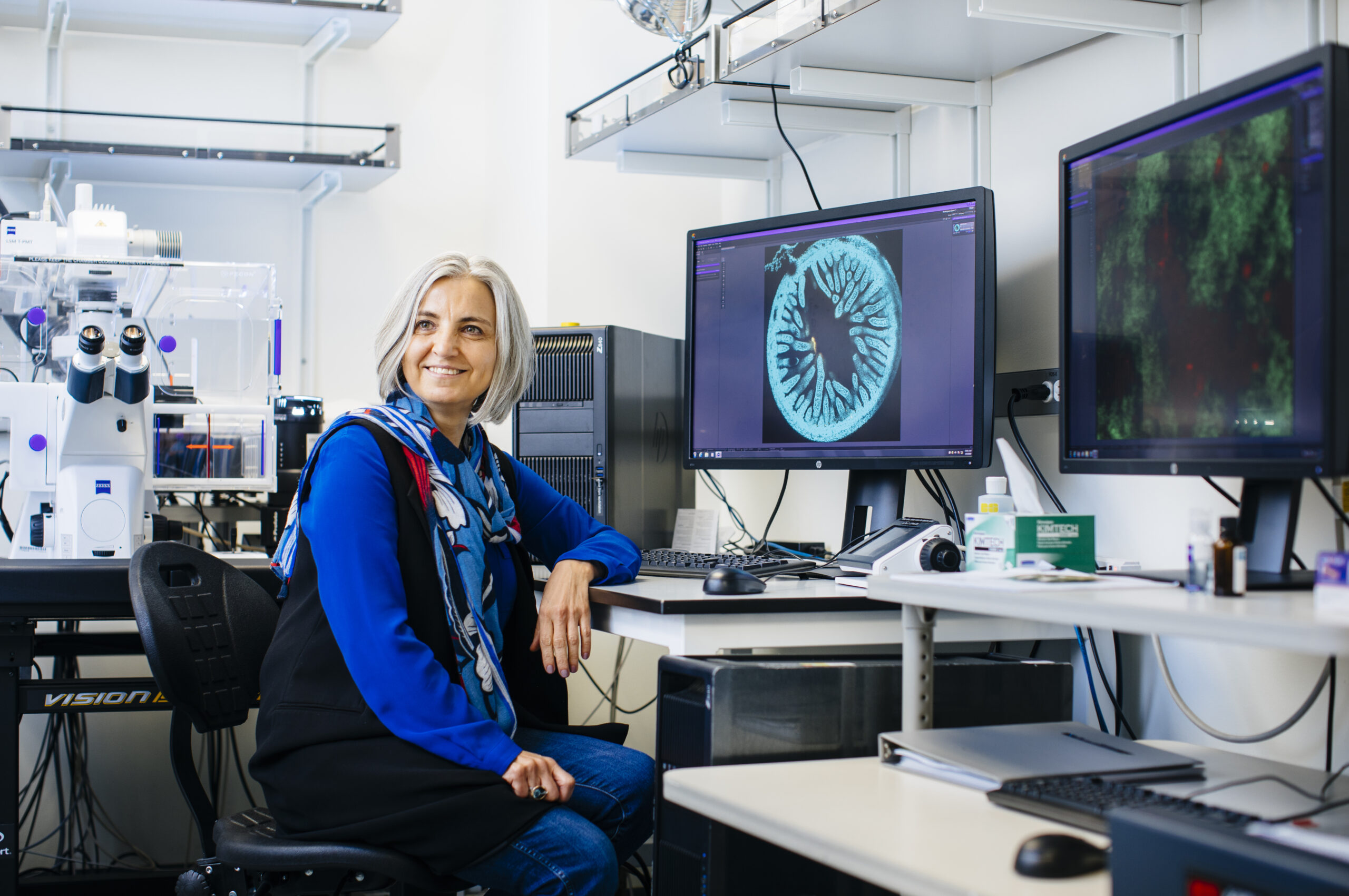
Fitnat Yıldız, distinguished professor of microbiology and environmental toxicology. (Photo by Elena Zhukova)
The National Institutes of Health (NIH) have awarded microbiology and environmental toxicology professor Fitnat Yıldız two grants totalling about $7.7 million over five years to research the molecular pathways that could be targeted by new treatments to protect against the bacteria that causes cholera.
An expert in microbiology and molecular genetics, Yıldız studies how bacterial biofilms form and contribute to disease, using Vibrio cholerae as a model. Biofilms are protective communities of bacteria that are highly resistant to antibiotics and immune responses. Her lab investigates how these molecular processes are regulated, identifying potential targets that could spark the formulation of new therapies.
The grants will fund Yıldız’s research to determine the mechanisms and consequences of a molecule produced by Vibrio cholerae that acts as a chemical switch that instructs bacteria to either remain in motion or stop. These behaviors have major consequences, affecting the bacteria’s virulence and protective biofilm formation that increases resistance to antibiotics and immunity response.
“Studying Vibrio cholerae and its biofilms is fascinating because it uncovers fundamental rules of bacterial behavior and the molecular ‘decision-making’ that allows bacteria to sense, respond, and persist in changing environments,” Yıldız said. “These studies will lead to new strategies to prevent infection and eliminate harmful biofilms, and uncover fundamental concepts that apply to a wide range of bacteria in medicine, industry, and the environment.”
Annually, there are an estimated 1.3 to 4 million cases of cholera worldwide, resulting in 21,000 to 143,000 deaths. The actual global burden of cholera is not known because cases are underdiagnosed and underreported, according to the World Health Organization.
The signaling molecule at the center of Yıldız’s research is produced by other bacteria as well. So determining its role in the infection cycle could lead to new treatments for a variety of illnesses.
Specifically, Yıldız received an NIH MERIT Award, which supports the principal scientific research of an investigator “who has demonstrated superior competence and outstanding productivity.” She also received a new NIH RO1 grant from the agency’s National Institute of Allergy and Infectious Diseases.
Yıldız is the associate dean of research and research impact in the Science Division.