Campus News
New Physics Department professorship reflects an engineer’s love of science and his spouse
Bruce Schumm is the inaugural Darrell D.E. Long and Elaine N. Long Family Professor in Experimental Physics

Elaine and Darrell Long
The service of computer scientist Darrell Long at the University of California, Santa Cruz, spans more than three decades as an engineering professor and over 20 years as director of the engineering school’s Center for Research in Systems and Storage. Now, Long’s dedication to the scientific pursuit at UC Santa Cruz deepens with the creation of an endowed professorship in experimental physics.
Bruce Schumm is the inaugural Darrell D.E. Long and Elaine N. Long Family Professor in Experimental Physics, a five-year chair awarded based on his career’s focus on experimental physics. Schumm is a distinguished professor of physics and said he was very gratified to receive the award at a time when he is trying to get a new effort off the ground.
The effort involves a leading contribution to a particle physics experiment known as PIONEER, which will commence in a few years at the Paul Scherrer Institute laboratory outside of Zurich. Schumm said securing funding has been a struggle due to a constrained environment in which existing projects are saturating the budgets of funding agencies.
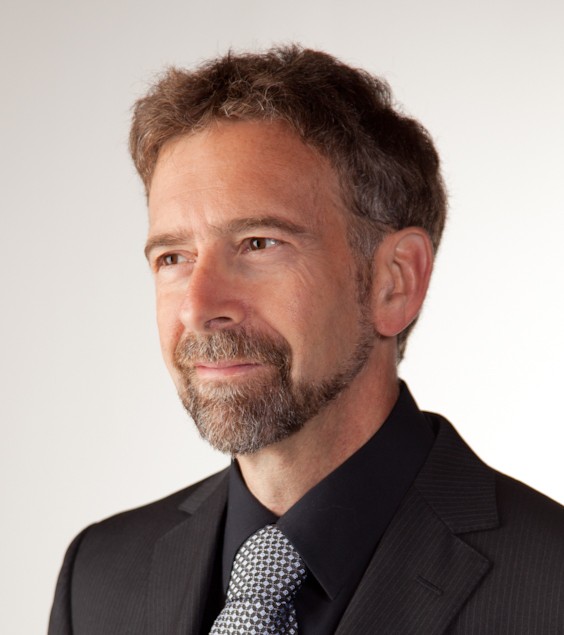
“It is a true gift from heaven. This professorship will allow me to support that new thrust, in particular, supporting a graduate student with travel and some graduate-student research,” Schumm said. “It also has allowed me to support a very promising second-year undergraduate student on some simulation work addressing a significant concern about the performance and design of the experiment.”
A little extra matters
A professor’s need for unrestricted funding—for miscellaneous expenses ranging from office supplies and equipment, to getting the lab cleaned, or hiring an assistant—is exactly why Professor Long endowed the chair. He deeply appreciated all that was made possible after being awarded the Kumar Malavalli endowed chair in storage-systems research.
Federal grants can typically only be spent on project-specific expenses such as grad-student stipends, postdoctoral salaries, and research costs. The modest unrestricted funds from the Malavalli chair allowed Long to buy a laptop, fund servers for graduate students, and hire an administrative assistant. His assistant supported two other professors and made daily academic life much more manageable.
Over two decades, the assistant handled paperwork, organized meetings, and helped maintain industry relationships. This extra support proved to be what Long called a “force multiplier,” allowing him to bring in both federal and industrial funding. As he put it, a small endowment allocation became an enabler, generating far greater resources for the university and creating a job in the process.
“That little extra matters so much,” he said. “And I got to employ someone for 20 years, so there’s a societal good there.”
An affinity for experimental physics
As for why he endowed a chair in the Physics Department, Long explained that by referring back to childhood. He grew up during the Apollo era, when scientists appeared on kids TV shows and space exploration inspired a generation—watching programs like “Mr. Wizard” that made science feel tangible. “You’d see these guys really understand how the world works and why,” he said. “That’s physics.”
Long’s early love for science deepened over the years into a specific affinity for experimental physics, which he regards as the purest way to understand the world from first principles. “What is chemistry but applied physics? And what is biology, really, but applied chemistry?”
The choice to include his wife’s name in the endowment reflects how much joy and stability she brings to their life together. The two first met as children in the Southern California town of El Cajon, where they attended the same elementary school. He remembered being nine years old and instantly struck: “That is the prettiest girl I’ve ever seen in my life!”
As a young lad, he was too shy then to approach her, but Elaine’s kindness left a lasting impression. Her family later moved away, and both Elaine and Darrell went on to marry and have their own children. After his first wife passed away, they reconnected in 2014. He proposed in December 2015, and they were married on July 9, 2016. Today, between them, they have four grown children and a grandson, Wyatt.
The endowed professor chair adds to an annual prize awarded in the spring in Darrell and Elaine Long’s name for the best Ph.D. dissertation in experimental physics, as decided by a committee of faculty who are themselves experimentalists.
Now a distinguished research professor in the Baskin School of Engineering, Darrell Long also spent more than a decade on the UC President’s Council on the National Laboratories. And beyond the UC system, he has served our country through deep involvement on the National Research Council and the National Academies of Sciences, Engineering, and Medicine.
He is a fellow of both the Institute of Electrical and Electronics Engineers (IEEE) and the American Association for the Advancement of Science (AAAS).