Campus News
UC Santa Cruz and The Conservation Fund create a transformative collaboration to conserve regional habitat and pursue sustainable organic-farm expansion
The collaboration will advance the campus’s leadership in conservation, education, sustainability, and agroecology while preserving critical coastal landscapes and habitats for future generations
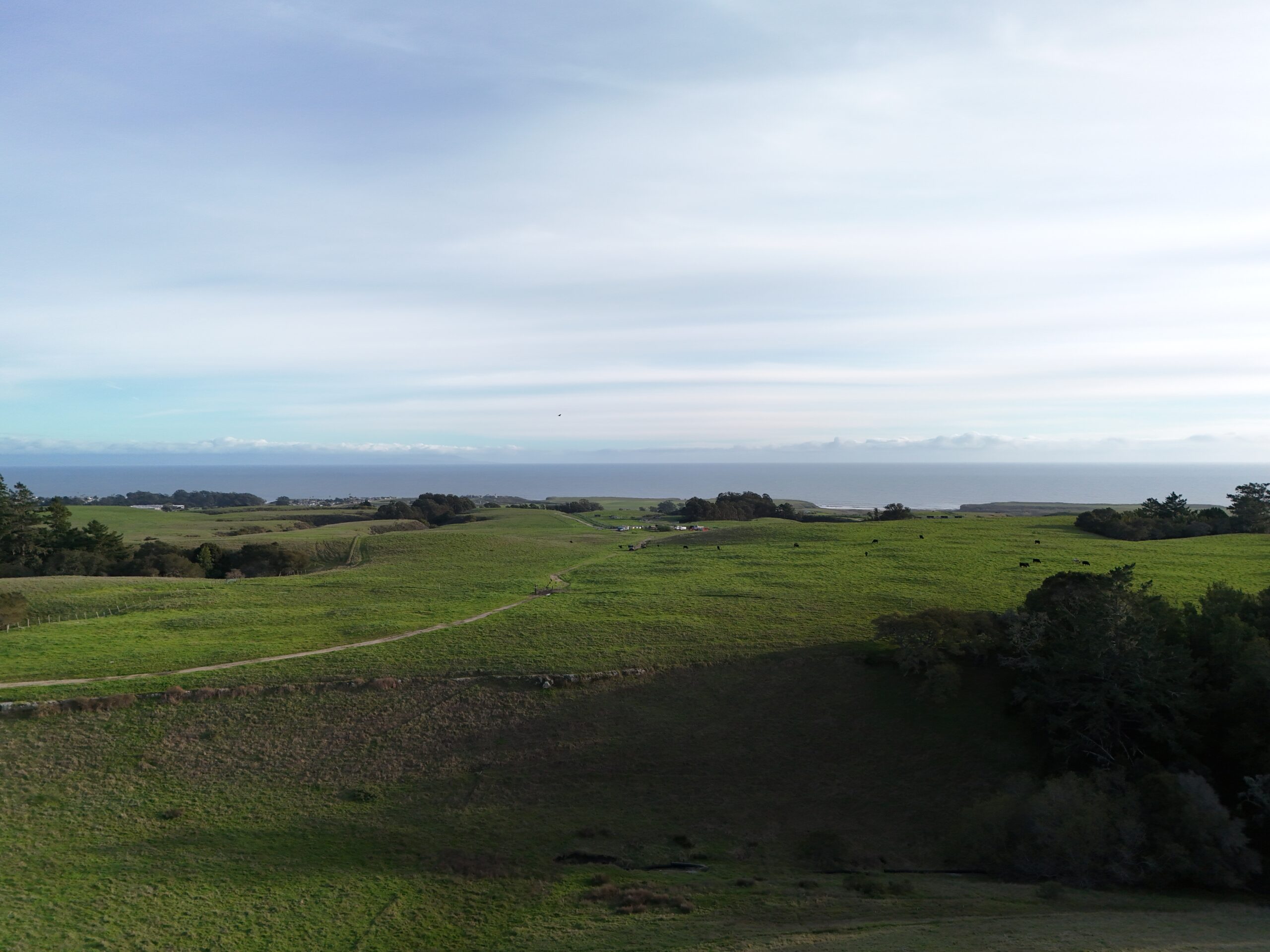
The undeveloped land, home to protected and environmentally sensitive habitat, will be stewarded by the UC Santa Cruz Campus Natural Reserves to ensure its long-term protection. (Photo courtesy of The Conservation Fund)
To advance conservation, teaching, and research, UC Santa Cruz and The Conservation Fund announced today (Aug. 25) a collaboration that will conserve more than 200 acres of currently privately held land adjacent to the residential campus. In addition, the campus is pursuing a transformative plan to expand UC Santa Cruz’s research and education in sustainable organic agriculture through the acquisition of another 200-plus acres of private farmland that borders its coastal campus.
The Conservation Fund (TCF) for more than 40 years has been securing at-risk land with high conservation value and identifying long-term owners who will ensure the land is managed for the public good.
Habitat conservation, research and education
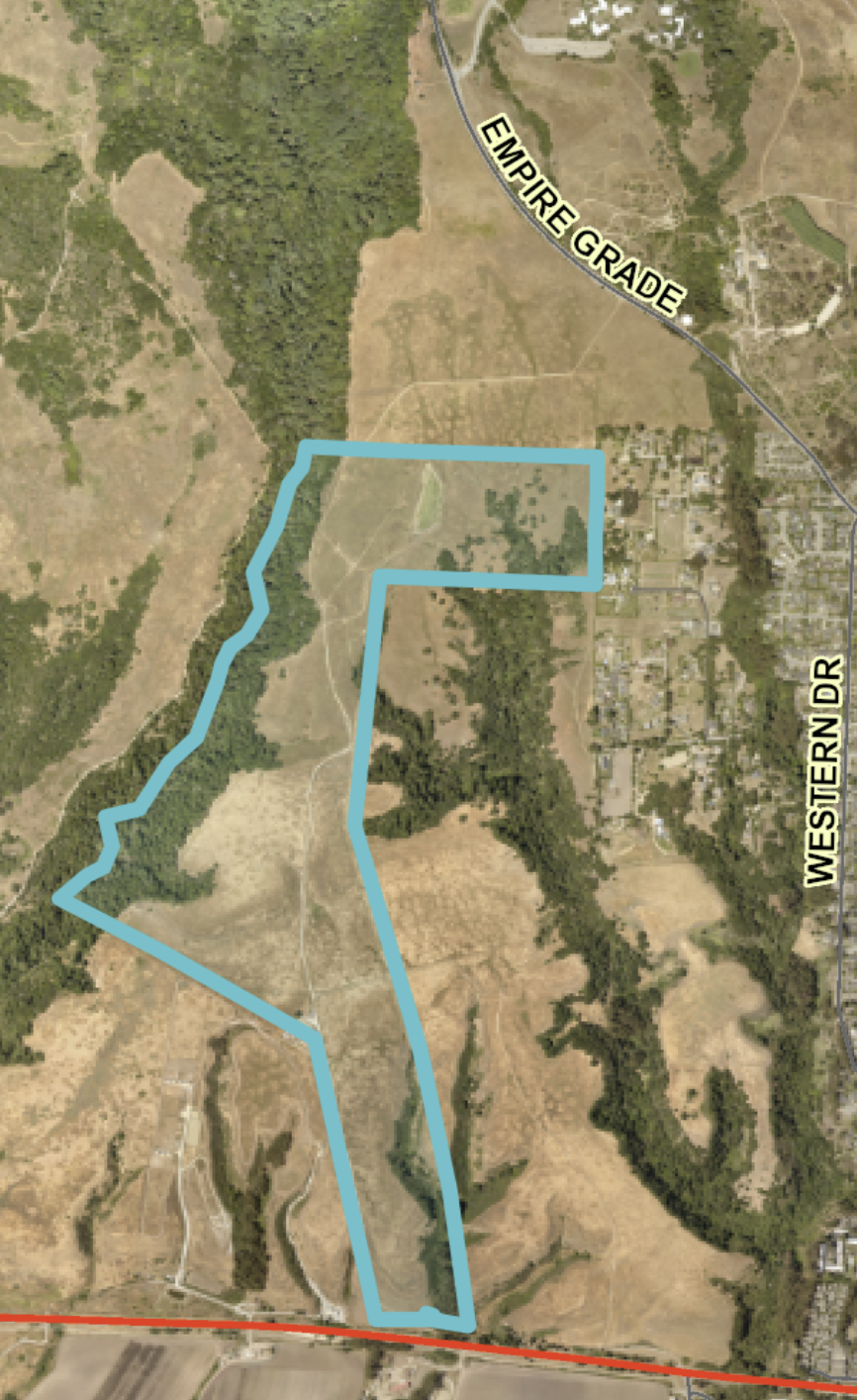
Initiative one, of this two-part pursuit, involves acquisition of the property bordering the residential campus, Moore Creek Reserve and Wilder Ranch State Park. The undeveloped land, home to protected and environmentally sensitive habitat, will be stewarded by the UC Santa Cruz Campus Natural Reserves to ensure its long-term protection. Made possible through private grants and philanthropy, the land was officially transferred from TCF to the campus on August 20, 2025.
The land will be used for research, field internships, outdoor experiential learning, and wildlife conservation. The 200-plus acres, with its noted environmental sensitivity and conservation value, will be permanently protected from the development of housing or other administrative and academic facilities and maintain this important regional greenbelt. Nearly half of the property will include permanent habitat for protected species as agreed upon with the National Fish and Wildlife Service.
UC Santa Cruz Campus Natural Reserves (CNR) currently encompasses 789 acres of protected lands dedicated to teaching, research, and interpretation. These living laboratories blend classroom learning with hands-on study of the natural world, bridging theory with field experiences. The reserves support student internships as well as undergraduate, graduate, and faculty research. In addition to stewarding the campus reserves, the UCSC CNR division manages five other UC System Natural Reserves located throughout the region.
This new property provides protected habitat for several federally protected species, including the Ohlone tiger beetle and California red-legged frog. The land, primarily coastal prairie, coastal scrub, and riparian habitat, creates an essential wildlife corridor and unprecedented opportunities for hands-on learning, research, and conservation.
The proximity of the property will allow students to integrate their classroom studies with hands-on experience, moving between main campus courses and the living laboratories of the inland reserve, making experiential learning a natural part of their daily academic life.
Voices of support
“This is a visionary step by UC Santa Cruz that will benefit our region for generations to come. By protecting this land, the university is not only strengthening the community’s vital greenbelt, but also advancing its mission of environmental research, hands-on education, and thoughtful stewardship. As a longtime advocate for conservation, I applaud UC Santa Cruz for once again demonstrating leadership in preserving the natural beauty and ecological integrity of the Central Coast.”
– State Senator John Laird
“I’m thrilled to see UC Santa Cruz expanding its commitment to conservation. Protecting open space on the Central Coast is essential for preserving biodiversity, supporting climate resilience, and providing meaningful opportunities for education and research. This investment reflects the university’s leadership in environmental stewardship and its deep connection to the Santa Cruz community,”
– Assemblymember Gail Pellerin
“UC Santa Cruz stewarding this land is a tremendous win for conservation, education, and the people of Santa Cruz. Expanding protected open space next to the Moore Creek Reserve for education and research as well as investing in resilient farming practices not only strengthens our local food systems, but it also positions our region to help meet the challenges of climate change. I commend UC Santa Cruz for its leadership in managing this land for public benefit and for deepening the connection between our community and the extraordinary landscape we call home,”
– Santa Cruz County Supervisor Justin Cummings
Expanding sustainable organic agriculture
Initiative two involves UC Santa Cruz and The Conservation Fund working together to secure an additional 200-plus acres adjacent to UCSC’s Coastal Science Campus and Younger Lagoon. This ocean-fronting property, mostly farmland, would allow the university to expand the nationally recognized UC Santa Cruz Farm, birthplace of the U.S. organic farming movement. Both the university and The Conservation Fund are working to raise private and public resources to realize this ambitious vision by summer 2026.

The property shares an approximately one-mile border with the university’s Coastal Science Campus including Younger Lagoon (one of campus’ existing natural reserves) and Wilder Ranch State Park. The property would significantly expand the university’s work on sustainable coastal agriculture, providing our researchers with an outdoor laboratory for sustainable organic farming practices on the Central Coast.
The farm’s agricultural history and oceanside location make it ideal for developing and testing innovative approaches to coastal farming, particularly crucial in threatened and fast-changing coastal environments.
The Center for Agroecology, which manages the campus Farm, advances agroecology and equitable food systems through experiential education, participatory research, agriculture extension, and public service.
Connected histories
Acquiring these two properties, owned by the Younger family for generations, deepens the campus’s long-time connection with the family. The Youngers have been an influential Santa Cruz County family since the mid-1800s. Younger Lagoon and a portion of the Long Marine Laboratory property were donated to UC Santa Cruz by Donald and Marion Younger in 1973. The lagoon remains one of the few relatively undisturbed wetlands remaining on the Central Coast, and is stewarded by the UC Santa Cruz Campus Natural Reserves. Long Marine Lab, part of UCSC’s Coastal Science Campus, has become a hub for teaching and research in coastal conservation, marine biology, ecology, habitat restoration, and environmental policy. The acquisition of the adjacent Younger Ranch will allow us to greatly expand our innovative work in sustainable organic agriculture.
The Younger family was inspired by the vision of transforming these lands for conservation and environmental education and research, and expanding sustainable, organic agriculture for the region and decided to partner with TCF and the university to help realize it.
“It’s amazing what happened over 50 years ago and what is happening now,” said Bob Goode, who is Donald and Marion Younger’s grandson and represents his family. “This is an opportunity that is so unique and so different. The university can do something pioneering and fresh, and what they do will be spoken about for generations in Santa Cruz. In recent time, our family has often thought that the properties should be connected to the campus at some point.”
About the opportunity
Chancellor Cynthia Larive sees the initiative as benefitting generations to come: “What we’re doing will protect species-rich undeveloped natural lands, provide our students with transformational hands-on learning opportunities, and expand the university’s research to help farmers sustainably grow healthy food for the region and beyond.”
UC Santa Cruz is designated as an Agricultural Experiment Station, a system of campus-based scientists and experts with the mission to develop cutting-edge knowledge and technologies to address agricultural, natural resources, and health issues. Emerging technologies are poised to reshape the agri-food system, and the UC Santa Cruz AgTech Alliance will use this site as a testbed for innovation, education, and research that reimagines agriculture for a sustainable future.
The ocean-front farm is near the campus’s established presence on Santa Cruz’s Westside, which includes the Coastal Science Campus and Westside Research Park, and it is less than three miles from the residential campus.
“At The Conservation Fund, we’re driven by a goal of preserving the most treasured natural and historic lands across the nation. In Santa Cruz County, a global biodiversity hotspot, this project is another step forward toward protecting the coastal ecosystems that support regional climate resilience, sustainable agriculture, and important habitat for rare species like the Ohlone tiger beetle,” said Dan Medeiros, senior field representative for The Conservation Fund. “Through our partnership with UC Santa Cruz, we’re opening new pathways for students to engage in hands-on learning in conservation and agroecology – fields aligned with our mission and essential for the future.”
Together, these properties create an unparalleled opportunity to advance UCSC’s leadership in agroecology, conservation and sustainability while preserving critical coastal habitats and landscapes for future generations.
UC Santa Cruz in 2024 became steward of the 2,400-acre Strathearn Ranch near Hollister. The ranch, as well as an operations endowment, was donated to the campus. These recent additions are a testament to the campus’s commitment to regional conservation efforts.