Student Experience
New program to train U.S. college students from all backgrounds to be conservation leaders
$1 million from Cedar Tree Foundation will fund a conservation-leadership academy to continue the work of the Doris Duke Conservation Scholars program at UC Santa Cruz
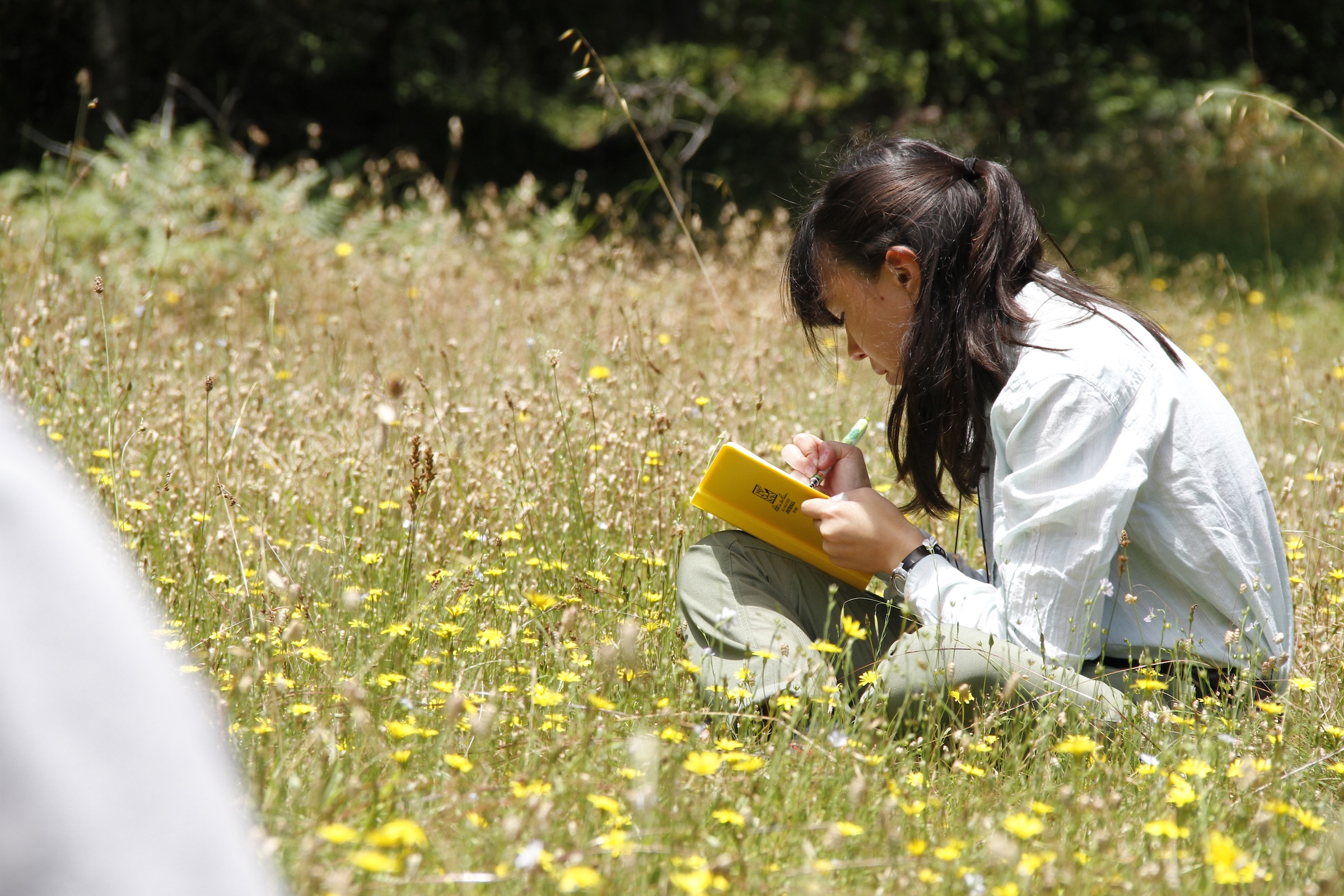
The new Conservation Leadership Immersion Experience (CLIME) Scholars Program will build off lessons learned over the past decade, adopting a similar format anchored by a leadership-immersion experience. (Photo by Abe Borker)
An immersive program at the University of California, Santa Cruz, that brought over 150 exceptional college students from around the country to campus to train as conservation leaders enters a new chapter. After 10 years of the Doris Duke Conservation Scholars program training students from all backgrounds how to hone their research, communications, and leadership skills, the program’s mission and momentum will continue and expand as the Conservation Leadership Immersion Experience (CLIME) Scholars Program.
Funding from the Doris Duke Foundation ended earlier this year, but not before preparing those 150 students to take the next step toward a career devoted—not just to conservation—but to helping lead the fight to save Earth’s natural resources and species that are increasingly under threat. Program alumni are now making critical contributions to transforming conservation, in the field, in the halls of government, and in the classroom.
The Cedar Tree Foundation has awarded UC Santa Cruz $900,000 to pilot CLIME, which would take three cohorts of scholars starting in summer 2026 through summer 2028. CLIME’s leaders say the new program will build off what they learned over 10 years, while adopting a similar format anchored by a leadership-immersion experience followed by student-internship placements with continued programmatic support.
“The timing of this grant is so important. We have learned so much from the Doris Duke Conservation Scholars program, which was really its own experiment,” said ecology and evolutionary biology professor Kristy Kroeker, leader of the new scholars program. “CLIME provides us an opportunity to really capitalize on those lessons and refine our programming to be laser-focused on making an impact—on students’ lives and the field.”
Enriching the conservation movement
The entry of Doris Duke alumni into such a wide array of institutions and locations around the world is welcome progress toward making the conservation field more inclusive. Environmental organizations have historically been homogenous entities, due to a legacy of exclusionary membership criteria dating back to the 19th century, and a collective stance of denial in the decades ahead.
Then in 1990, emerging environmental-justice activists stunned the leaders of the nation’s largest environmental organizations with a letter in the New York Times claiming that few people of color were on the staff of environmental nonprofits. The letter stated that the institutions discriminated in their hiring practices. Since then, those institutions have gradually worked to be more inclusive. But overall, they still have a long way to go.
“Programs like Doris Duke Conservation Scholars offer once-in-a-lifetime opportunities for a new generation of underrepresented students who possess the drive and skills, but may often lack the pathway, to establish themselves in conservation and become the next generation of stewards for our planet,” said Luis Rouzaud, a member of the 2022 Doris Duke cohort. “I strongly believe that the tailored mentorship and guidance from program leadership, as well as the extensive networking opportunities they enabled, have made all the difference in my career and allowed me to confidently take off in pursuit of my professional goals.”
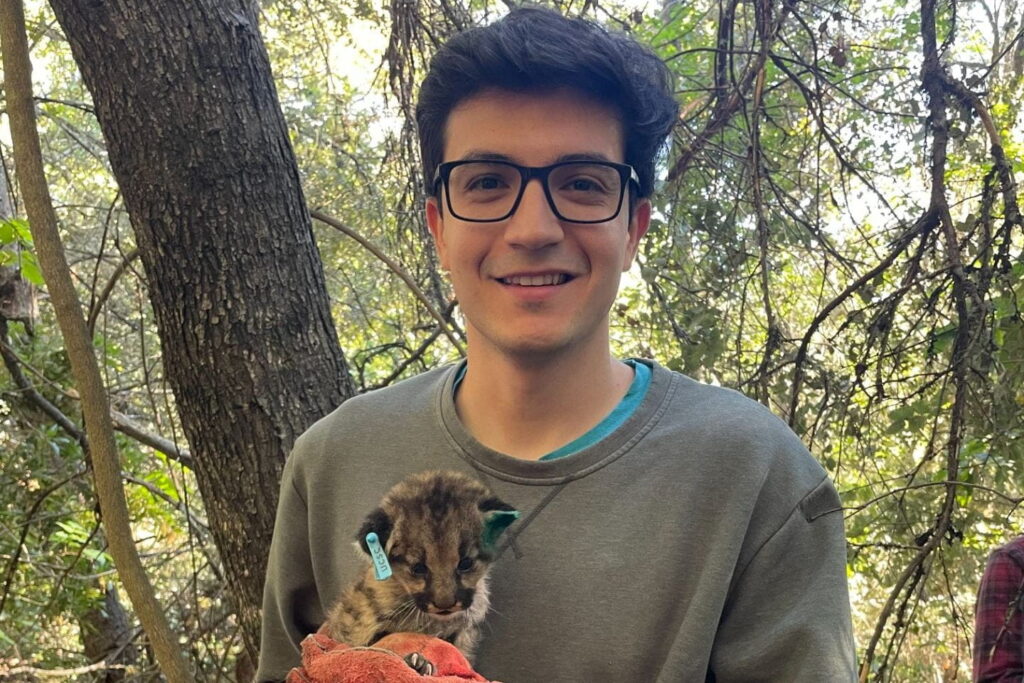
Rouzaud is a second-year Ph.D. student in environmental studies at UC Santa Cruz. He participated in the Doris Duke program as an undergraduate biology major from UC Riverside and recalled how the second summer in the program provided him with the pivotal experience of interning as a wildlife ecologist in the lab of UC Santa Cruz environmental studies professor Chris Wilmers.
For eight weeks that summer, Rouzaud assisted with mountain-lion research: helping track collared lions in the wild, generating movement maps from their GPS data, and analyzing their behaviors using camera-trap imagery and bioacoustic software. He said he felt fulfilled knowing that his work was making a positive impact in the effort to improve the animals’ lives.
Upon completing his internship with the Wilmers Lab, Rouzaud was convinced that he wanted to devote his career to conservation. “Growing up as a first-generation Hispanic immigrant from a low economic background, I never saw people like myself participating in—let alone being successful leaders of—conservation,” he said. “In spite of this, my dream of becoming a wildlife ecologist never waned. I might not have known growing up what my path would look like—all I knew was that I needed to get there somehow.
“Doris Duke Conservation Scholars was that somehow,” Rouzaud said.
Building on success
The power of the Doris Duke program stemmed from its structure and the deeply talented and diverse team leading it. Ecology and evolutionary biology professor Erika Zavaleta brought the program to UC Santa Cruz in 2015, two years after the Doris Duke Foundation launched it with a goal to attract and employ individuals to the conservation workforce who fully reflect the racial and ethnic makeup of the nation.
At UC Santa Cruz, the program was co-led and advised by other faculty on campus, and at top universities across the country, as well as advocates from organizations ranging from the local mayor’s office to the U.S. Fish and Wildlife Service. The two-year program was built around two core experiences: The first year consisted of an eight-week, paid, intensive summer course integrating conservation design, leadership, and research experiences while traveling with a close group of peers and mentors. The second year consisted of an eight-week, paid, intensive summer internship with a conservation organization or agency. Scholars received a $4,600 stipend each summer and reconvened for a fully-funded professional retreat and workshop the winter after nationwide internships.
Program alumni became part of a growing professional network of more than 700 Doris Duke Conservation Scholars around the world. “In addition to all of the alumni scholars, that network consists of hundreds of people who have mentored our interns and become part of the community—including many staff and visitors who’ve come and spent anywhere from a single day to a few weeks with the program over the years,” Zavaleta said. “It’s a powerful network, partly because it’s a way to access opportunities in the field. But it’s also powerful because it includes people who have each other’s backs.”
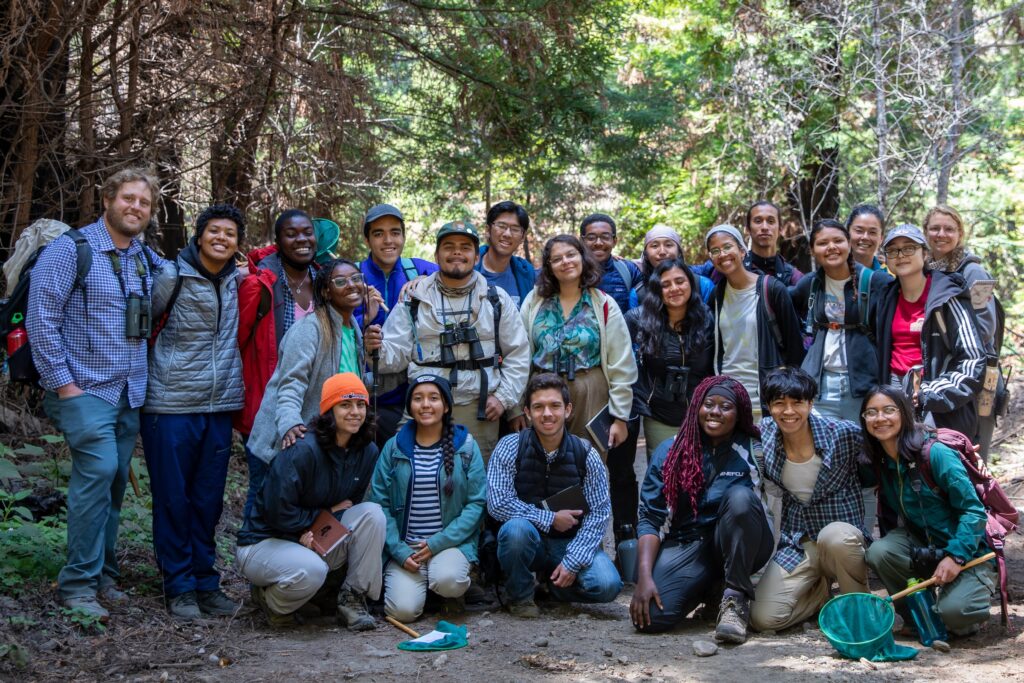
Kroeker will direct CLIME, with Zavaleta and Abe Borker—now a professor of ecology and evolutionary biology at UC Santa Cruz—serving as co-investigators. Their deep involvement in the previous scholars program will ensure the continuity and chemistry that is essential for addressing conservation’s potential to expand diversity in its leadership ranks.
Conservation needs to be more effective to succeed, as identified in a 2022 paper by several conservation and environmental-studies scholars published by the Ecological Society of America. In their study, “Redefining American conservation for equitable and inclusive social-environmental management,” the authors assert that conceptualizations of conservation and the environment should expand beyond Western and Eurocentric worldviews that dominate the fields.
It’s imperative that the conservation movement includes cultures and communities that see themselves as part of nature, with long histories of successful stewardship. CLIME’s leaders say this would increase conservation’s reach, success, and alignment with other social goals.
“With CLIME, UC Santa Cruz is poised to strengthen collective human endeavors such as conservation by injecting more diversity and inclusivity at all levels,” Kroeker said. “And with climate change now recognized as one of the most critical global issues of our time, CLIME aims to prepare future leaders equipped with the creativity, insight, and resilience needed to face it head-on.”
CLIME is geared toward rising college seniors or those who have recently graduated. To support the goal of developing inclusive cohorts of conservation leaders in the years ahead, please visit the program online.