November 2020
-

UC Santa Cruz leads interdisciplinary consortium for astrobiology research
With funding from NASA, the UCSC-led team will lay the foundation for detecting the signatures of life in the atmospheres of other planets.
-
Protection of Human Subjects in Research
The Office of the President has issued major revisions to the Protection of Human Subjects in Research policy. The revised policy provides the following
-
Spring and Summer 2021 Instruction and Housing Planning
Much like we did in fall and winter, UC Santa Cruz will continue to offer most courses remotely or online for spring and summer 2021, providing in-person instruction for a small number of courses that may not be effectively delivered remotely, such as some laboratory, studio, field-research and field-study courses. E
-
Email Scam Alert – Part time work assistant needed/Internship
The UC Santa Cruz Police Department and ITS Information Security are asking members of the campus community to beware of email scams being perpetrated on students offering part time work assistance and/or internships.
-

Humanities Institute to host acclaimed writer Ta-Nehisi Coates in special post-election event
Coates will be in conversation with Adam Serwer, staff writer at The Atlantic magazine, to discuss his acclaimed novel “The Water Dancer”—as well as the state of the country after the election
-
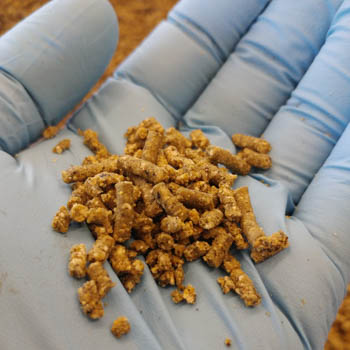
Research breakthrough achieves fish-free aquaculture feed that raises key standards
A new aquaculture feed formula eliminates conventional fish meal and fish oil ingredients by combining ingredients derived from two species of marine microalgae.
-

Computer scientist Lise Getoor receives research funding from Google
A new project on recommender dialogue systems led by Getoor and her collaborators at UC Santa Barbara and USC will receive $1 million in funding over three years.
-
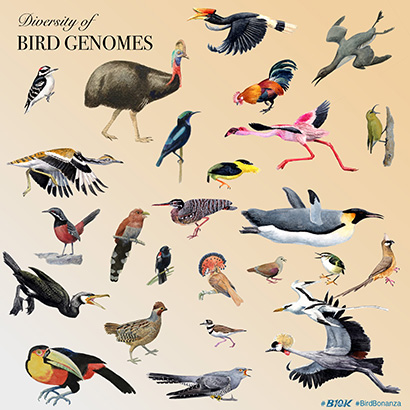
New genome alignment tool empowers large-scale studies of vertebrate evolution
Important new studies of the evolution of birds and mammals relied on Progressive Cactus, a genome alignment tool developed at the UC Santa Cruz Genomics Institute.
-
Presidential Policy Business and Finance Bulletin IS-12 IT Recovery.
The University of California Office of the President invites comments on a proposed Presidential Policy Business and Finance Bulletin IS-12 IT Recovery. The policy was rewritten by a systemwide cross-functional workgroup including representatives from UC Santa Cruz and serves to address the following key issues: Updates to reflect modern technology (i.e. CD-ROMS are removed, ransomware…
-

Radioactive elements may be crucial to the habitability of rocky planets
Earth-size planets can have varying amounts of radioactive elements, which generate internal heat that drives a planet’s geological activity and magnetism.